
Ideology · Central & East Asia
Legalism
At a glance
- Legalism is a name first given in the Han dynasty to a group of Warring States thinkers, among them Shang Yang, Shen Buhai, Shen Dao and Han Fei, who sought a strong state built on clear laws, administrative method, agriculture and war.
- Its ideas were first put into practice in the state of Qin under Shang Yang’s reforms in the 4th century BCE, which became instrumental in Qin’s conquest of China and the founding of its first imperial dynasty.
- Qin’s reputation for brutality and harsh laws led later dynasties to proclaim Confucianism instead, but the bureaucracy Qin built was adopted by the Han and shaped Chinese statecraft throughout Chinese history.
Timeline
- 770 BCEThe Eastern Zhou dynasty is established, beginning the decline of Zhou authority that led to the Warring States period
- 4th century BCEShang Yang’s reforms in Qin bring the first institutional adoption of Legalist ideas
- 167 BCEThe Han dynasty abolishes mutilating punishments, in continuity with Qin practice
- late 2nd century BCESima Tan coins the term Fajia, “fa school”, in an essay included in the Shiji’s final chapter
- 1st century BCELiu Xiang uses the fa school as a category of texts when he establishes the imperial library
- 111 CEThe Book of Han lists the fa school among the categories of its catalogue
- 1961Herrlee G. Creel’s Legalists or Administrators? leads many scholars to avoid the term Legalism
Origins
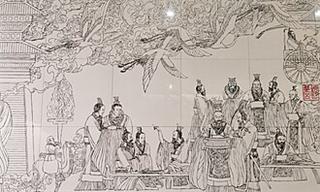
The establishment of the Eastern Zhou dynasty in 770 BCE began a gradual decline of the Chinese political order. Zhou authority was challenged by local fiefdoms acting as states in their own right, and by the early 5th century the monarchy had become largely symbolic, leaving the field to the rival states of the Warring States period. Without allegiance to the Zhou, states needed new grounds for their legitimacy and thinkers who could strengthen them politically, economically and militarily; the ideas that answered are known as the Hundred Schools of Thought.
The first major schools were Confucianism, which held that a virtuous king would make a virtuous people and a thriving state, and Mohism, which wanted officials appointed for ability rather than birth. By the fourth century both came under heavy criticism from a loose cluster of thinkers later classified as Daoists and Legalists, closely associated with the Jixia Academy in the state of Qi. Their ideas shaped Shen Buhai, chancellor of the Han state; Shen Dao, who argued that the realm be modelled on the natural world; and Han Fei, whom many consider the greatest Legalist thinker. The Hanshu took Li Kui as the first author of works on regulations and an influence on Shang Yang, under whose reforms in the 4th century BCE Legalist ideas were first adopted by a state, Qin.
Core Ideas
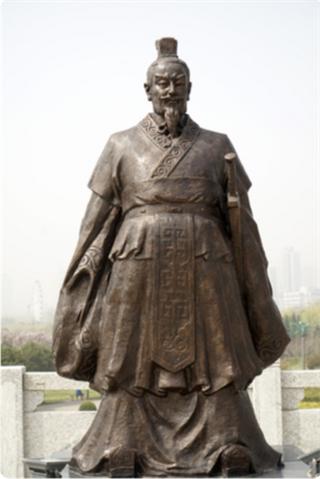
Though heterogeneous, the Legalists generally saw most people, or at least the elite, as fundamentally self-interested. They stressed equality under the law, administrative methods and regulations, treated agriculture and the military as the state’s first concerns, and wanted the power of the aristocracy reduced in favour of merit. In the Han Feizi, fa means regulations recorded and displayed in the official archives, with punishments inevitable and rewards certain, and it holds that “laws are best when they are clear, whereas techniques should not be seen”.
The Han Feizi associates Shang Yang with fa, law; Shen Buhai with shu, the techniques of rule; and Shen Dao with shi, positional power. Shen Buhai’s method, later called xing-ming, matched a minister’s performance to his proposal, appointing by ability and holding officials to account; Herrlee Creel called him perhaps the “first systematic theorist of organizational and managerial science”. Drawing on the Daoist idea of wu wei, Han Fei pictured a ruler who withdrew from active management, set universal standards and kept the “two handles” of reward and punishment in his own hands: “The enlightened ruler governs his officials; he does not govern the people.” Shang Yang and Han Fei saw history as change, and the Book of Lord Shang has Shang Yang say that “to benefit the state, one need not imitate antiquity”.
Spread & Variants

The Legalists probably never formed self-aware, organized schools as the Confucians and Mohists did, and the name is a later one. Sima Tan (165–110 BCE) coined the term Fajia, “fa school”, in an essay included in the Shiji’s final chapter, and the Confucian scholar Liu Xiang (77–6 BCE) made it a category of texts when he established the imperial library, which the Book of Han took up in 111 CE. Besides the Book of Lord Shang, the Han Feizi and the works of Shen Buhai and Shen Dao, six other texts were listed under it, now lost. The Guanzi was only reclassified from Daoism under the Sui dynasty.
Legalist and Daoist ideas merged in Huang-Lao, the dominant ideology of the early Han dynasty; Sima Qian held Shen Buhai and Han Fei to be rooted in it, and their practice of xing-ming re-emerged under Emperor Wen of Han, “cautious, unobtrusive and firm”. Later scholars were often unaware that Shen Buhai and Shang Yang had differed, and the meaning of xing was lost in confusion with punishment, so that after the fall of the Han the Fajia came to be called “the school of punishments”. In modern scholarship Joseph Needham used the term Legalism in 1954 for a positive-law reading of fa, but since Creel’s Legalists or Administrators? of 1961 many scholars have avoided it, and some regard it as inaccurate.
In Power

Shang Yang’s reforms registered and mobilized all adult men in Qin, organized society on a military basis in mutual-responsibility groups of five and ten, granted fiefs for military performance and punished farmers who failed to meet quotas. Michael Loewe saw their aim as a “unified, powerful state, based on an industrious peasantry and disciplined army”, and they became instrumental in Qin’s conquest of China and the founding of its first imperial dynasty. In the Han state, Shen Buhai’s reforms were credited with the successful defence of a small state.
Qin practice was milder than the harshest pages of the Book of Lord Shang. Before unification Qin abandoned Shang Yang’s anti-Confucianism and harsh penal policy; its mutilating punishments of tattooing and cutting off the nose or feet were often redeemed for fines, labour or ranks, and the commonest heavy punishments became labour on roads and canals or expulsion to new colonies. Officials could not punish without a confession, and in one modern assessment Qin laws are more definable by fairness than cruelty. Yet the Qin dynasty’s reputation for brutality and rigid, harsh laws led later dynasties to distance themselves from Legalism and to proclaim Confucianism the state ideology, while the Han kept the Qin bureaucracy and abolished mutilations in 167 BCE.
Critiques & Debates

Han writers fixed the lasting image. Sima Tan praised the fa school for honouring rulers and clearly distinguishing offices, but found it strict with little kindness, a temporary policy that could not last. Sima Qian thought Han Fei “extremely cruel” and of “little compassion”, and Liu Xin wrote that the school rejected teaching and benevolence and relied only on punishment and law. Following them, Shang Yang, Shen Buhai and Han Fei came to be seen together as strict and unkind advocates of cruel law and merciless punishment. The Book of Lord Shang has been called anti-people for saying that a weak people makes a strong military, though such statements are concentrated in a few chapters. Dong Zhongshu (179–104 BCE) thought Qin officials and taxes severe, yet faulted its system for failing to punish criminals.
Modern scholars question the school itself. Creel argued that Shen Buhai was an administrator and that fa often meant method rather than penal law. Others note that fa, agriculture and conscription concerned most thinkers of the age, so that Legalism may amount to little more than the position of a Warring States ruler bent on conquest. Henrique Schneider, by contrast, defended a Legalist reading in 2018 as realism and “state consequentialism”. The Han Feizi itself complained that great ministers broke the law while penalties fell on the humble alone.
Legacy

The bureaucratic apparatus that Qin built on Legalist lines was adopted by the Han dynasty and remained a profound influence on Chinese statecraft throughout Chinese history. The meritocratic ideas of xing-ming may have contributed to the founding of the imperial examination, and the Qin judge-magistrate who investigated like a detective lived on in early Han theatre. The Qing Yongzheng Emperor more or less quoted the Han Feizi’s praise of law as useful for “correcting the faults of the high, rebuking the vices of the low”.
The modern image of the school owes much to chapters 43 and 40 of the Han Feizi, which shaped an early modern view of Shen Buhai as focused on technique, Shen Dao on power and Shang Yang on law. The scholar Hu Shih called Han Fei and Li Si the “greatest statesmen in Chinese history” and champions of progress through conscious human effort, and Feng Youlan read the Legalists as statesmen who understood that needs change with the times. Scholars and commentators have cited Legalism as an influence on the governance of the People’s Republic of China, particularly under Xi Jinping; Sam Crane has called the modern Chinese state “Confucianism on the outside, Legalist on the inside”. Deng Xiaoping’s saying that a cat is a good cat if it can catch rats, whether white or black, has been compared with the Han Feizi.
Legalism is the name given in the Han dynasty to Warring States thinkers such as Shang Yang, Shen Buhai, Shen Dao and Han Fei, who sought a strong state through clear laws, administrative method, agriculture and war. First applied in Qin, it helped Qin unify China; later dynasties disowned it for Confucianism but kept its bureaucracy.
References
- Herrlee G. Creel, Legalists or Administrators? (1961)
- Michael Loewe, in the Cambridge History (1986)
- Yuri Pines, in the Stanford Encyclopedia
- Christoph Harbsmeier (trans.), Han Feizi, ed. Østergaard Petersen and Yuri Pines (2025)