
Ideology · Europe
Republicanism
At a glance
- The word republic comes from the Latin res publica, “public thing”, the government Rome adopted after expelling its kings in the 6th century BCE; Polybius praised it as a mixture of monarchy, aristocracy and democracy.
- Republicanism holds that sovereignty resides in the people and stresses civic virtue, the common good and the fight against corruption; modern scholars see it as a stream distinct from liberalism, which rests on economics and individualism.
- Revived in the trading city-states of late medieval and Renaissance Europe, it shaped the English Commonwealth, the American and French Revolutions and Latin American independence; today a republic usually means a democracy with an elected head of state.
Timeline
- 6th century BCELucius Junius Brutus and Collatinus expel the kings from Rome, and the res publica takes their place
- 1649After the overthrow of Charles I, Oliver Cromwell sets up the Commonwealth of England, which lasts until 1660
- 1755Pasquale Paoli’s Corsican Republic, the first Enlightenment republic in Europe, introduces universal male suffrage
- 1776The American Revolution, driven by republican values, breaks with Britain
- 1792Revolutionaries overthrow the French monarchy and found the First French Republic
- 1831In exile in Marseille, Giuseppe Mazzini founds Young Italy to make Italy a unitary democratic republic
- 1923Mustafa Kemal Atatürk leads the declaration of the Republic of Turkey
- 1946A referendum on 2 June makes Italy a republic, the first republican rule over the whole peninsula since ancient Rome
Origins
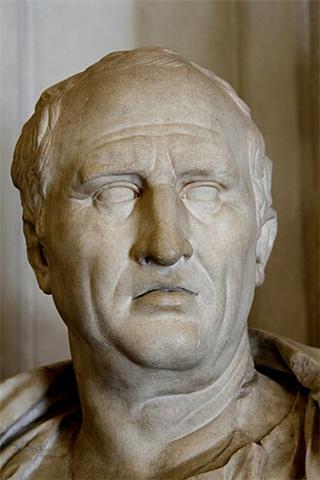
The word republic derives from the Latin res publica, “public thing”, the system of government that emerged in Rome in the 6th century BCE after Lucius Junius Brutus and Collatinus expelled the kings. No ancient text defines a republic as moderns do, but most of the essential features of the modern idea, among them mixed government and civic virtue, are present in Plato, Aristotle and Polybius; the Greek politeia was traditionally rendered in Latin as res publica, and Athens and Sparta have been called classical republics for the wide part their citizens took in making laws.
Writing in the mid-2nd century BCE, the Greek historian Polybius described the Roman Republic as a mixture of monarchy, aristocracy and democracy, each offsetting the weaknesses of the others, and held that the domestic tranquillity this gave allowed Rome to conquer the Mediterranean. He influenced Cicero, whose De re publica linked res publica to politeia. The Republic collapsed in the latter part of the 1st century BCE into what was a monarchy in form, if not in name; Tacitus judged the change irreversible only once Tiberius took power after the death of Augustus in 14 CE.
Republicanism revived in the late Middle Ages in states that arose from medieval communes, generally small, wealthy trading states led by merchants. By the Renaissance, Knud Haakonssen notes, states ruled by landed elites were monarchies and those ruled by commercial elites, such as Florence, Genoa, Venice and the Hanseatic towns, were republics.
Core Ideas

Republicanism holds that sovereignty resides in the people and their elected representatives, as opposed to hereditary monarchy or other absolute personal power. Its principles include civic virtue, active participation, civic education, the fight against corruption, a balanced and mixed constitution, government limited by constitutional law, freedom as non-domination, and commitment to the rule of law and the common good. Its definitions vary widely with historical context and method, and in a monarchy republicanism can simply mean the wish to replace the monarch with an elected head of state.
Liberalism and republicanism were often conflated in the Enlightenment, since both opposed absolute monarchy, but modern scholars see two distinct streams: republicanism stressed civic virtue and the common good, liberalism economics and individualism. In the United States historians describe its central values as liberty and inalienable rights, the sovereignty of the people, the rejection of monarchy, aristocracy and hereditary power, civic virtue, and the vilification of corruption.
Republicanism did not itself say how the people should rule. In Federalist No. 10 James Madison rejected “pure democracy” for representative government, which he called a republic, and argued that a republic grows stronger as it grows larger and combats faction by its very structure. The French républicanisme, drawn from Rousseau’s general will, sets each citizen in a direct relationship with the state.
Spread & Variants

Renaissance writers drew on ancient models, and their thought came to be called classical republicanism, or civic humanism. Niccolò Machiavelli’s Discourses on Livy was the period’s key work on republics, though most writers thought republics could succeed only in small, highly urbanised city-states. In the Dutch Republic anti-monarchism grew during the Eighty Years’ War, which began in 1568, and the brothers Johan and Peter de la Court called all monarchies illegitimate tyrannies. In the Polish–Lithuanian Commonwealth, the Rzeczpospolita, republicanism was the ideology not of merchants but of the landed nobility, who wanted a weak king.
In England James Harrington and John Milton were leading republican thinkers of the Commonwealth, and in the early 18th century the “country” party of the commonwealthmen denounced the corruption of the court, a theory that heavily influenced the American colonists. Montesquieu, Voltaire and Rousseau elaborated the social contract, positive law and mixed government. Republicanism, especially Rousseau’s, played a central role in the French Revolution, and in 1791 the Society of United Irishmen was founded in Belfast and Dublin.
In the early 19th century republicanism helped inspire the independence movements of Spain’s former colonies, where Simón Bolívar and others identified as republicans and Andrés Bello shaped a “republican internationalism”. Giuseppe Mazzini revived the republican idea in Italy, Brazil’s radical liberals founded a Republican Party in 1870, and Spain had two republics, in 1873–1874 and 1931–1939.
In Power

Oliver Cromwell set up the Commonwealth of England (1649–1660) after the overthrow of Charles I; its collapse and the restoration of Charles II discredited republicanism among England’s ruling circles. Pasquale Paoli’s Corsican Republic (1755–1769), inspired by Montesquieu, Voltaire and Rousseau, had a permanent parliament with regular elections and universal male suffrage, founded a national university at Corte and a standing army, and fell to Genoese and French forces. In the decades before 1776 most Americans’ commitment to republican values made the Revolution, in one historian’s view, inevitable, and the United States Constitution prohibits titles of nobility.
French revolutionaries overthrew the monarchy and founded the First Republic of 1792–1804, which Napoleon turned into an empire with a new aristocracy. Jules Ferry, prime minister from 1880 to 1885, enacted the Ferry Laws, ending the Catholic Church’s part in many state institutions, including schools. In Ireland the United Irishmen rose against British rule from May to September 1798, with French military support. In Poland–Lithuania republican rule of the nobility ended in an oligarchy of the great landed magnates.
In Turkey Mustafa Kemal Atatürk declared the Republic in 1923 and carried out sweeping reforms, among them secularism, free education, gender equality and economic statism; republicanism remains one of the six principles of Kemalism. In Italy anger at the monarchy’s twenty years of support for Fascism helped bring the republic of 1946.
Critiques & Debates

Historians disagree over how far republicanism shaped the American founding. For decades the consensus was that John Locke’s liberalism was paramount. J. G. A. Pocock argued in The Machiavellian Moment (1975) that in the early 18th century republican ideas mattered as much as liberal ones, a view now widely accepted, and Bernard Bailyn and Gordon Wood held that the founders owed more to republicanism than to liberalism. Isaac Kramnick and Joyce Appleby answered that Americans have always been individualistic and Lockean. Even the label is disputed: Zera Fink coined “classical republicanism” in the 1940s, but scholars such as Brugger say it confuses the early modern republic with ancient government, and “early modern republicanism” has been proposed instead.
Republicans themselves distrusted democracy. The American founders often equated direct democracy with mob rule, Thomas Jefferson warned that “an elective despotism is not the government we fought for”, and Richard Ellis and Michael Nelson argue that much constitutional thought from Madison to Lincoln turned on “the problem of majority tyranny”. Cicero defended monarchy, or a mixed monarchy and oligarchy, in his theoretical works, and Jean Bodin identified monarchy with republic.
Some critics argue that the colour-blind laws of French républicanisme perpetuate discrimination. Alex Gourevitch, writing on the labour republicanism of the Knights of Labor, also criticises that union’s support for the Chinese Exclusion Act.
Legacy
In 1848 Leopold von Ranke wrote that by founding a republic on the rights of the individual the North Americans had brought a new force into the world: “Now the idea emerged that power should come from below.” Today the word republic usually means a representative democracy with an elected head of state who serves a limited term. Several monarchies, such as Britain, the Netherlands and the Scandinavian countries, turned their kings into constitutional ones with limited or merely symbolic powers, while France, China, Russia, Germany, Italy and Turkey abolished the monarchy.
Republican movements continue in monarchies. In Britain support for the monarchy reached historical lows after the death of Elizabeth II in 2022; in Spain a survey of 2007 found 69 per cent preferring the monarchy and 22 per cent a republic, while parties such as United Left increasingly refer to republicanism. After the fall of communism in 1989 France increasingly turned to republicanism to define its national identity. Mazzini influenced the Constitution of Italy and statesmen from Woodrow Wilson to Mahatma Gandhi and Jawaharlal Nehru, and the Italian Republican Party, founded in 1895, is the oldest party still active in Italy.
In scholarship, neo-republicanism draws on the classical tradition for a public philosophy for today. Philip Pettit and Cass Sunstein have defined how it differs from liberalism, and Michael Sandel argues for supplementing liberalism with republicanism.
Republicanism holds that sovereignty resides in the people and their elected representatives, and it prizes civic virtue, the common good, the rule of law and the fight against corruption. Drawn from republican Rome and revived in the Italian city-states, it shaped the English Commonwealth and the American and French Revolutions, and it lives on in modern republics and neo-republican thought.
Test yourself
5 questions on this page, from its key events and facts.
The questions open here once the page has loaded.
References
- J. G. A. Pocock, The Machiavellian Moment (1975)
- Philip Pettit, Republicanism: A Theory of Freedom and Government (Oxford University Press, 1997)
- Maurizio Viroli, Republicanism (Hill and Wang, 2002)
- Bernard Bailyn, The Ideological Origins of the American Revolution (Harvard University Press, 1967)
- Gordon S. Wood, The Creation of the American Republic 1776–1787 (1969)
- Martin van Gelderen and Quentin Skinner, eds., Republicanism: A Shared European Heritage (Cambridge University Press, 2002)