Glossary · Term
Waqf
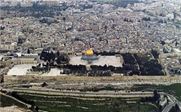
A waqf, also called a ḥabs, is an irrevocable trust in Islamic law, usually an endowment of real estate or other assets whose revenues serve a specified purpose, such as a mosque, school, fountain or the founder's family. Once declared, the property cannot be sold, transferred or given away and is legally held to belong to God; the founder appoints a trustee to manage it. The practice rests on hadiths, among them Umar's endowment of land at Khaybar on Muhammad's advice, but the formal system emerged from the 9th century: the oldest dated deed, of 876 CE, concerns a Qur'an now in Istanbul. The Jerusalem Waqf manages the al-Aqsa Mosque.
Mentioned in 4 profiles
See also



Cite this entry
- APA
- The Epoch Institute. (2026). Waqf. In The Epoch Institute Encyclopedia. https://the-epoch-institute.org/encyclopedia/waqf
- MLA
- “Waqf.” The Epoch Institute Encyclopedia, The Epoch Institute, 2026, https://the-epoch-institute.org/encyclopedia/waqf. Accessed .
- Chicago
- The Epoch Institute. “Waqf.” The Epoch Institute Encyclopedia. 2026. https://the-epoch-institute.org/encyclopedia/waqf.
- Harvard
- The Epoch Institute (2026) ‘Waqf’, The Epoch Institute Encyclopedia. Available at: https://the-epoch-institute.org/encyclopedia/waqf (Accessed: ).
Last reviewed October 2026Random entry ↻