Egypt & North Africa
Marinid Sultanate
At a glance
- The Marinids took Fez in 1248 and Marrakesh in 1269, ending Almohad rule in the western Maghreb; in 1276 they founded Fes Jdid as their administrative and military centre.
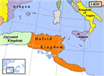
- Abu al-Hasan (r. 1331–1348) conquered Tlemcen in 1337 and defeated the Hafsids in 1347, making himself master of a territory from southern Morocco to Tripoli, but lost his eastern lands within a year.
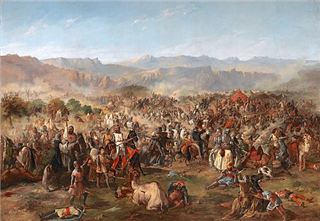
- A Portuguese–Castilian army defeated the Marinids at the Battle of Río Salado in 1340 and Castile took Algeciras in 1344, expelling them from the Iberian Peninsula for good.
Rise & Fall
- 1244Abu Yahya's reign begins; between 1244 and 1248 the Marinids take Taza, Rabat, Salé, Meknes and Fez from the weakened Almohads.
- 1269Abu Yusuf Yaqub captures Marrakesh, effectively ending Almohad rule.
- 1276Fes Jdid, 'New Fez', is founded as the dynasty's administrative and military centre.
- 1294The Marinids hold Rota, Tarifa and Gibraltar, seeking control of the Strait's trade from Algeciras.
- 1337Abu al-Hasan conquers the Abdalwadid kingdom of Tlemcen.
- 1340A Portuguese–Castilian army defeats the Marinids at the Battle of Río Salado near Tarifa.
- 1347Abu al-Hasan defeats the Hafsids of Ifriqiya and rules from southern Morocco to Tripoli; within a year a revolt of Arab tribes in southern Tunisia costs him the east.
- 1465Abd al-Haqq II, the last Marinid sultan, is killed in a revolt in Fez after appointing a Jewish vizier, Aaron ben Batash.
Foundation
The Banu Marin were a nomadic faction of the Zenata Berber confederation who originated in the Zab, the country around Biskra in modern Algeria. Pushed from their lands by the arrival of Arab Bedouins in the 11th and 12th centuries, they moved to north-western Algeria and by the beginning of the 13th century entered what is now Morocco in force. The dynasty took its name from Marin ibn Wartajan al-Zenati, and like earlier Berber dynasties its historians claimed a North Arabian origin to help legitimise its rule. Although Berber, the Marinid rulers were culturally Arabised.
They began as servants of the Almohads. Their leader Mahyu fought for the Almohad victory at the Battle of Alarcos in 1195 and died of his wounds; his son Abd al-Haqq, born in the Zab to a noble family, was the effective founder of the dynasty. The Almohad disaster at the Battle of Las Navas de Tolosa on 16 July 1212 left their state weakened and parts of it depopulated, and from 1213 or 1214 the Marinids began taxing the farming communities of north-eastern Morocco between Nador and Berkane. Fighting with the Almohads broke out regularly from 1215; in 1217 an attempt on eastern Morocco failed and Abd al-Haqq was killed. Under Uthman I and Muhammad I the tribe regrouped and built its authority over the rural tribes around Taza, Fez and Ksar el-Kebir. The caliph Sa'id beat the Marinids back south of Taza in 1244, the year Abu Yahya's reign began.
Socioeconomy
The population under Marinid rule was mostly Berber and Arab, divided between heavily Arabised and uniformly Islamised cities, where politics ran along the lines of local aristocratic families, and a countryside that stayed largely Berber and tribal; the nomads, Berber tribes joined by Arab ones such as the Banu Hilal who had arrived under the Almohads, became more Arabised than the settled peasantry. Jewish communities were a significant urban minority active in most aspects of society: the Jewish quarter of Fez el-Jdid, the first mellah in Morocco, came into being in this period. Berber was the language of the court and of rural life, Arabic the language of law, government and most literature, and Arabisation advanced significantly.
Fez had been prosperous under the Almohads, even the largest city in the world, but it was under the Marinids that it reached its golden age and acquired its reputation as an intellectual centre. The sultans sought control of the commercial traffic of the Strait of Gibraltar from Algeciras, which the Nasrids of Granada had ceded to them, with shipyards at Salé and Ceuta. Luxurious silks continued to be made, though the only reliably dated Marinid textiles are three banners captured at Río Salado in 1340 and kept in the Cathedral of Toledo. Bronze chandeliers hung in the mosques, the one at Taza of 1294 weighing three tons and holding 514 lamps.
Military

The Marinid army was built of tribes. Its core was the Banu Marin and their allies, supplemented by other Zenata tribes of the central Maghreb, by Arab tribes such as the Banu Hilal and Banu Ma'qil, and by Christian mercenaries from Europe hired as the Almohads had hired them, mainly cavalry who served as the sultan's bodyguard. Under Abu al-Hasan the main striking force was some 40,000 Zenata horsemen with Arab tribal cavalry, about 1,500 mounted archers of 'Turkish' origin and about 1,000 Andalusi foot archers, while the standing army and royal guard numbered 2,000 to 5,000 salaried mercenaries from Aragon, Castile and Portugal with Black Africans and Kurds. The fleet was the weak point: it could not keep up with Aragon's.
With this army the Marinids took Marrakesh in 1269, besieged Tlemcen for nine years from 1299 and fought in Iberia. From Algeciras Abu Yusuf Yaqub campaigned against Castile, dying there in 1286 after his fourth expedition, and by 1294 the Marinids held Rota, Tarifa and Gibraltar. Then came the reverses: a Portuguese–Castilian coalition crushed Abu al-Hasan's army at the Battle of Río Salado near Tarifa in 1340, and in 1344 Castile took Algeciras, ending the Marinid presence in Iberia. Abu al-Hasan took Tlemcen in 1337 and beat the Hafsids in 1347, holding the Maghreb to Tripoli for a year until a revolt of Arab tribes in southern Tunisia stripped away the east.
Governance & Law

In many respects the Marinids continued the Almohad order: a primarily tribal state resting on the loyalty of its own tribe and allies, with very little civil administration in the provinces beyond the capital. They kept the Berber tradition of consultative government through a council of Marinid tribal chiefs whom the sultan consulted, chiefly on military matters, and held the provinces by appointing family members as governors or by marriage alliances. The sultan bore the title amir al-muslimin, 'Commander of the Muslims', and later sultans sometimes took amir al-mu'minin, 'Commander of the Faithful'; the heir apparent often led the army and the vizier ran the day-to-day government.
Religion was a tool of legitimacy. The Marinids presented themselves as guardians of proper Islamic government, restored Maliki Sunnism as the official religion after Almohadism, allied with the Maliki ulama of the cities and with the sharifian families, with whom they sometimes intermarried, and in Fez insisted on appointing the officials of religious institutions and managing the waqf endowments. The madrasas they built, the first in Morocco, trained the Maliki scholars who staffed their bureaucracy and were meant to undermine the marabouts and sharifian elements. Families of viziers competed for power, the Wattasids above all, and after 1358 they made and unmade sultans.
Global & Regional Impact

The Marinids remade the religious and intellectual landscape of Morocco. They pioneered the madrasa there, a type of institution born in north-eastern Iran by the early 11th century that had been antithetical to Almohad doctrine: the Saffarin Madrasa of Fez in 1271 was the first, the al-Attarine followed in 1323, and the Bou Inania, the largest, was also a Friday mosque, with others from Salé and Meknes to Taza, Tlemcen and Marrakesh. The Qarawiyyin reached its apogee in prestige and scope, and the age produced fiqh, poetry, science, geography and above all history, in part because the dynasty wanted histories to legitimise it. Ibn Khaldun was the most famous figure of this intellectual life, shared with Nasrid Granada, and Ibn Battuta set out on his 29-year journey in 1325.
In architecture the Marinids refined the Almoravid and Almohad legacy with ever more intricate wood and stucco and were the first to use zellij mosaic tilework extensively, which became standard in Moroccan building; their style was closely akin to the Nasrid Alhambra. Their madrasas in Fez, Salé and Meknes are counted among the greatest works of western Islamic architecture of the period, beside the Grand Mosque of Fes el-Jdid (1276), the Great Mosque of Taza (1294) and the Chellah necropolis gate of 1339. The growing weight of sharifian families and the popular veneration of the Idrisids under their rule prepared the way for the Saadians and Alawis.
Decline & Fall
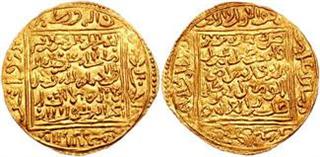
The decline began at the height. In 1348 Abu al-Hasan, who had lost Tunisia to the Arab revolt, was deposed by his son Abu Inan Faris, and the Black Death and the rebellions of Tlemcen and Tunis marked the turn; in 1358 Abu Inan was strangled by his own vizier. Real power now lay with the viziers, who paraded sultans and forced them to succeed one another in quick succession: Abu Salim Ibrahim in 1359 with the backing of Pedro of Castile, Muhammad ibn Yaqub, assassinated by his vizier in 1366. The country split: in 1359 Hintata tribesmen from the High Atlas occupied Marrakesh, which they ruled until 1526; in 1374 the empire was partitioned into kingdoms of Fez and Marrakesh; and wandering Arab Bedouin spread anarchy.
The 15th century brought a financial crisis that ended the subsidies to the marabouts and sharifian families, and the Christian powers struck the coast: Henry III of Castile seized Tetouan in 1399, massacred half its people and enslaved the rest, and John I of Portugal took Ceuta in 1415. Abd al-Haqq II became sultan in 1420 at the age of one, and the Wattasid viziers ruled as regents. In 1459 he massacred the Wattasid family; in 1465 his appointment of a Jewish vizier, Aaron ben Batash, provoked a popular revolt in Fez in which his throat was cut. In 1471–72 the surviving Wattasid Abu Abd Allah al-Sheikh Muhammad ibn Yahya installed himself in Fez and founded the Wattasid dynasty.
The Marinid Sultanate, a Zenata Berber dynasty, replaced the Almohads in Morocco between 1244 and 1269 and ruled from Fez, building the Maghreb's first madrasas and reaching under Abu al-Hasan from Morocco to Tripoli, until defeat at Río Salado, the rule of the viziers and the Wattasid regency ended with the last sultan's murder in Fez in 1465.
Test yourself
5 questions on this page, from its key events and facts.
The questions open here once the page has loaded.
References
- Charles-André Julien, Histoire de l'Afrique du Nord, des origines à 1830 (Payot, 1994; first published 1931)
- Ibn Abi Zar, al-Dhakhirah as-Saniyya, ed. Mohamed Bencheneb (Algiers, 1920)
Connections
Open the full connections map →