Egypt & North Africa
Alodia
At a glance
- Alodia was the last of the three Nubian kingdoms to accept Christianity: in 580 the bishop Longinus baptized the king, his family and the nobility.
- In the 10th century Ibn Hawqal and al-Aswani found a large, polyethnic kingdom more powerful than Makuria, with a capital of fine buildings and churches full of gold.
- Succession was matrilineal, passing to the son of the king's sister, and al-Aswani wrote that the king could enslave any subject at will.
Rise & Fall
- 569John of Ephesus mentions Alodia for the first time, as a kingdom on the cusp of Christianization.
- 580Longinus is sent at the king's request and baptizes him, his family and the nobility; Alodia joins the Coptic Patriarchate of Alexandria.
- 652Makuria and the Arabs sign the Baqt after two failed invasions; the treaty explicitly leaves Alodia unaffected.
- 9th centuryAl-Yaqubi describes Alodia as the stronger of the two Nubian kingdoms, a country three months' journey across.
- 10th centuryIbn Hawqal and al-Aswani visit the kingdom and describe Soba's prosperity under kings Eusebius and Stephanos.
- 1220The Damadim attack Nubia from the south, according to Ibn Sa'id al-Maghribi; Soba may have been conquered and destroyed.
- 1276Al-Abwab, the northernmost province, is recorded as an independent splinter kingdom.
- 1504Soba lies in ruins; Abdallah Jammah and the Funj king Amara Dunqas destroy the kingdom, and the Funj found Sennar.
Foundation
Alodia, called Alwa in Arabic and Aroua in Old Nubian, rose from the ruins of the Kingdom of Kush. By the early 4th century Kush was in decline and Nubian speakers, pushed eastward from the lands west of the Nile by changes in the climate, were settling the valley; by mid-century they held most of the former Kushite country. An Aksumite inscription records an expedition against the warlike Nubians that marched to the confluence of the Nile and the Atbara and plundered Kushite towns, among them one named Alwa. Kush ceased to exist in the middle of the 4th century; its people were absorbed into the Nubians and their language replaced by Nubian. Regional centres then emerged whose elites were buried in large tumuli, as at El-Hobagi, dated to the late 4th century and furnished with weaponry imitating Kushite royal funerary rites.
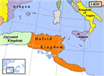
How the kingdom came into being is unknown. Its formation was complete by the mid-6th century, when it stood beside Nobadia and Makuria to the north, with Soba, by then a major urban centre, as its capital. In 569 John of Ephesus mentioned it for the first time, and a late 6th-century Greek document from Byzantine Egypt recording the sale of an Alodian slave girl confirms its existence. Its heartland was the Gezira, the fertile plain between the White and Blue Nile, and it is by far the least studied of the Nubian kingdoms.
Socioeconomy
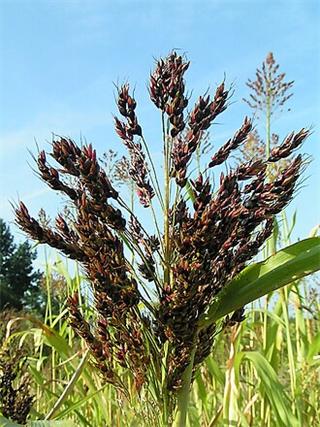
Alodia lay in the savannah belt, which gave it an advantage over Makuria. Al-Aswani wrote that the provisions of the country and its king came from Kersa, the Gezira, where rainfall was enough for rain-fed cultivation, whereas north of the confluence farming was confined to riverside plots watered by the shadoof or the sakia. At Soba the main cereal was sorghum, also brewed into beer, with barley and millet; figs, dates, acacia and doum palm fruits and grapes have been found, though al-Aswani noted that vineyards were rare. Nomadic herders lived in exchange with the farmers; beef was plentiful, cattle bones outnumber those of sheep and goats at Soba, and fishing and hunting added little to the diet.
Soba was a trading hub on north-south and east-west routes, and goods reached the kingdom from Makuria, the Middle East, western Africa, India and China. Routes ran through the Bayuda Desert to Makuria, from Berber to the Red Sea ports of Badi, Suakin and Dahlak, and, Benjamin of Tudela wrote, west to Zuwila in Fezzan. Exports likely included gold, ivory, salt and hides; silk, flax and most of the glass found at Soba were imports, probably from Egypt. Arab merchants handled most foreign trade and lived in a district of the capital. Al-Aswani described a town of fine buildings, extensive dwellings and churches full of gold and gardens. Whether Alodia exported slaves on any scale, as William Y. Adams postulates, is poorly evidenced before the 16th century.
Military

Little is recorded of Alodia's wars, but the Arab geographers agreed on its strength. Al-Yaqubi in the 9th century called it the stronger of the two Nubian kingdoms, and al-Aswani in the 10th found it more powerful than Makuria, more extensive and with a larger army. The kingdom may have kept a standing army in which cavalry projected force and symbolized royal authority deep into the provinces; horses also carried a rapid courier service between Soba and the provinces, and boats were central to transport on the rivers. Forts north of the confluence of the two Niles point to tensions with Makuria in the 6th century, soon settled. The Arab invasions that struck Makuria in 641/642 and 652 did not reach Alodia, which the Baqt treaty explicitly left aside.
The enemies that undid the kingdom came from the south and the east. Ibn Sa'id al-Maghribi records that the Damadim, a people from the south, attacked Nubia in 1220; Soba may have been conquered and destroyed. Another invasion from the south followed late in that century. From the 14th century Arab tribes overran the Butana and the Gezira; the kingdom at first forced some of them to pay tribute, but by the second half of the 15th century it held only the country around Soba. Its last war, by Sudanese tradition, was fought by an army of Nubians, Beja and Abyssinians raised by the patriarch of Soba 'for the sake of religion' against Abdallah Jammah's Arab alliance and the Funj.
Governance & Law
Information on Alodia's government is sparse, but it was probably like Makuria's. The king, al-Aswani wrote, reigned as an absolute monarch who could enslave any of his subjects at will; none opposed him, and all prostrated themselves before him. Succession was matrilineal, passing to the son of the king's sister rather than to his own son, and Abu al-Makarim may describe a mobile royal encampment of the kind later known in the Funj sultanate, Ethiopia and Darfur. The royal houses of Alodia and Makuria were closely tied; the throne may often have passed to a king whose father belonged to the other kingdom's family, and Moses, king in Makuria in the later 12th century, most likely ruled both in personal union, styling himself king of the Arouades and Makuritai.
The kingdom was divided into provinces under governors the king appointed: al-Aswani says so of al-Abwab in the north, and Ibn Hawqal records an Arabic-speaking appointee over the Gash Delta. Regions named in 1286, when Mamluk emissaries went to several rulers of central Sudan, include al-Anag, Ari, Bara, Befal, Danfou, Kedru, Kersa and Taka. State and church were intertwined, the kings serving as patrons of a church under the patriarch of Alexandria; Coptic documents seen by Johann Michael Vansleb list the bishoprics of Arodias, Borra, Gagara, Martin, Banazi and Menkesa. Greek was the sacral language, books were translated from it into Nubian, and the liturgy was Greek.
Global & Regional Impact

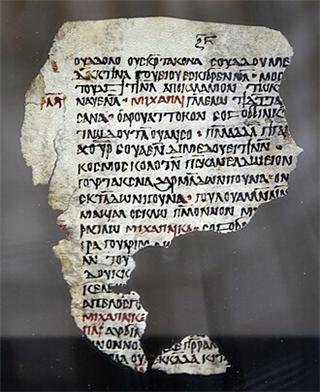
Alodia carried Christianity and Nubian rule to the far south of Nubia. Its conversion in 580 under Longinus brought the Gezira into the world of the Coptic Patriarchate; pagan temples such as the one at Musawwarat es-Sufra were turned into churches, and Abu al-Makarim in the 12th century counted some 400 churches in the kingdom, including the great Church of Manbali at Soba. Only seven have been identified, five of them at Soba. The kingdom's painters developed Soba Ware, pottery decorated with simplified faces with big round eyes and animal-shaped bosses, a style foreign to Makuria and Egypt but resembling Ethiopian painting, and a Nubian dialect written in a Greek-based script with signs drawn from Meroitic hieroglyphs.
Its influence stretched over the Nuba Mountains, the Butana, the Gash Delta, where a vassal king ruled, and, by the accounts of Ibn Hawqal and al-Aswani, the Eastern Desert to the Red Sea, lands once under Aksum. The Funj who succeeded it kept Nubian customs: crowns with horn-like features, the shaving of a king's head at his coronation and, Jay Spaulding argues, the confinement of princes away from their mothers. Nubian was spoken in central Sudan until the 19th century, Sudanese Arabic keeps many Nubian words, and rituals of Christian origin, chiefly the marking of crosses on people and objects, were still common in Omdurman, the Gezira and Kordofan in the 20th century.
Decline & Fall
Soba declined from the 12th century, and by about 1300 the kingdom's decline was well advanced; no pottery or glass later than the 13th century has been found there. The Damadim attack of 1220 and a second invasion from the south late in the century may have brought occupation and destruction. Trade suffered as new East African cities such as Kilwa exported the same goods, severe droughts struck sub-Saharan Africa between 1150 and 1500, and Soba's land shows overgrazing and overcultivation. By 1276 al-Abwab was an independent kingdom, and Alodia may already have been breaking into petty states.
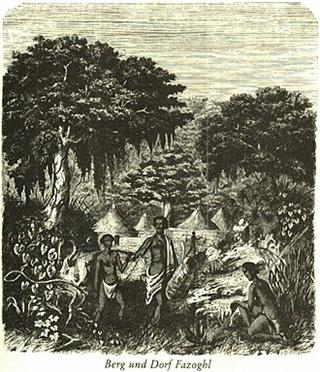
In the 14th and 15th centuries Arab tribes overran much of Sudan, perhaps aided by a plague in the mid-14th century; the collapse of Makuria late in the century, in Adams's phrase, burst the flood gates open. Arabs from the Eastern Desert settled the Butana and the Gezira, and by about 1500 the Nubians had no king but 150 lordships centred on castles. Soba was in ruins. Sudanese tradition tells how Abdallah Jammah, a Rufa'a Arab based at Qerri, gathered the tribes against Christian taxation, killed the king, and with the Funj king Amara Dunqas defeated the patriarch's army, razed Soba, enslaved its people and carried off a bejewelled crown and a necklace of pearls and rubies; traditions date the destruction to 1509 or to 1504–1505. The Funj founded Sennar in 1504. Oral traditions hold that the kingdom lived on in the Fazughli hills until the Funj conquered it in 1685.
Alodia, the Christian Nubian kingdom of Soba, formed after the fall of Kush and was baptized in 580; Arab geographers of the 9th and 10th centuries found it larger and stronger than Makuria, with a rich trading capital. Invasions from the south, drought, the loss of al-Abwab and Arab migration wore it down until Abdallah Jammah and the Funj destroyed Soba around 1504.
Test yourself
5 questions on this page, from its key events and facts.
The questions open here once the page has loaded.
References
- Derek A. Welsby, The Medieval Kingdoms of Nubia: Pagans, Christians and Muslims along the Middle Nile (British Museum Press, 2002)
- Mariusz Drzewiecki and Tomasz Michalik, "The beginnings of the Alwan capital of Soba in light of new archaeological evidence", Polish Archaeology in the Mediterranean 30/2 (2021)
Connections
Open the full connections map →