Islamic Caliphates & Middle East
Mandatory Palestine
At a glance
- The League of Nations charged Britain in 1922 both to put the Balfour Declaration's Jewish national home into effect and to develop self-governing institutions for a population then 78 per cent Muslim Arab.
- The Arab revolt of 1936–1939 cost more than 5,000 Arab, 400 Jewish and 200 British lives; the White Paper of 1939 that followed cut Jewish immigration and land purchase as the Holocaust began.
- The UN General Assembly recommended partition on 29 November 1947; the Jewish Agency accepted it, the Palestinian Arab leadership and the Arab League rejected it, and civil war broke out at once.
Rise & Fall
- 1920A British civilian administration under High Commissioner Sir Herbert Samuel replaces military rule in July; riots in Jerusalem in April have killed five Jews and four Arabs.
- 1922The League of Nations grants Britain the Mandate for Palestine; the Palestine Order in Council plans a Legislative Council whose seats the Arabs reject, boycotting the 1923 elections.
- 1929Riots in August, including the Hebron massacre of Jews, leave 250 people dead.
- 1936The Arab general strike of April to October, led by the Arab Higher Committee under Amin al-Husseini, opens the Arab revolt in Palestine.
- 1939The revolt ends in March with more than 5,000 Arabs, 400 Jews and 200 British dead; the White Paper restricts Jewish immigration and land purchase and promises an independent state within ten years.
- 1946The Irgun blows up the King David Hotel in Jerusalem, headquarters of the British administration, killing 92 people; Britain begins interning illegal Jewish immigrants in Cyprus.
- 1947The UN General Assembly adopts Resolution 181 on 29 November, recommending partition into Arab and Jewish states; civil war between the two communities begins at once.
- 1948The Mandate expires at midnight on 14–15 May; David Ben-Gurion declares the State of Israel, Arab armies cross the borders, and the 1948 war divides the territory.
Foundation

Mandatory Palestine was a British administrative territory in the region of Palestine from 1920 to 1948. During the First World War the Arab Revolt against the Ottoman Empire broke out in 1916, and British forces drove the Ottomans out of the Levant in 1917–1918. Britain had agreed in the McMahon–Hussein Correspondence to honour Arab independence in the event of a revolt, yet with France divided Ottoman Syria under the Sykes–Picot Agreement, which the Arabs saw as a betrayal; in the Balfour Declaration of 1917 it promised support for a Jewish “national home” in Palestine, overriding the emerging principle of self-determination for the existing Palestinian Arab population. At the Mandate's formal start the population was about 11 per cent Jewish, 9 per cent Christian Arab and 78 per cent Muslim Arab.
In July 1920 a civilian administration under a High Commissioner replaced the military one; the first, Sir Herbert Samuel, a Zionist and recent British cabinet minister, took office on 1 July. The League of Nations granted Britain the Mandate for Palestine in 1922, charging it to develop representative institutions and to put the Balfour Declaration into effect without prejudicing the civil and religious rights of non-Jewish communities. Arab inhabitants had held the first Palestine Arab Congress in Jerusalem in 1919 against the Balfour Declaration; the Jewish community elected its Assembly of Representatives on 19 April 1920.
Socioeconomy
Palestine's economy was primarily agricultural and most people lived in the countryside. The 1922 census counted 757,182 people, 78 per cent Muslim, 11 per cent Jewish and 10 per cent Christian; by 1945 the population was 1,764,520, of whom 1,061,270 were Muslims, 553,600 Jews and 135,550 Christians. By official records 367,845 Jews immigrated legally between 1920 and 1945, with another 50,000–60,000 estimated to have come illegally, so that the Yishuv grew from one-sixth to almost one-third of the population; the Arab increase, larger in absolute numbers, was mostly natural, helped by the end of Ottoman conscription and the campaign against malaria. Jews were mainly urban, Arabs mainly rural.
Of 26,625,600 dunams, 33 per cent was arable. Much agricultural land stayed with the landowners of Ottoman times, mostly Arab clans and local sheikhs; Jews owned 5.23 per cent of the territory in 1945 and, by Stein's estimate, 7.51 per cent in May 1948, mostly in Galilee and the coastal plain, while Arab ownership of arable land averaged 68 per cent of a district. The Land Transfer Regulations of 1940 forbade sales to non-Arabs in the hill country to protect Arab cultivators from landlessness. The Jewish sector of the economy grew 13.2 per cent a year between 1922 and 1947, fed by immigration and foreign capital, the Arab sector 6.5 per cent; by 1936 Jews earned 2.6 times as much as Arabs. Literacy in 1932 was 86 per cent among Jews and 22 per cent among Arabs.
Military
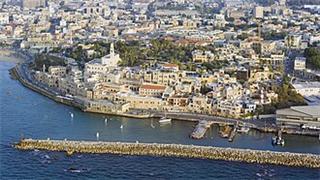
The Mandate was held by force, and violence ran through its whole life. Riots in Jerusalem in April 1920 killed five Jews and four Arabs; in May 1921 almost 100 died in Jaffa after clashes between rival Jewish protesters and then Arab attacks on Jews; in August 1929 riots in which 250 people died included the Hebron massacre of Jews. In 1930 Sheikh Izz ad-Din al-Qassam built the anti-Zionist and anti-British Black Hand, until police killed him near Ya'bad in November 1935. His death fed the Arab general strike of 1936: Jewish farms were destroyed and Jewish civilians killed. After the Arabs rejected the Peel Commission's partition the revolt resumed in 1937; the British lost Nablus and Hebron for a time, then crushed it with overwhelming force, 6,000 armed Jewish auxiliary police and Orde Wingate's Special Night Squads raiding Arab villages, while the Irgun attacked Arab marketplaces and buses as “retaliation”. By March 1939 more than 5,000 Arabs, 400 Jews and 200 British were dead.
From 1944 Lehi and the Irgun turned on the British: Lehi killed Lord Moyne in Cairo on 6 November 1944, the Irgun blew up the King David Hotel in 1946, killing 92, and hanged two British sergeants after the Acre prison break; British soldiers killed five Lehi trainees at Ra'anana in November 1947. Over 100,000 British troops were needed. After the UN vote civil war broke out between the communities, and in May 1948 the armies of five Arab states crossed into Palestine.
Governance & Law
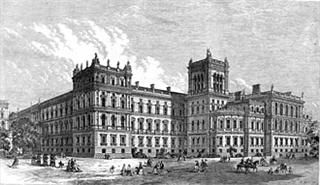
From 1922 Britain governed through a High Commissioner, with the territory divided into districts under the Palestine Order in Council. The Order provided a Legislative Council of 23: twelve elected, eight of them Muslim Arabs, two Christian Arabs and two Jews, ten appointed, and the High Commissioner. Arabs, 88 per cent of the population, protested at 43 per cent of the seats and at the rule that no ordinance could contradict the Mandate; they boycotted the elections of 1923 and an appointed Advisory Council followed. Britain rejected majority rule, and in 1947 Ernest Bevin admitted it had failed to “secure the development of self-governing institutions” the Mandate required.
Britain kept the Ottoman millet system, recognising eleven confessional communities whose courts ruled personal status. Samuel appointed Mohammad Amin al-Husseini Grand Mufti of Jerusalem in 1921, and in 1922 he became president of the Supreme Muslim Council, controlling the Waqf and the Islamic courts; the rivalry of his clan with the Nashashibis dominated Palestinian politics. The Jewish Agency, from 1929, ran schools and hospitals, immigration and land purchase and formed the Haganah; it and the Arab Higher Committee grew into parallel governments, an imperium in imperio the Peel Commission noted. The Colonial Office's statement of 1922 said Palestine as a whole was not to become a Jewish national home, a reading the Zionist Executive then accepted.
Global & Regional Impact

The Mandate's twenty-eight years remade the land and its two peoples. Jewish institutions built under it carried over into a state: the Hebrew school system of 1919, the Histadrut of 1920, the Technion in 1924 and the Hebrew University of Jerusalem in 1925; the Haganah, the Palmach formed with British help in 1942 and veterans of the Jewish Brigade became the core of the Israel Defense Forces. Arab Palestinian attempts to found a higher-education institution failed, which Ilan Pappé attributes to Zionist pressure, British anti-Arab racism and lack of resources. Palestinian Arab society, Rashid Khalidi concludes, was as advanced as any Arab society in the region, though overmatched by the Yishuv.
The Mandate also fixed the terms of a conflict. The British repression of 1936–1939 left the Palestinians without unified leadership, and Ben-Gurion wrote in 1937 that partition would be a first step to “possession of the land as a whole”. The White Paper of 1939 radicalised parts of the Jewish population against Britain, and its quotas, kept after 1945 against American pressure, sent Jews fleeing the Holocaust to camps in Mauritius and Cyprus. Its outcome shaped the region: the State of Israel, the West Bank annexed by Transjordan, Gaza under Egypt, and the 1948 Palestinian expulsion and flight. The International Court of Justice later held that the Palestinian people are entitled to self-determination and a state of their own.
Decline & Fall

Britain's position collapsed after 1945. The Anglo-American Committee of 1946 recommended admitting 100,000 refugees and neither an Arab nor a Jewish state; the British kept the ban on immigration. Jewish bombings, the Acre prison break and the hanging of two sergeants made the Mandate unpopular in Britain, and it referred the question to the United Nations. On 29 November 1947 the General Assembly adopted Resolution 181 by 33 to 13, the United States and the Soviet Union in favour and the Arab League members against. The Jewish Agency accepted it, though Menachem Begin of the Irgun declared partition illegal; the Palestinian Arab leadership and most of the Arab population rejected it, and the Arab League resolved on a military solution. Britain accepted the plan but refused to enforce it.
Civil war followed at once and British authority dissolved. The police left Tel Aviv on 16 December 1947, and Haifa was abandoned in April 1948 but for the port enclave, after which the Haganah took the city. On 14 May the last High Commissioner, General Sir Alan Cunningham, left Jerusalem, and that afternoon David Ben-Gurion declared the State of Israel, effective at midnight, when the Mandate expired. Troops from Lebanon, Syria, Iraq, Egypt and Transjordan crossed into Palestine; the war to 1949 left Israel with about 78 per cent of the former Mandate, Transjordan with the annexed West Bank and Egypt with the Gaza Strip.
Mandatory Palestine was Britain's League of Nations mandate over Palestine from 1920 to 1948, charged with a Jewish national home and self-government for a population then 88 per cent Arab; Jewish immigration, the Arab revolt of 1936–1939 and the Jewish insurgency of 1944–1948 ended in the UN partition vote, civil war and, on 15 May 1948, the State of Israel and the division of the land.
Test yourself
5 questions on this page, from its key events and facts.
The questions open here once the page has loaded.
References
- Tom Segev, One Palestine, Complete: Jews and Arabs under the British Mandate (Metropolitan Books, 2000)
- Rashid Khalidi, The Iron Cage: The Story of the Palestinian Struggle for Statehood (Beacon Press, 2006)
- Benny Morris, Righteous Victims: A History of the Zionist–Arab Conflict, 1881–2001 (Vintage, 2001)
Connections
Open the full connections map →