Europe
Republic of Lithuania
At a glance
- Lithuania declared independence on 16 February 1918 and, having lost Vilnius to Poland, made Kaunas its interwar capital.
- Occupied and annexed by the Soviet Union in 1940, it was the first Soviet republic to declare independence, in 1990.
- Restored Lithuania joined NATO and the European Union in 2004 and the eurozone in 2015.
Rise & Fall
- 1918The Council of Lithuania signs the Act of Independence on 16 February
- 1920Polish forces seize Vilnius; Kaunas becomes the temporary capital
- 1923Lithuania takes over the Klaipėda Region
- 1926A military coup restores Antanas Smetona to power
- 1940The Soviet Union occupies and annexes Lithuania
- 1990The Supreme Council declares the restoration of independence on 11 March
- 1991Soviet troops kill fourteen civilians at the Vilnius television tower
- 2004Lithuania joins NATO and the European Union
Foundation

The modern Republic of Lithuania claims descent from the medieval Grand Duchy of Lithuania, which had shared a Commonwealth with Poland until the partitions of 1772–1795 brought most Lithuanian lands under Russian rule. In the nineteenth century a national revival, sustained despite the tsarist ban on printing Lithuanian in the Latin alphabet between 1864 and 1904, built a sense of Lithuanian identity based on language and peasant culture rather than on the Polonised nobility. During the First World War Germany occupied the country and administered it through the military government of Ober Ost. A conference in Vilnius in September 1917 elected a twenty-member Council of Lithuania, the Taryba, chaired by Antanas Smetona, and on 16 February 1918 its members, among them Jonas Basanavičius, signed the Act of Independence, proclaiming an independent democratic state with Vilnius as its capital. Germany recognised independence only in a form tied to itself, and in July 1918 the Taryba briefly elected the German prince Wilhelm of Urach as King Mindaugas II, a decision revoked in November. After Germany’s defeat, the first government under Augustinas Voldemaras was formed in November 1918, and Smetona became the first president in April 1919. The new state then had to fight for its existence against Soviet Russia, the Bermontians and Poland.
Socioeconomy
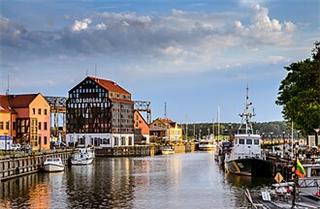
Interwar Lithuania was a small, overwhelmingly agrarian country of between two and two and a half million people, most of them Catholic peasants; Jews, who made up about seven per cent of the population, dominated much urban commerce, and there were Polish, German, Russian and Latvian minorities. The land reform of 1922 broke up large estates, many owned by Polish-speaking nobles, and created tens of thousands of new family farms. The national currency, the litas, was introduced in 1922. Farm cooperatives developed exports of butter, bacon, eggs and flax, especially to Britain and Germany, while Klaipėda gave the country its only seaport. The University of Lithuania, renamed Vytautas Magnus University in 1930, and a modernist building boom made Kaunas the centre of national life. After the Soviet annexation, land and businesses were nationalised and farms collectivised, Russian migrants arrived in the cities and heavy industry, including the Ignalina nuclear power plant, was developed. Since 1990 the economy has been rebuilt on a market basis through privatisation, foreign investment and integration into the European single market, with growth in logistics, manufacturing, information technology, financial services and lasers. Emigration after 1990 and especially after joining the European Union reduced the population from about 3.7 million to under three million, a lasting demographic challenge.
Military

The Lithuanian army was founded on 23 November 1918, largely from volunteers, and the Riflemen’s Union, a paramilitary volunteer force, followed in 1919. In the wars of independence of 1918–1920 Lithuanian forces fought the Red Army, which briefly established a Lithuanian-Byelorussian Soviet republic, defeated the German-backed Bermontian army near Radviliškis in November 1919, and fought Poland over the Vilnius region. The Soviet-Lithuanian Peace Treaty of July 1920 recognised Lithuanian claims to Vilnius, but in October 1920 Polish troops under General Lucjan Żeligowski seized the city in a staged mutiny. Lithuanian forces halted their further advance at Širvintos and Giedraičiai in November 1920, but Vilnius remained Polish and was annexed in 1922. In January 1923 Lithuanian irregulars took over the Klaipėda Region, under French administration since the Treaty of Versailles. Lithuania could not resist the German ultimatum of March 1939, which took Klaipėda, or the Soviet ultimatum of June 1940, when the government chose not to fight. After the Second World War the Forest Brothers waged a guerrilla war against Soviet rule until about 1953, at the cost of tens of thousands of lives. The restored republic rebuilt its armed forces, joined NATO in 2004, reintroduced conscription in 2015 and hosted the NATO summit in Vilnius in 2023.
Governance & Law

The Constituent Assembly elected in 1920 adopted a democratic constitution in 1922 that made the Seimas, the parliament, the dominant institution. Parliamentary politics was unstable, and on 17 December 1926 army officers overthrew the left-leaning government of President Kazys Grinius and restored Antanas Smetona to power. Smetona dissolved the Seimas in 1927, sidelined his more radical prime minister Augustinas Voldemaras in 1929 and ruled until 1940 as an authoritarian president supported by the Lithuanian Nationalist Union, with new constitutions in 1928 and 1938 strengthening his position. The loss of Vilnius dominated foreign policy: Kaunas served as the temporary capital, and Lithuania had no diplomatic relations with Poland until a Polish ultimatum forced them in 1938. Under Soviet rule from 1940, and again from 1944, the Lithuanian Soviet Socialist Republic was governed by the Communist Party, led for decades by Antanas Sniečkus. Many Western states, including the United States, never recognised the annexation, and Lithuanian diplomats in exile kept the republic’s legal continuity alive. The constitution of 1992 created a parliamentary republic with a directly elected president, who directs foreign policy. Presidents have included Algirdas Brazauskas, Valdas Adamkus, Dalia Grybauskaitė and Gitanas Nausėda.
Global & Regional Impact

Lithuania’s influence has been greatest at moments of crisis. Its restoration of independence on 11 March 1990, the first by a Soviet republic, challenged the Soviet Union directly and encouraged independence movements in the other republics; the peaceful resistance of January 1991 and the Baltic Way of 23 August 1989, a human chain of some two million people across Lithuania, Latvia and Estonia, became symbols of non-violent struggle. The country’s insistence on legal continuity with the interwar republic helped establish the principle that Soviet annexation had been illegal. The interwar state left a cultural legacy in the modernist architecture of Kaunas, inscribed as a UNESCO World Heritage Site in 2023, in Lithuanian-language schools and scholarship, and in a national passion for basketball that began with victories in the European championships of 1937 and 1939. The trans-Atlantic flight of Steponas Darius and Stasys Girėnas in 1933, which ended in a fatal crash in Germany, became a national legend. The Holocaust in Lithuania, in which around 90 per cent of Lithuania’s Jews were murdered, often with the participation of local collaborators, destroyed the Jewish community of Vilnius, once known as the Jerusalem of Lithuania, and remains a painful subject in public memory.
Into the Present
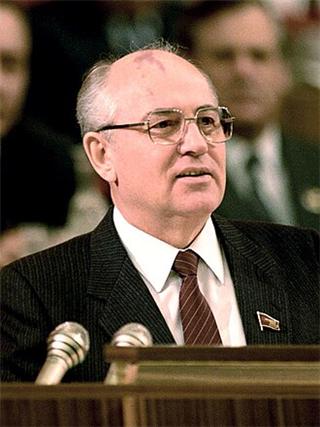
The first republic ended in June 1940, when the Soviet Union, acting under the secret protocols of the Molotov-Ribbentrop Pact, issued an ultimatum and occupied the country. Rigged elections produced a People’s Seimas that proclaimed the Lithuanian Soviet Socialist Republic, admitted to the Soviet Union on 3 August 1940. Mass deportations, German occupation from 1941 to 1944 and the Holocaust, and renewed deportations after 1944 cost Lithuania a large part of its population. Under Mikhail Gorbachev’s reforms the reform movement Sąjūdis was founded in 1988, and in February 1990 it won elections to the Supreme Council, which under Vytautas Landsbergis declared the restoration of independence on 11 March 1990. Moscow answered with an economic blockade, and on 13 January 1991 Soviet troops killed fourteen civilians at the Vilnius television tower. After the failed August coup in Moscow, independence was widely recognised, the Soviet Union accepted it on 6 September 1991 and Lithuania joined the United Nations that month. The last Russian troops left on 31 August 1993. Lithuania joined NATO and the European Union in 2004, the Schengen Area in 2007 and the eurozone in 2015. Today it is a democratic member of both, with a strong focus on defence against Russia.
The Republic of Lithuania re-created a Lithuanian state in 1918 after more than a century of Russian rule; extinguished by Soviet annexation in 1940, it was restored in 1990 as the first Soviet republic to break away, helping to bring down the Soviet Union, and is now a member of the European Union and NATO.
Test yourself
5 questions on this page, from its key events and facts.
The questions open here once the page has loaded.
References
- Kiaupa, Z. (2005) The History of Lithuania. Vilnius: Baltos lankos.
- Lieven, A. (1993) The Baltic Revolution: Estonia, Latvia, Lithuania and the Path to Independence. New Haven: Yale University Press.
- Misiunas, R.J. and Taagepera, R. (1993) The Baltic States: Years of Dependence, 1940–1990. Expanded edn. Berkeley: University of California Press.
- Senn, A.E. (1959) The Emergence of Modern Lithuania. New York: Columbia University Press.
- Snyder, T. (2003) The Reconstruction of Nations: Poland, Ukraine, Lithuania, Belarus, 1569–1999. New Haven: Yale University Press.
Connections
Open the full connections map →