Islamic Caliphates & Middle East
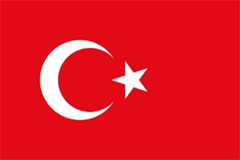
Republic of Turkey
At a glance
- The Treaty of Lausanne of 24 July 1923 won international recognition for the Turkish state as the Ottoman Empire's successor, and the Republic was proclaimed on 29 October 1923 in Ankara, the new capital.
- Mustafa Kemal's reforms turned a religion-based, multi-communal monarchy into a secular nation state: a civil code based on the Swiss code in 1926, the alphabet reform, and the vote for women in 1934.
- Turkey joined NATO in 1952 after fighting in the Korean War and keeps the alliance's second-largest military; coups or memorandums in 1960, 1971, 1980 and 1997 broke its multiparty politics, and a 2017 referendum made it a presidential republic.
Rise & Fall
- 1923The Republic is proclaimed in Ankara after the Treaty of Lausanne and the withdrawal of the last Allied troops from Istanbul on 4 October; Mustafa Kemal becomes its first president.
- 1934Women gain the right to vote nationally; the Surname Law gives Mustafa Kemal the name Atatürk.
- 1938Atatürk dies and İsmet İnönü becomes the second president; Turkey stays neutral in almost all of the Second World War.
- 1952After fighting with the UN forces in the Korean War, Turkey joins NATO as a bulwark against Soviet expansion into the Mediterranean.
- 1980The third military coup, after those of 1960 and 1971; the constitution still in force is approved by referendum in 1982.
- 2002Recep Tayyip Erdoğan's Justice and Development Party (AKP) wins power, beginning more than two decades of AKP government.
- 2016On 15 July an attempted coup fails; by 2024 the government counts 13,251 people jailed in connection with it.
- 2017A referendum replaces the parliamentary republic with an executive presidency and abolishes the office of prime minister.
Foundation

The Republic rose from the defeat of the Ottoman Empire, which had entered the First World War under the Three Pashas and during it committed genocides against its Armenian, Greek and Assyrian subjects. The Armistice of Mudros in 1918 and the Treaty of Sèvres of 1920 proposed the empire's partition, and the Allied occupation of Istanbul in 1918 and İzmir in 1919 set off the Turkish National Movement under Mustafa Kemal Pasha. On 23 April 1920 a government in Ankara declared itself the legitimate authority of the country, and in the Turkish War of Independence of 1919–1923 it drove out the Armenian, Greek, French and British armies. On 1 November 1922 the Ankara parliament abolished the Sultanate after 623 years of Ottoman monarchy.
The Treaty of Lausanne of 24 July 1923 superseded Sèvres and recognised the Turkish state as the empire's successor; the last Allied troops left Istanbul on 4 October, and on 29 October 1923 the Republic was proclaimed in Ankara, the new capital. Its people were the product of a century of flight: five to nine million Muslim refugees had come into Anatolia from the Balkans, the Caucasus, Crimea and the Mediterranean islands as the empire contracted, and the Lausanne Convention added a population exchange with Greece. The new state covered Anatolia and East Thrace, with the Kurds as its largest minority, and emerged as a far more homogeneous nation state than the empire it replaced.
Socioeconomy
Turkey grew from a largely rural country into an upper-middle-income emerging market: its population more than quadrupled from 20.9 million in 1950 to 83.6 million in 2020, and 94% now live in province and district centres. The economy is the world's 16th largest by nominal GDP and 11th by purchasing power, with services at 61%, industry 32% and agriculture about 7%. It is diversified across automobiles, electronics, textiles, construction, steel, mining and food processing; Turkey ranks eighth in crude steel and 13th in motor vehicles and shipbuilding, and in 2022 the country was second in the world for international contractors. The European Union Customs Union, joined in 1995, reshaped its manufacturing.
Tourism provides about 8% of GDP: 60.6 million foreign visitors in 2024 made Turkey the fourth most visited country, with Istanbul and Antalya among the ten most visited cities. Poverty at the $6.85 line fell from 20% to 7.6% between 2007 and 2021, but the top fifth took 47% of disposable income in 2021 and inflation and slow productivity growth weigh on the economy. Turkey is the 15th largest electricity producer, about half of it renewable, and the fourth in geothermal power; its first nuclear station is Akkuyu and the Sakarya gas field began production in 2023. Fertility has fallen to 1.51, and since 2011 the country has taken in the largest refugee population in the world, 3.3 million Syrians in 2023.
Military

The Republic was forged in war and has kept the second-largest armed forces in NATO, an estimated 890,700 personnel in 2022. The president is commander-in-chief, the General Staff and the land, naval and air forces report to the Minister of National Defence, and the Gendarmerie and Coast Guard to the Interior. Men serve six to twelve months, reduced to one month for a fee; conscientious objection is not recognised. Turkey hosts about twenty American B61 nuclear bombs at Incirlik under NATO's nuclear sharing, and has become a significant power in unmanned aerial vehicles.
Atatürk's reforms met the Sheikh Said rebellion of 1925 and the Dersim rebellion of 1937 among Kurdish and Zaza tribes. Turkey stayed neutral in almost all of the Second World War, declaring war on 23 February 1945, fought with the UN forces in the Korean War and joined NATO in 1952. Its army intervened in politics with coups or memorandums in 1960, 1971, 1980 and 1997 and crushed an attempted coup on 15 July 2016. Abroad it has kept 36,000 troops in Northern Cyprus since 1974, supported the coalition in the First Gulf War, served in ISAF, KFOR and Somalia, and holds bases in Albania, Iraq, Qatar and Somalia. From the 1980s the PKK waged a campaign of attacks on civilian and military targets, declaring a ceasefire in 2025; in 2018 Turkish forces drove the YPG from Afrin in Syria, and airstrikes in Iraqi Kurdistan drew Iraqi protests.
Governance & Law
The Republic was built as a parliamentary state under a secular constitution. Sharia-derived Ottoman law gave way to a civil code of 1926 modelled on the Swiss codes, a criminal code first Italian and since 2005 German in inspiration, and French-style administrative law; Islamic principles play no part in the legal system. The constitution in force was approved by referendum in 1982 after the 1980 coup. Since the 2017 referendum Turkey has been a unitary presidential republic: the president, directly elected for five years and limited to two terms, commands the armed forces, appoints the cabinet and issues decrees, while the 600-member Parliament, elected the same day, makes laws, declares war and may impeach.
The Constitutional Court of fifteen judges, appointed by the president and parliament for twelve years, heads a judiciary with the Court of Cassation and Council of State; it may strip parties of funding or ban them. Since 2002 the AKP has governed; Erdoğan won the first direct presidential election in 2014, and in May 2016 parliament stripped nearly a quarter of its members, including 101 HDP and CHP deputies, of immunity. Because of judicial capture, the imprisonment of opposition politicians and the repression of protest, Turkey is now classed as a competitive or fully authoritarian system rather than a democracy. In March 2025 the arrest of Istanbul mayor Ekrem İmamoğlu set off the largest protests since 2013.
Global & Regional Impact
Lausanne recognised Turkey as the Ottoman Empire's successor; the republic replaced a religion-based, multi-communal monarchy with a secular state, and Kemalism sought to make Islam a matter of personal conviction. Under Atatürk and İnönü the republic followed the principle of peace at home, peace in the world, then anchored itself in the West against Soviet threats: the Council of Europe in 1950, NATO in 1952, an application to the EEC in 1987, the Customs Union in 1995 and accession talks with the European Union from 2005, now frozen. It is a founding member of the OECD, the G20 and the Organization of Turkic States, and after the Soviet collapse built close ties with Azerbaijan and the Central Asian Turkic states. Turkey is described as an emerging, middle and regional power.
Its position between Europe and Asia makes it a corridor: the Blue Stream, TurkStream and Baku-Tbilisi-Ceyhan pipelines cross it, it aims to become a regional energy and transport hub on the Middle Corridor, and in 2024 it agreed with Iraq, the UAE and Qatar to link Iraqi ports by road and rail. Relations with Israel broke after the 2010 Gaza flotilla raid, were restored in 2016 and cut again over Gaza, with trade halted in 2024. In 2003 Istanbul held the first Pride march in a Muslim-majority country, Orhan Pamuk won the 2006 Nobel Prize in Literature, and the country counts 22 UNESCO World Heritage Sites.
Into the Present
Turkey's recent decades belong to Erdoğan. His AKP has governed since 2002 amid criticism of centralised authority; the Gezi Park protests of 2013 grew into protests at democratic backsliding and more than a dozen people died, many through police brutality. The failed coup of 15 July 2016 was followed by mass arrests, and the 2017 referendum that created the executive presidency was marred when the Supreme Electoral Council lifted the rule requiring stamped ballots while voting was under way; the opposition said 2.5 million unstamped ballots were counted. Since 2013 the independence of judges and prosecutors has been doubted at home and abroad, Turkey has more cases pending at the European Court of Human Rights than any other country, and the European Commission's 2023 report criticised its institutions.
In March 2025 the detention of İmamoğlu and some 100 others led to protests in which 1,879 people were detained; in May 2026 an Ankara appeals court voided the CHP primaries and reinstated Kemal Kılıçdaroğlu as interim leader, and on 12 September 2026 police raided LGBTQ+ clubs and courts blocked the accounts of rights groups and journalists. The country also faces the earthquakes of 2023, the deadliest in its history, high vulnerability to climate change, a fertility rate below replacement and the strains of hosting millions of refugees. A PKK ceasefire in 2025 and a growing defence and energy sector stand on the other side of the ledger.
The Republic of Turkey was proclaimed on 29 October 1923 after the War of Independence and the Treaty of Lausanne, and Atatürk remade the Ottoman heartland as a secular nation state. A NATO member since 1952 with the alliance's second-largest army, it became the world's 16th largest economy; since 2002 Erdoğan's AKP has governed it, and a 2017 referendum turned it into a presidential republic.
Test yourself
5 questions on this page, from its key events and facts.
The questions open here once the page has loaded.
References
- Erik J. Zürcher, Turkey: A Modern History (I.B. Tauris, 2004)
- Bernard Lewis, The Emergence of Modern Turkey (Oxford University Press, 1961)
Connections
Open the full connections map →