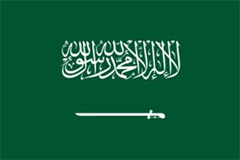
At a glance
- Abdulaziz recaptured Riyadh in 1902, took Al-Ahsa from the Ottomans in 1913 with the Ikhwan, conquered the Kingdom of Hejaz in 1924–25 and, after crushing the Ikhwan at the Battle of Sabilla in 1929, united Hejaz and Nejd as Saudi Arabia on 23 September 1932.
- Oil found in Al-Ahsa in 1938 and developed by Aramco from 1941 made the kingdom the world's largest oil producer by 1976; the 1973 embargo quadrupled oil prices, and the state bought out Aramco's American owners in 1980.
- The Al Saud rule as absolute monarchs under the Basic Law of 1992, with uncodified Sharia and the ulema, led by the Al ash-Sheikh, sharing power in a pact dating from 1744; no political parties or national elections are permitted.
Rise & Fall
- 1932On 23 September Prince Faisal declares on Ibn Saud's behalf the unification of the kingdoms of Hejaz and Nejd as the Kingdom of Saudi Arabia, now the Saudi National Day.
- 1938Vast oil reserves are discovered in Al-Ahsa on the Persian Gulf; full-scale development begins in 1941 under the American-controlled Aramco.
- 1973Saudi Arabia leads an oil embargo against the Western countries that supported Israel in the Yom Kippur War, and oil prices quadruple.
- 1979The Iranian Revolution and the seizure of the Grand Mosque in Mecca by Islamist militants, retaken after ten days, push the royal family towards stricter religious observance and a greater role for the ulema.
- 1990After Iraq invades Kuwait, King Fahd asks the United States to intervene and allows American and coalition troops to be stationed in the kingdom; Saudi forces join the Gulf War of 1991.
- 1992King Fahd introduces the Basic Law in March; the Consultative Council of sixty appointed members is inaugurated in December 1993.
- 2015Saudi Arabia mobilises 150,000 troops and 100 fighter jets to intervene in the civil war in Yemen; women vote and stand in municipal elections for the first time.
- 2017Crown Prince Mohammed bin Salman takes power; as many as 500 princes, ministers and businessmen are arrested in an anti-corruption campaign in November.
Foundation

The Al Saud emerged at Diriyah in central Arabia, where Muhammad bin Saud became emir on 22 February 1727. In 1744 he joined forces with the religious leader Muhammad ibn Abd al-Wahhab, founder of the strict Wahhabi movement within Sunni Islam, an alliance that drove Saudi expansion and still underpins the dynasty's rule. The Emirate of Diriyah sacked Karbala in 1802 and took Mecca in 1803 before the Ottoman viceroy of Egypt, Mohammed Ali Pasha, destroyed it in 1818; the smaller Emirate of Nejd of 1824 lost the interior to the Al Rashid of Jabal Shammar, and by 1891 the Al Saud were exiles in Kuwait.
In 1902 Abdul Rahman's son Abdulaziz, later Ibn Saud, recaptured Riyadh and founded the third Saudi state. With the Ikhwan, a tribal army inspired by Wahhabism and led by Faisal Al-Dawish, he took Al-Ahsa from the Ottomans in 1913, stayed out of the Arab Revolt of 1916 that made Hussein bin Ali King of Hejaz, defeated the Al Rashid and took the title Sultan of Nejd in 1921. The Kingdom of Hejaz fell in 1924–25 and on 10 January 1926 he declared himself its king, ruling the two realms separately. When the Ikhwan raided British Transjordan, Iraq and Kuwait and turned against his modernising policies, he crushed them at the Battle of Sabilla in 1929, where their leaders were massacred. On 23 September 1932 Prince Faisal declared the unification of Hejaz and Nejd as the Kingdom of Saudi Arabia.
Socioeconomy

The new kingdom lived on limited agriculture and pilgrimage revenues until vast oil reserves were found in Al-Ahsa in 1938. Full-scale development began in 1941 under the American-controlled Aramco, and oil brought prosperity and political leverage, though wasteful spending left large deficits and foreign borrowing by the 1950s. The state took 20% of Aramco in 1972 and bought out the American interests in 1980; by 1976 it was the world's largest oil producer. Oil still supplies about 63% of budget revenue, 67% of export earnings and 45% of GDP, and the kingdom holds the second-largest proven reserves of petroleum. Its economy, the largest in the Arab world and 18th in the world, exceeds $1.1 trillion nominally.
Oil wealth transformed a society that in 1950 numbered some 3 million, mostly nomadic pastoralists and farmers. The population reached 32 million in 2022, about 85% of them urban in Riyadh, Jeddah and Dammam, half under 25 and close to 42% immigrants; about 80% of private-sector employees are foreign, many under the kafala system that rights groups link to slavery. Slavery itself, with an estimated 300,000 enslaved people in the early 1960s, was abolished in 1962. The 1970s brought large-scale wheat farming on non-renewable groundwater, four-fifths of which was gone by 2012; desalination now gives half the drinking water. The kingdom is the world's second producer of dates and hosts some two million hajj pilgrims a year.
Military
Saudi Arabia was made by conquest and has spent heavily on arms ever since. Its Armed Forces under the Ministry of Defence comprise the Royal Saudi Land Forces with the Royal Guard, the Air Force, the Navy, the Air Defence and the Strategic Missile Force; the Saudi Arabian National Guard, under its own ministry, is drawn from tribal forces loyal to the royal family. In 2023 there were 127,000 active personnel in the Armed Forces, 130,000 in the National Guard and 24,500 in the paramilitary forces. Spending of about $80.3 billion in 2024, roughly 7% of GDP, ranked seventh in the world; the kingdom was the second-largest arms importer of 2019–2023 and the largest recipient of American arms.
The Ikhwan wars of the 1920s ended at Sabilla in 1929. Saudi Arabia and Kuwait spent $25 billion backing Saddam Hussein in the Iran–Iraq War of 1980–1988, yet after Iraq's invasion of Kuwait in 1990 King Fahd invited American and coalition troops onto Saudi soil, and in 1991 Saudi forces flew bombing raids and joined the land invasion that liberated Kuwait. In March 2015 the kingdom mobilised 150,000 troops and 100 fighter jets against the Houthis in Yemen, taking Aden by early 2016 while Houthi attacks crossed the border; 2,500 Saudi troops were still engaged in 2024. A mutual defence pact with Pakistan followed in September 2025, and the kingdom has said it would seek nuclear weapons if Iran acquires them.
Governance & Law
Saudi Arabia is an absolute monarchy. The Basic Law adopted by royal decree in 1992 binds the king to Sharia and declares the Quran and the Sunnah the constitution; the king combines legislative, executive and judicial power, royal decrees form the legislation, and no political parties or national elections exist. The Al Saud, at least 7,000 princes with power concentrated in some 200 male descendants of Ibn Saud, hold the key ministries and the thirteen regional governorships. Succession passed from Ibn Saud to Saud (1953), Faisal (1964), Khalid (1975), Fahd (1982) and Abdullah (2005), and the Allegiance Council of 2007 regulates it.
The ulema have a direct role in government unique among modern states, led by the Al ash-Sheikh, descendants of Ibn Abd al-Wahhab, in a mutual support pact with the Al Saud nearly 300 years old; after the Grand Mosque seizure of 1979 their control of education and social behaviour grew, and King Abdullah later trimmed it. Sharia is uncodified, judges follow the Hanbali school, final appeal lies with the king, and retaliatory punishments and diyya remain, though flogging was abolished in 2020 and codification was announced in 2021. Participation is limited to the majlis, where men may petition the king, the Consultative Council of 1993 whose sixty members the king chooses, and municipal elections since 2005. Freedom House rates the kingdom Not Free, 8 of 100 in 2023, and open protest is not tolerated.
Global & Regional Impact

As custodian of Mecca and Medina the kingdom stands at the centre of Islam, and its oil at the centre of the world economy. It co-founded OPEC in 1960 and has officially sought to stabilise the oil market, yet the 1973 embargo on the United States, Britain, Japan and other supporters of Israel caused an oil crisis with lasting effects on global politics. Saudi Arabia has been a strategic ally of the United States since the Second World War and its leading arms customer, signing letters of intent for $350 billion of purchases in 2017. It is a founding member of the Arab League, the Gulf Cooperation Council, the Muslim World League and the Organisation of Islamic Cooperation and the only Arab state in the G20.
Since 1979 the kingdom has fought a proxy rivalry with Iran and used its wealth to contain revolutionary change in its neighbours, from the Arab Spring to Yemen. The export of Wahhabi doctrine and private Saudi funding of Sunni militant groups drew accusations of sponsoring terrorism, sharpened when fifteen of the September 11 hijackers proved to be Saudi nationals and answered by the Grand Mufti's 2014 fatwa against ISIS and al-Qaeda and the Islamic Military Counter Terrorism Coalition of 2015; since 2016 the state has stopped funding mosques abroad. Under Mohammed bin Salman it has leaned towards China and Russia, coordinated oil cuts with Moscow, and sought defence ties with Pakistan, India and South Korea.
Into the Present
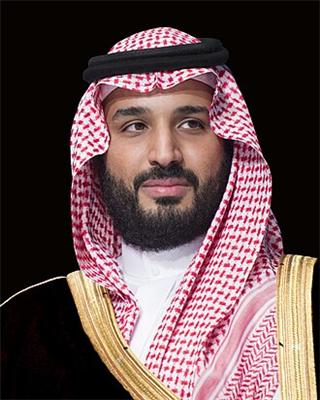
By the twenty-first century the kingdom was extremely wealthy yet near stagnant, with unemployment and discontent at the royal family's monopoly of power. The Arab Spring reached Saudi Arabia in 2011; King Abdullah answered with $36 billion and then $93 billion of benefits and housing, and no political reform, though women voted in the municipal elections of 2015. Since 2017 Crown Prince Mohammed bin Salman has ruled in practice: as many as 500 princes, ministers and businessmen were arrested in his anti-corruption campaign of November 2017, women were allowed to drive in June 2018, and the religious police were curbed, while mass executions in 2016, 2019, 2022 and 2025 and the detention of women in the Dar al-Reaya care homes drew condemnation.
The economy is being remade under Vision 2030: services were privatised from 2003, economic cities planned, a tourist visa for non-Muslims opened in 2019 and, in 2024, joint ventures formed with Chinese firms to localise 75% of renewable components by 2030. The pandemic and falling oil prices brought what the finance minister in May 2020 called the first severe crisis in decades. Water scarcity has broken much of the kingdom's agriculture and sent it to buy farmland abroad. With 2,500 troops still in Yemen in 2024, a defence pact with Pakistan in 2025 and relations with Iran cooling through dialogue, the House of Saud governs a young, urban population of 32 million as it has since 1932.
Saudi Arabia was unified on 23 September 1932 by Abdulaziz Ibn Saud, heir to the Wahhabi alliance of 1744, from Nejd, the Hejaz and eastern Arabia. Oil found in 1938 made it the world's leading exporter and a strategic ally of the United States; the Al Saud still rule as absolute monarchs under the Basic Law of 1992, guardians of Mecca and Medina and the largest economy of the Arab world.
Test yourself
5 questions on this page, from its key events and facts.
The questions open here once the page has loaded.
References
- Madawi Al-Rasheed, A History of Saudi Arabia (Cambridge University Press, 2002)
- Alexei Vassiliev, The History of Saudi Arabia (Saqi Books, 1998)
Connections
Open the full connections map →