Central & East Asia
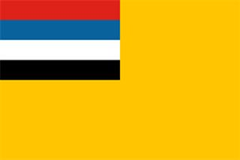
Manchukuo
At a glance
- Historians consider Manchukuo a puppet state: Japanese vice-ministers made every decision, the Kwantung Army commander was also ambassador with a veto over the emperor, and Puyi was a figurehead.
- The Kwantung Army used more than ten million Chinese civilians as slave labour, Unit 731 vivisected prisoners near Harbin, and Special Security Courts sentenced thousands to death for 'thought crimes'.
- Only Japan's allies and dependents recognised the state; the League of Nations endorsed the Lytton Report against it in February 1933 and Japan left the League.
Rise & Fall
- 1932After the Mukden incident and the Japanese invasion of Manchuria in 1931, Manchukuo is proclaimed on 18 February and formally established at Xinjing on 1 March, with Puyi as nominal head of state.
- 1932On 15 September Japan recognises the state through the Japan–Manchukuo Protocol; the Manchukuo Imperial Army is founded by the Army and Navy Act of 15 April.
- 1933The League of Nations endorses the Lytton Report in February, finding Japan had broken international law; Japan withdraws from the League.
- 1934On 1 March Manchukuo is proclaimed a monarchy and Puyi takes the throne with the era name Kangde; El Salvador, the Dominican Republic and Costa Rica recognise the state.
- 1936Five Year Plans modelled on the Soviet Union's begin; Nobusuke Kishi, deputy minister since 1935, brings the zaibatsu into a state-directed heavy industry.
- 1937Manchukuo serves as the base for Japan's invasion of the rest of China after the Marco Polo Bridge incident; 'thought crime' is introduced and an emergency law mobilises society for total war.
- 1939A border skirmish between Manchukuoan and Mongolian cavalry in May escalates into the Battles of Khalkhin Gol, where a Soviet–Mongolian force defeats the Kwantung Army.
- 1945The Soviet Union declares war on 8 August and invades; Manchukuo units surrender or mutiny, Puyi abdicates on 17 August and is captured by the Soviets.
Foundation

Manchuria, the homeland of the Manchu people and by the 20th century overwhelmingly Han Chinese, had been contested since Russia annexed Outer Manchuria by the unequal treaties of 1858 and 1860. After the Russo-Japanese War Japan took Russia's place: the Treaty of Portsmouth gave the Kwantung Army the right to occupy southern Manchuria, and the South Manchurian Railway, founded in 1906, dominated the economy. In 1928 the Kwantung Army assassinated the warlord Zhang Zuolin, hoping for anarchy as a pretext to seize the region; his son Zhang Xueliang, a Chinese nationalist, succeeded him instead.
After the Mukden incident, a bombing of a Japanese-controlled railway at Liutiaogou that Japanese officers had staged, Japan invaded and occupied Manchuria in 1931. To create an air of legitimacy the last emperor of China, Puyi, was brought in with his followers, among them the Qing loyalist Zheng Xiaoxu. On 16 February 1932 the Imperial Army convened Chinese governors and generals, among them Zhang Jinghui and Ma Zhanshan, as the Northeast Administrative Committee, which declared the Northeast provinces independent on 18 February and proclaimed Manchukuo. The state was formally established on 1 March 1932 at Changchun, renamed Xinjing, and recognised by Japan in the Japan–Manchukuo Protocol of 15 September. Local Chinese organised volunteer armies, and it took the new state several years of war to subdue the country.
Socioeconomy
Manchukuo was built as the industrial heartland of the Japanese empire and a laboratory for the army's 'national defense state'. Planning aimed at heavy industry without regard to profit; Five Year Plans modelled on the Soviet Union's began in 1936. At first the zaibatsu were excluded and factories belonged to army-owned corporations, until the 'reform bureaucrat' Nobusuke Kishi, deputy minister of industrial development from 1935, brought private capital under bureaucratic direction. Steel production exceeded Japan's in the late 1930s, and the South Manchurian Railway by 1945 owned 70 companies and employed about 340,000 people. Kishi's system of state-guided investment became the model for Japan's post-war development.
The cost fell on the Chinese population. More than ten million Chinese civilians were used as slave labour under the Kōa-in, badly ill workers were pushed into mass graves to save medical costs, prisoners of war were worked, and the world's worst mine disaster occurred at Benxihu Colliery. Traditional lands were seized by 'price manipulation, coerced sales and forced evictions' and given to Japanese settlers, while Chinese farmers were pushed into collective units on smaller plots; more than a million Japanese lived in Manchukuo by 1945, with Koreans also resettled. The population, 30.9 million in 1934 and some 43 million by 1940, was 96 per cent Chinese and about 80 per cent rural.
Military
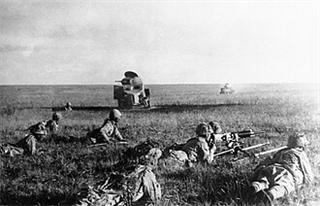
The Manchukuo Imperial Army, founded by the Army and Navy Act of 15 April 1932, grew to perhaps 170,000–220,000 men by 1945. Its soldiers were mostly Manchurian-born Han Chinese with Koreans, Mongols and White Russians, trained and led by Japanese instructors, and conscripted from 1940. Its main task was fighting Nationalist and Communist insurgents who resisted the occupation, and Japanese officers regarded most units as unreliable. The cavalry was its most effective branch; the air force and the river navy were small token forces.
Manchukuo was above all the Kwantung Army's base. From it Japan launched the invasion of the rest of China after the Marco Polo Bridge incident of 1937, and in May 1939 a clash between Manchukuoan and Mongolian cavalry grew into the Battles of Khalkhin Gol, in which a combined Soviet–Mongolian force defeated the Kwantung Army with limited Manchukuoan support. The Kwantung Army also ran Unit 731, the biological and chemical warfare unit near Harbin, at Beiyinhe from 1932 to 1936 and then at Pingfan, whose doctors vivisected Chinese, Russian and Korean victims, sometimes without anaesthesia, and used the Russian Fascist Party to kidnap 'unreliable' Russians as subjects. When 76 battle-hardened Red Army divisions invaded in August 1945, the Manchukuo forces and their depleted Japanese allies were swept aside; whole units surrendered without a shot, and many mutinied against their Japanese advisers.
Governance & Law
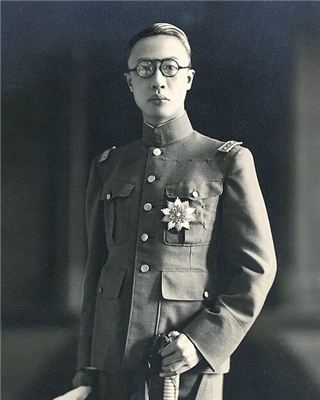
Historians consider Manchukuo a puppet state because the Japanese military occupied it and directly controlled its government. Puyi served first as chief executive and, from 1 March 1934, as emperor, but he had no political power: Japanese officials made all pertinent decisions and controlled his court and personal safety. The General Affairs State Council held power, each minister shadowed by a Japanese vice-minister who decided; the Kwantung Army's commander doubled as ambassador with a veto over the emperor. The only party was the Concordia Association, and the official ideology was Zheng's wangdao, the 'Kingly Way', a Confucian order hostile to individualism in which law served the state and the emperor could change it at will.
The legal system showed the regime's two faces. The Organic Law of 1932 carried a Human Rights Protection Law and a nominally independent judiciary, but courts had two Chinese judges as nominal superiors and two Japanese who were the masters, and police could arrest anyone for 'undermining the state'. From 1937 'thought crime' made certain thoughts illegal, Special Security Courts from April 1938 tried five kinds of thought crime, and a law of 26 August 1941 denied their defendants appeal or counsel; one such court at Jinzhou sentenced about 1,700 people to death and 2,600 to life between 1942 and 1945. A Religions Law of May 1938 began a cult of emperor-worship.
Global & Regional Impact
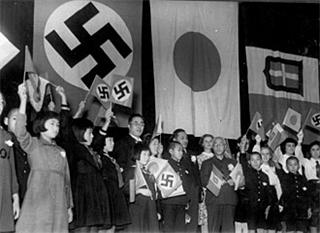
Manchukuo was the launching ground for Japan's war in China from 1937 and a model for Japanese economic mobilisation; the state-guided economy Kishi pioneered there later shaped Japan's post-1945 development. Its creation also reshaped international politics: the League of Nations' Lytton Commission found Japan had broken international law, the League endorsed the report in February 1933 and Japan walked out, and the United States articulated the Stimson Doctrine, refusing to recognise changes made by force of arms. Recognition came only from Japan's allies and dependents, El Salvador, the Dominican Republic and Costa Rica in 1934, Italy, Spain, Germany and Hungary in 1937–1939, and from 1940 Axis satellites and Japanese dependents; the Soviet Union granted de jure recognition in the Neutrality Pact of 13 April 1941.
At home the state remade the region's peoples. The Japanese population passed a million and the Korean population grew; 850,000 Japanese settlers were captured by the Red Army in 1945 and most repatriated in 1946–1948, leaving behind orphans adopted by Chinese families and 'stranded war wives'. The Oroqen were given opium, used in human experiments, forbidden contact with other peoples and forced to hunt for the Japanese until only 1,000 remained; after an Oroqen hunter killed two soldiers, forty were poisoned. The Hezhen population fell by 80 or 90 per cent. Schools segregated Chinese from Japanese children and banned the words Zhongguo and Zhonghua.
Decline & Fall
From 1937 the state tightened into an instrument of total war. The war with China enlarged the bureaucracy and the demand for university graduates; the Kwantung Army vetoed the civil servants' land reform, and in November 1941 the Kenpeitai raided the South Manchurian Railway's Social Research Unit, convicting at least 44 of its staff. When Japan lost control of the Yellow Sea in 1943–1944 the flow of settlers stopped. The Han majority never accepted that Manchuria was anything but part of China and resisted, passively and violently, throughout.
On 8 August 1945 the Soviet Union declared war on Japan under the Yalta agreement and invaded from Outer Manchuria and Outer Mongolia. The Manchukuo Imperial Army, 200,000 strong on paper, performed poorly; whole units surrendered without firing a shot and some rioted and mutinied against the Japanese. Puyi abdicated on 17 August, but the Soviets captured him and in 1949 handed him to the new Communist government of China, which imprisoned him for war crimes with the other captured officials. The government was formally dissolved after Japan's surrender in September, and the territory passed to Chinese administration in 1946. From 1945 to 1948 Manchuria was a base of the People's Liberation Army against the Nationalists, many former Manchukuo soldiers joining the Communists because the Nationalists executed collaborators.
Manchukuo (1932–1945) was the state Japan's Kwantung Army created in occupied Manchuria with the deposed emperor Puyi as its powerless head. Run by Japanese vice-ministers, it became an industrial powerhouse through slave labour, land seizures, thought-crime courts and Unit 731's experiments, served as the base for the invasion of China, and was swept away by the Soviet invasion of August 1945.
Test yourself
4 questions on this page, from its key events and facts.
The questions open here once the page has loaded.
References
- Louise Young, Japan's Total Empire: Manchuria and the Culture of Wartime Imperialism (University of California Press, 1998)
- Prasenjit Duara, Sovereignty and Authenticity: Manchukuo and the East Asian Modern (Rowman & Littlefield, 2003)
- Edwin G. Beal, "The 1940 Census of Manchuria", The Far Eastern Quarterly 4 (1945)
Connections
Open the full connections map →