Islamic Caliphates & Middle East
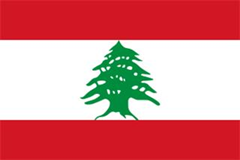
Lebanese Republic
At a glance
- Greater Lebanon was created under French Mandate on 1 September 1920, joining Mount Lebanon with the north, the south and the Beqaa; the republic was proclaimed on 1 September 1926 and won its independence in November 1943.
- The unwritten National Pact of 1943 reserves the presidency for a Maronite Christian, the premiership for a Sunni and the speakership for a Shia; the Taif Agreement of 1989 made parliament's 128 seats equal between Christians and Muslims.
- The civil war of 1975–1990 killed an estimated 150,000 people and displaced nearly a million; Syrian forces stayed until 2005 and Israel held the south until 2000, and Hezbollah has since outgunned the national army.
Rise & Fall
- 1926On 1 September the Lebanese Republic is proclaimed under the French Mandate, with a constitution inspired by France's adopted on 23 May; the country stays under French control.
- 1943The new government abolishes the mandate on 8 November and is imprisoned by the French; under British pressure the officials are released on 22 November and France accepts Lebanon's independence.
- 1975Full-scale civil war breaks out between Christian groups and the forces of the PLO and left-wing Druze and Muslim militias.
- 1989Parliament agrees the Taif Agreement, with a timetable for Syrian withdrawal and equal Christian and Muslim representation; the war ends at the end of 1990.
- 2000Israeli forces withdraw fully from southern Lebanon in May; 25 May becomes Liberation Day.
- 2005Former Prime Minister Rafic Hariri is assassinated on 14 February; mass demonstrations force Syria to withdraw its troops by 26 April.
- 2019Mass protests from 17 October against sectarian rule, corruption and the liquidity crisis; the currency collapses and the state defaults in 2020.
- 2024Israel invades on 1 October after killing Hezbollah's leader Hassan Nasrallah on 27 September; a ceasefire follows in November.
Foundation
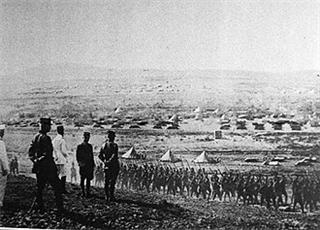
Lebanon's mountains had long been a refuge for religious communities: Maronite Christians in the north, Druze in the south, Shia in the Beqaa and Jabal Amel. Under Ottoman rule from 1516 the Druze emir Fakhr al-Din II rose to paramount power until his execution in 1635, and the Shihab clan governed Mount Lebanon until 1830. After the civil war of 1860, in which around 10,000 Christians were killed by the Druze, European pressure created the Mount Lebanon Mutasarrifate of 1861, an autonomous district with a Christian governor and a homeland for the Maronites. The First World War brought direct Ottoman control, requisitions and a famine in which some 100,000 people died in Beirut and Mount Lebanon.
The Sykes–Picot Agreement of 1916 marked the country for French influence. At the Paris Peace Conference of 1919 Patriarch Elias Peter Hoayek won an enlarged territory for the Maronites, including Muslim and Druze districts, and after Faisal's Arab Kingdom of Syria fell at the Battle of Maysalun in 1920 the San Remo Conference placed Syria and Lebanon under French rule. On 1 September 1920 Greater Lebanon was established as a League of Nations Mandate, uniting Mount Lebanon, the north, the south and the Beqaa with Beirut as capital; its boundaries became today's. The Lebanese Republic was proclaimed on 1 September 1926 with a constitution adopted on 23 May, a state of 10,452 square kilometres with a government of its own but still under French control.
Socioeconomy

Lebanon's constitution declares the economy free and private property secure, and it has followed a laissez-faire model, largely dollarised, with no restrictions on the movement of capital. From the mandate into the 1960s the country prospered as a hub of banking and finance and a distribution centre for the Middle East; GDP growth in the 1950s was the second highest in the world, and until the early 1970s Lebanon was called the Switzerland of the Middle East and Beirut the Paris of the Middle East. The civil war cut national output in half and all but ended Beirut's role as entrepôt and banking centre; a service economy of finance, real estate and tourism was rebuilt after 1990, employing nearly 65% of the workforce.
Emigration has yielded Lebanese commercial networks across the world, and remittances of $8.2 billion in 2008 made up a fifth of the economy; more people of Lebanese descent live abroad than in Lebanon. Agriculture employs 20–25% of the workforce on the highest proportion of cultivable land in the Arab world, yet 80% of food is imported, and the Beqaa Valley holds a drug economy of hashish, heroin and Captagon. The population is more than five million, with over 1.6 million refugees in 2024, the most per head in the world. GDP has shrunk by 40% since 2018, the currency has lost 95% of its value, inflation has exceeded 200% and three in four Lebanese live below the poverty line; the state defaulted in 2020.
Military
The Lebanese Armed Forces have 72,000 active personnel; Lebanon is the second largest per-capita recipient of American military aid after Israel. In 1958 an insurrection by Muslims who wanted Lebanon to join the United Arab Republic brought 5,000 United States Marines to Beirut. After the Palestine Liberation Organization moved to Lebanon in 1970 the state lost control of its wars: the civil war of 1975 set Christian groups against the PLO and Druze and Muslim militias, Syria's Arab Deterrent Force entered in 1976, and Israel invaded in 1978 and again in 1982, besieging Beirut; sectarian massacres followed at Sabra and Shatila.
The war ended in 1990 with some 150,000 dead and 200,000 wounded. Israel held a border zone through the South Lebanon Army until May 2000, and Hezbollah, founded by Shia clerics trained and funded by Iran in the early 1980s, fought it. In 2006 Hezbollah's raid brought a war in which 1,191 Lebanese died, and in 2008 Hezbollah seized western Beirut. Hezbollah, with perhaps 150,000–200,000 rockets and missiles in 2024, is called the world's most heavily armed non-state actor and controls much of the south. After the Gaza war it fought Israel again: Israeli strikes killed at least 558 people on 23 September 2024 and Nasrallah four days later, Israel invaded on 1 October, and since 2 March 2026 renewed attacks have killed over 1,000 and displaced nearly a million.
Governance & Law

Lebanon is a parliamentary democracy built on confessionalism. The unwritten National Pact of 1943 requires a Maronite Christian president, a Sunni Muslim prime minister, a Shia Muslim speaker of parliament and Greek Orthodox deputies to both, so as to share power among the eighteen recognised religious groups. The unicameral Parliament of 128 seats, elected for four years by sectarian proportional representation, is divided equally between Christians and Muslims, a ratio of 6:5 before the Taif Agreement of 1989; it elects the president for a single six-year term by two-thirds, and the president appoints the prime minister after consulting it. In 1990 article 95 was amended to promise an end to the confessional structure, a promise still unkept.
The legal system is French civil law, with the Code des Obligations et des Contrats of 1932, except for personal status, which each community's religious courts govern; a Constitutional Council rules on laws and electoral fraud. The system has often seized up: parliament extended its own term twice, there was no president from May 2014 to October 2016 and again for two years until the army commander Joseph Aoun was elected in January 2025, when Nawaf Salam formed a government after a two-year caretaker cabinet. Freedom House counted Lebanon among only two free states in the region until 1975 and rates it Partly Free today, still among the most democratic Arab countries.
Global & Regional Impact
Lebanon's weight has always exceeded its size. Beirut's banks served the Gulf Arabs, its port and merchants supplied the region, and its culture, carried by a diaspora larger than the home population, with Brazil's 5–7 million the largest community, is renowned across the Arab world and beyond. The French Mandate left a francophone country: almost 40% of Lebanese speak French and 70% of secondary schools teach in it, and Lebanon hosted the Francophonie Summit in 2002 and the Jeux de la Francophonie in 2009. It is a founding member of the United Nations and the Arab League, held an Arab League summit in 2002, concluded an association agreement with the European Union in 2001 and sits in the Non-Aligned Movement, the Organization of Islamic Cooperation and the Group of 77.
Its wars have shaped the region. Some 100,000 Palestinians fled to Lebanon in 1948 and their descendants, 174,000 to 450,000, still live there, half in camps and barred from many occupations; their militias drew Israel's invasions of 1978 and 1982 and the United Nations' UNIFIL force. Syria occupied the country from 1976 to 2005, Israel from 1985 to 2000, and the Taif Agreement of 1989, brokered by a Saudi–Moroccan–Algerian committee, became the template for its sectarian peace. Hezbollah, armed by Iran, made Lebanon the front line of the Israel–Iran rivalry. Saudi Arabia pledged $1.5 billion and the European Union about $1 billion to rebuild the country after the 2006 war.
Into the Present
Since 2019 the republic has been counted a failed state. Protests that began on 17 October 2019 grew into a condemnation of sectarian rule, corruption and the liquidity crisis; Prime Minister Saad Hariri resigned, and Lebanon became the first country in the region with inflation above 50% for thirty consecutive days. On 4 August 2020 2,750 tonnes of unsafely stored ammonium nitrate exploded at the port of Beirut, killing over 200 people and bringing down Hassan Diab's cabinet. In October 2021 the whole country lost power for 24 hours, in May 2022 Hezbollah's allies lost their parliamentary majority, and on 1 February 2023 the central bank devalued the pound by 90%. The United Nations now counts more than 80% of the population as poor.
War returned with the Gaza conflict. The Israeli explosion of Hezbollah's pagers in September 2024, the killing of Nasrallah and the invasion of 1 October 2024 ended in a November ceasefire, and the fall of the Assad regime in Syria that December weakened it further. Joseph Aoun became president in January 2025 and Nawaf Salam's government won a confidence vote in February. Yet since 2 March 2026 intensified Israeli attacks have killed over 1,000 people and displaced nearly a million, and Israel has announced a buffer zone up to the Litani River with the demolition of border villages. Lebanon faces its crisis with a shattered economy, 1.6 million refugees and a political system still divided along sectarian lines.
The Lebanese Republic was proclaimed under French Mandate on 1 September 1926 and became independent in 1943 under a National Pact dividing power among its religious communities. Beirut's banking and trade made it the Switzerland of the Middle East until the civil war of 1975–1990; occupied by Syria and Israel, dominated militarily by Hezbollah, it collapsed after 2019 and is again at war.
Test yourself
5 questions on this page, from its key events and facts.
The questions open here once the page has loaded.
References
- Robert Fisk, Pity the Nation: The Abduction of Lebanon (Nation Books, 2002)
- Kamal Salibi, A House of Many Mansions: The History of Lebanon Reconsidered (University of California Press, 1990)
- Augustus R. Norton, Amal and the Shi'a: Struggle for the Soul of Lebanon (University of Texas Press, 1987)
- Philip K. Hitti, History of Syria Including Lebanon and Palestine, Vol. 2 (2002)
- Georges Corm, Le Liban contemporain. Histoire et société (La Découverte, 2003)
- Benny Morris, 1948: A History of the First Arab-Israeli War (Yale University Press, 2008)
Connections
Open the full connections map →