Islamic Caliphates & Middle East
Syrian Arab Republic
At a glance
- Syria seceded from the United Arab Republic on 28 September 1961; the Ba'athist coup of 8 March 1963 then founded a one-party state that ruled under martial law until 2011 and fell in December 2024.
- Hafez al-Assad's Corrective Movement of November 1970 made the Ba'athist state a hereditary dictatorship: Alawite loyalists held the key posts, a cult of personality surrounded the family, and his son Bashar succeeded him in 2000.
- The uprising that began on 26 January 2011 became a thirteen-year civil war with more than 600,000 dead, over 5 million refugees and a GDP that shrank by 84% between 2010 and 2023; Hay'at Tahrir al-Sham took Damascus on 8 December 2024.
Rise & Fall
- 1961On 28 September a coup takes Syria out of the United Arab Republic and ends the political union with Egypt.
- 1963On 8 March the Military Committee of the Arab Socialist Ba'ath Party seizes power and establishes a one-party state under martial law.
- 1967In the Six-Day War Israel captures two-thirds of the Golan Heights in under 48 hours.
- November 1970Hafez al-Assad, Minister of Defense, deposes Salah Jadid in the bloodless Corrective Movement and becomes the state's strongman.
- 1982The Islamist uprising of the Muslim Brotherhood ends in the Hama massacre, in which Ba'athist troops and paramilitaries kill between 2,000 and 40,000 people.
- 2000Hafez al-Assad dies on 10 June; his son Bashar is elected president unopposed, and the Damascus Spring is suppressed by autumn 2001.
- 2011Protests from 26 January become a nationwide uprising; the army is sent against the cities and defectors form the Free Syrian Army.
- 2024On 8 December opposition forces led by Hay'at Tahrir al-Sham capture Damascus, ending 53 years of Assad family rule; Bashar al-Assad flees to Moscow.
Foundation
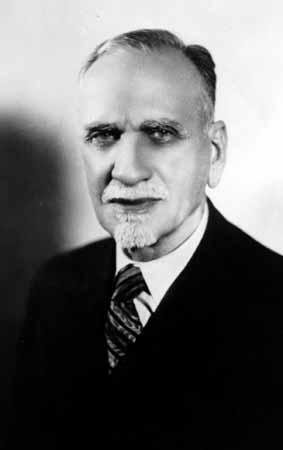
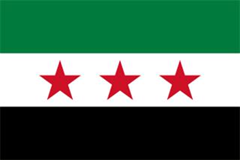
Modern Syria emerged from the Ottoman provinces after the First World War. Faisal I's Kingdom of Syria of 1920 lasted months before the Battle of Maysalun, and France ruled under a League of Nations mandate from 1920 and crushed Sultan al-Atrash's revolt of 1925–1927. A treaty of independence negotiated in 1936 under President Hashim al-Atassi was never ratified by France; British and Free French forces took the country from Vichy in July 1941, and French troops left in April 1946. Independence brought coups by Husni al-Za'im, Sami al-Hinnawi and Adib Shishakli in 1949, a return to parliament in 1954, a pact with the Soviet Union in 1956 and, on 1 February 1958, union with Egypt as the United Arab Republic.
In the union all Syrian parties ceased open activity, while a secret Military Committee of Ba'athist officers, Muhammad Umran, Salah Jadid and Hafez al-Assad among them, prepared for its collapse. Agrarian reform laws from 1958 redistributed more land than any before. On 28 September 1961 a coup took Syria out of the union, and the Syrian Arab Republic resumed its separate existence. Its 185,180 square kilometres run from the Mediterranean coast and the mountains of the west across the fertile valleys of the Euphrates, Orontes and Khabur to the eastern desert, with Damascus and Aleppo among the oldest continuously inhabited cities in the world and a people of Sunni Arabs, Alawites, Druze, Christians, Kurds and Armenians.
Socioeconomy
Syria's economy rested on agriculture and, after oil was found in the northeast in 1956, on petroleum, its chief export from 1974 and about 40% of export earnings in 2010. The state owned much of industry and regulated trade, subsidies and the currency; growth was slow, 2.5% a head a year in 2000–2008, the share of world exports fell from 2001, and poverty rose from 11% in 2004 to 12.3% in 2007. Before the war Syria was nonetheless one of the more dynamic markets of the Middle East, a lower-middle-income country hoping to draw investment in tourism, gas and services, and remittances from Syrians abroad were a main source of foreign exchange.
War destroyed this. Exports fell from $12 billion in 2010 to $4 billion in 2012, the pound lost 80% of its value, European and American oil bans cost about $400 million a month, and ISIS seized the phosphate mines in 2015. Iran, Russia and China kept the regime afloat with credit, Iran alone spending $6–20 billion a year in the war's first four years, and a drug industry run by Assad's relatives made captagon the leading export. The World Bank estimated an 84% contraction of GDP between 2010 and 2023, to $6.2 billion; more than 90% of the population lived in poverty. After the regime fell and sanctions were lifted the transitional government reported GDP of $32 billion, but a 36-year drought left 14 million food-insecure in 2025.
Military
The Syrian Arab Armed Forces, some 100,000 troops on mobilisation, were a conscript force until 2024, men serving thirty months, cut to eighteen by 2011; the Soviet Union was the main source of training, equipment and credit, later Iran and Russia. The army lost two-thirds of the Golan Heights to Israel in under 48 hours in the Six-Day War of 1967, retreated from Jordan in Black September 1970, and with Egypt launched the Yom Kippur War on 6 October 1973, in which Israel reversed its gains and destroyed Quneitra. From 1976 Syrian forces held Lebanon for 29 years, fighting for control through its civil war, and in 1991 Syria joined the American-led coalition in the Gulf War.
The army was also turned against Syrians. The Muslim Brotherhood's uprising of 1976–1982 ended in the Hama massacre of 1982, the single deadliest act of violence by any state on its own people in modern Arab history. From 2011 the army besieged rebellious cities and defectors formed the Free Syrian Army; the regime used chemical weapons in 2013 and barrel bombs. ISIS seized two-thirds of the country by 2015 before a United States-led coalition and the Kurdish-led Syrian Democratic Forces destroyed its hold in 2017; Turkey invaded the north in 2016 and built the Syrian National Army. When Hay'at Tahrir al-Sham struck from Idlib on 27 November 2024, Aleppo, Hama and Homs fell within days, soldiers abandoned their uniforms and Damascus was taken on 8 December.
Governance & Law
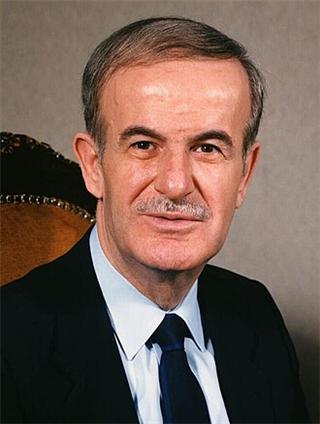
From the coup of 8 March 1963 the Arab Socialist Ba'ath Party ruled Syria as a one-party police state. An Emergency Law suspended most constitutional protections from 1963 to 21 April 2011; the Mukhabarat watched every part of civil society, the armed forces and secret police were fused with the party, and the People's Council of 250 seats existed to validate the system. The neo-Ba'athist coup of 23 February 1966 imprisoned President Amin al-Hafiz and made Salah Jadid the effective ruler until Hafez al-Assad's Corrective Movement of November 1970. Assad's constitution of 31 January 1973 dropped the requirement that the president be a Muslim and gave him power to appoint ministers, declare war and issue laws.
Under Hafez and, from 2000, Bashar al-Assad, Alawite loyalists held the key posts of army, intelligence and bureaucracy, a cult of personality taught that the dynasty would rule for ever, and Freedom House gave the state its lowest score, 1 of 100, in 2023. Since 8 December 2024 Syria has been in transition: Mohammed al-Bashir's caretaker government gave way on 29 March 2025 to a transitional government under President Ahmed al-Sharaa, appointed on 29 January 2025. The Constitutional Declaration of 13 March 2025 sets a five-year transition; the president appoints a third of the People's Assembly and the Constitutional Court. A parliamentary election was held in October 2025 and the Assembly first sat on 12 July 2026.
Global & Regional Impact
Ba'athist Syria made itself a pivot of the region's conflicts. The 1966 coup split the Ba'ath into Syrian and Iraqi movements. Syria fought Israel in 1967 and 1973 and demands the return of the Golan Heights, whose annexation by Israel in 1981 the UN Security Council called null and void; it occupied Lebanon for 29 years, from 1976 until the assassination of Rafik Hariri forced it out in 2005. It allied with the Soviet Union from 1956 and later with Russia and Iran, who intervened to save the regime, and took part in the Madrid Conference of 1991 before talks with Israel failed in 2000.
The civil war reshaped the Middle East and Europe. More than 600,000 people died, over 90% of civilian deaths at the hands of pro-Assad forces; 7.6 million were displaced within Syria and over 5 million became refugees abroad. ISIS built its caliphate on Syrian soil, Kurdish forces carved out the Autonomous Administration of North and East Syria, and Turkey, the United States, Russia and Iran all put troops in the country. The Arab League suspended Syria in November 2011 and readmitted it in 2023. Since the regime's fall Western sanctions, including the Caesar Act, have been lifted, Turkey is retraining the army, and the United States announced the reopening of its Damascus embassy in 2026.
Into the Present
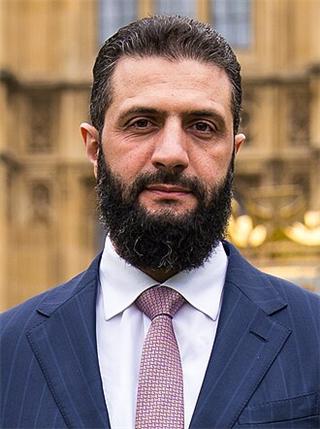
The Ba'athist state died in December 2024. Rebel advances had been reversed after the rise of the Islamic State and the intervention of Iran and Russia, and by 2020 the war was frozen, with Hay'at Tahrir al-Sham ruling Idlib through its Syrian Salvation Government. Its offensive of 27 November 2024 took Aleppo, then Hama on 5 December and Homs on 8 December; cut off from the Alawite coast and abandoned by Russia and Iran, the army melted away and Damascus fell on 8 December 2024, ending 53 years of Assad rule. Bashar al-Assad was granted asylum in Moscow. Israel at once seized the UN buffer zone on the Golan and bombed military depots, and in February 2025 demanded the demilitarisation of southern Syria.
The transition has been violent. Ahmed al-Sharaa became president on 29 January 2025 and formed a transitional government on 29 March; the Syrian Network for Human Rights reported disappearances and torture of critics, and in March 2025 security forces and pro-government fighters massacred more than 1,500 Alawite civilians in the west. Druze and Alawite insurgents and Israeli forces remain in the field; the Syrian Democratic Forces agreed on 10 March 2025 to merge into the army, yet fighting in Aleppo in January 2026 killed 23 and displaced 148,000. Fourteen million people were food-insecure in 2025 after a record drought, and the 2026 Iran war has pushed prices up 12–20%. Sanctions have gone and a parliament sat in July 2026.
The Syrian Arab Republic resumed its separate life when Syria left the United Arab Republic on 28 September 1961. The Ba'ath coup of 1963 and Hafez al-Assad's Corrective Movement of 1970 built a hereditary dictatorship that lost the Golan, occupied Lebanon and crushed Hama; the uprising of 2011 became a civil war that killed over 600,000 and ended with the fall of Damascus on 8 December 2024.
Test yourself
5 questions on this page, from its key events and facts.
The questions open here once the page has loaded.
References
- Patrick Seale, Asad of Syria: The Struggle for the Middle East (University of California Press, 1989)
- Hanna Batatu, Syria’s Peasantry, the Descendants of Its Lesser Rural Notables, and Their Politics (Princeton University Press, 1999)
Connections
Open the full connections map →