
Culture · Americas
Kalinago
At a glance
- Long described as invaders from South America who conquered the earlier Igneri, the Kalinago appear from archaeology and ancient DNA to have formed from the islands’ own peoples together with newcomers from the mainland.
- They kept their independence in the Lesser Antilles against Spain and later France and England; Dominica and Saint Vincent were left to them as reserves in 1660, but the British had annexed both by 1763.
- On Saint Kitts in 1626 English and French settlers massacred an estimated 2,000 Kalinago, and Spanish tales of Carib cannibalism, never backed by hard evidence, have been read as a campaign to justify such genocidal expeditions.
Timeline
- c. 1200 CEBy the traditional account, Caribs migrate from the Orinoco region of South America to the islands
- 1492Columbus reaches the Caribbean and hears from the Taíno of Carib raids
- 1626English and French settlers massacre an estimated 2,000 Kalinago at Bloody Point on Saint Kitts
- 1660France and England make the Treaty of Saint Charles with the Kalinago, leaving them Dominica and Saint Vincent as reserves
- 1763Britain has annexed Saint Lucia, Tobago, Dominica and Saint Vincent
- 1797After the Second Carib War the British expel the Garifuna of Saint Vincent to Honduras
- 1903The British government grants the Kalinago a territory of 3,700 acres on the east coast of Dominica
- 2015Dominica officially changes the people’s name from Carib to Kalinago
Origins
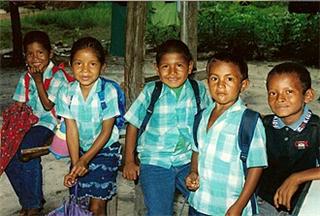
The Kalinago, also known as the Island Caribs, are an Indigenous people of the Lesser Antilles. Kalinago (plural) and Karifuna (singular) are their own names; Carib, first recorded by Columbus, is an exonym, and the Spanish kept it for peoples they considered hostile, calling those they considered friendly Arawaks. They may have been related to the mainland Caribs, or Kalina, of South America, but their language, Kalinago or Island Carib, was Arawakan, like that of their Taíno neighbours.
The traditional account, almost as old as Columbus and widespread in oral testimony, held that the Kalinago came from South America, from the Orinoco around 1200 CE, and conquered and displaced the earlier islanders, the Igneri. Linguistic and archaeological evidence contradicts a mass invasion. Irving Rouse proposed that a small group of mainland people settled without displacing the islanders and took on their language while keeping traditions of a South American origin. Ancient DNA suggests a common origin with other Antillean groups, and in this model the change from Igneri to Island Carib culture came around 1450.
Archaeology in Grenada and Saint Vincent supports integration. Cayo pottery, akin to the mainland Koriabo complex, arrived around 1250 and was made alongside the local Suazan Troumassoid pottery until European contact. In 1649 the French in Grenada distinguished Caraïbes from Galibis, which suggests that Island Carib identity was a political alliance or fusion of long-settled islanders and newer arrivals.
Society
At the time of Spanish contact the Kalinago were among the dominant peoples of the Caribbean, living throughout the Windward Islands, Dominica and the southern Leeward Islands, including Guadeloupe, and possibly Barbados. They had a reputation as warriors who raided neighbouring islands. By the early 17th century the men also spoke a Cariban-based pidgin, like the one the mainland Caribs used with their Arawak neighbours, beside the Arawakan language spoken by both sexes; scholars once took this for two languages, of men and of women, and explained it by a theory that invaders had killed the men and kept the women.
The sea shaped their lives. Dugout canoes, made from trees such as Cedrela odorata, Ceiba pentandra and Hymenaea courbaril, carried them between the islands and to the mainland and made fishing more efficient. Fish remains the core of their diet, with meat, greens, root vegetables and local herbs and spices; the quickest and most popular meal is the one pot of dasheen, yams, tannia and green bananas cooked with fresh fish or smoked meat in coconut cream.
The Kalinago of Dominica elect their own chief: in 2014 Charles Williams succeeded Garnette Joseph. Healing joins bush medicine with modern medicine; oils from coconuts, snakes and bay leaves are used for a sprain, and the Caribs formerly used a wide range of medicinal plants and animal products.
Beliefs & Worldview
The Kalinago are believed to have practised polytheism. Spirits dwelt in the world around them: the Ceiba pentandra tree, used for canoes, was believed to house spirits that would grow angry if disturbed. They kept the bones of their ancestors in their houses, which the missionaries Jean Baptiste Labat and Cesar de Rochefort described as part of a belief that the ancestral spirits would always look after the bones and protect their descendants.
The Spanish sought to convert them to Catholicism; in 1579 Caribs destroyed a Franciscan church at Aguada in Puerto Rico and killed five of its members. The French missionary Raymond Breton, who lived in Guadeloupe and Dominica from 1635 to 1653, took ethnographic and linguistic notes on the islanders, though he was also responsible for many of the early stereotypes about them.
Ritual cannibalism remains debated. Early European accounts describe the taking of human trophies and the eating of war captives among Caribs and other Amerindian peoples, and among the Caribs karibna was apparently associated with the ritual eating of enemies; the historian William Riviere relates most of it to war rituals. But there is no hard evidence, and no skeletal evidence, that the Kalinago ate human flesh. Rochefort stated that they did not, and one historian suggests it may have been done seldom, to taunt or frighten their Arawak enemies.
Arts & Knowledge
The canoe is the Kalinago’s great craft. Dugouts serve different purposes according to the height of the tree and the thickness of its bark, and they are still used for fishing and travel between the islands, with renewed interest in making them in the traditional way. In 1997 the Dominica Carib artist Jacob Frederick and the Tortola artist Aragorn Dick Read built a traditional canoe on the model of the fishing canoes still used in Dominica, Guadeloupe and Martinique, and took it on a voyage to the Orinoco delta to meet the Kalinago communities there, a journey documented by the BBC in The Quest of the Carib Canoe.
Pottery tells their history. Cayo-style pottery, found from Grenada to Basse-Terre and possibly Saint Kitts and dated between AD 1000 and 1500, resembles the mainland Koriabo style and the Meillacoid and Chicoid styles of the Greater Antilles, while Suazan Troumassoid pottery grew in the islands from earlier Saladoid traditions.
The Island Carib language, also known as Igneri because it grew from the older tongue of the islands, and the men’s Cariban pidgin are part of the same inheritance. Kalinago cooking keeps its own names: bwigo, chaloup, viyo and chatou water, taken as energy boosters, and vizou kann, cane juice, at breakfast. Living Kalinago culture includes the work of the artist Nona Aquan, Carib Queen of the Santa Rosa First Peoples Community in Arima, Trinidad, and the reggae of Nasio Fontaine.
Contact & Exchange

When Columbus reached the Caribbean in 1492, the Taíno reportedly told him that the Caribs raided them and carried off women. Yet the Kalinago also fought beside the Taíno: with Kalinago support from Vieques the Taíno of Puerto Rico destroyed Daguao, meant to be the Spanish capital. By the mid-16th century resistance in the Greater Antilles was largely crushed and the survivors enslaved. In the Lesser Antilles the Kalinago held out, helped by the lack of gold and the losses they inflicted on the Spanish.
English and French settlers followed. On Saint Kitts in 1626, told by a Kalinago woman, Barbe, of a plot by the leader Ouboutou Tegremante, a belief one historian says rested on “slim intelligence”, they invited the Kalinago to a party, then attacked their village, killing 120, Tegremante among them. The next day some 4,000 Kalinago were forced to Bloody Point, where an estimated 2,000 were massacred while trying to surrender. By 1640 those not enslaved had been forcibly removed to Dominica.
The Kalinago raided the plantations, sided with the French and Dutch in the 1650s and held a frontier, the “poison arrow curtain”. The Treaty of Saint Charles of 1660 left them only Dominica and Saint Vincent, but the English ignored it, and by 1763 the British had annexed both. On Saint Vincent, Kalinago and free West Africans formed the Garifuna; after the Second Carib War 4,338 Garifuna were deported to Roatan.
Legacy

After the Second Carib War about 80 Island Caribs were allowed to stay on Saint Vincent, but the eruption of La Soufrière in 1812 destroyed their territory and killed most of them; 120 of the survivors emigrated to Trinidad under Captain Baptiste, and by 1830 fewer than 100 Caribs remained there. The Garifuna, who share common ancestry with the Kalinago, live mainly in Central America.
On Dominica the rugged land helped the Kalinago keep their independence for many years. In 1903 the British government granted them 3,700 acres on the east coast, long called the Carib Territory, where about 3,400 Kalinago lived in 2008. Dominica officially changed the name from Carib to Kalinago in 2015. Their leaders have included Irvince Auguiste, founder of the Touna Auté living village, and Anette Sanford, the first woman to be Kalinago chief in Dominica in 400 years; in 2023 Sylvanie Burton became the first woman and the first Kalinago to be president of Dominica.
Historians now read the colonial record against itself. Hilary McD. Beckles suggests that the stories of “vicious cannibals” formed an “ideological campaign” to justify “genocidal military expeditions”, and William Young’s Account of the Black Charaibs (1795) has been described as framing most of Saint Vincent’s Indigenous people as “mere interlopers from Africa” with no claim to its land. Chief Kairouane and his men of Grenada, who leapt from Leapers Hill rather than face slavery under the French, stand for that resistance.
The Kalinago, or Island Caribs, are an Indigenous people of the Lesser Antilles, formed, as recent evidence suggests, from the islands’ earlier peoples and newcomers from South America. Seafarers and warriors, they kept their independence against Spain, France and England for generations until British annexation; today they live chiefly in the Kalinago Territory of Dominica, and their Garifuna kin in Central America.
Test yourself
5 questions on this page, from its key events and facts.
The questions open here once the page has loaded.
References
- Keegan, William F.; Hofman, Corinne L. (2017). The Caribbean before Columbus (ebook ed.). New York: Oxford University Press.
- Allaire, Louis (1997). “The Caribs of the Lesser Antilles”, in Samuel M. Wilson, The Indigenous People of the Caribbean, pp. 180–185. Gainesville, Florida: University of Florida.
- Honeychurch, Lennox, The Dominica Story, MacMillan Education, 1995.
- Davis, D and Goodwin R.C. “Island Carib Origins: Evidence and non-evidence”, American Antiquity, vol.55 no.1(1990).
- Eaden, John, The Memoirs of Père Labat, 1693–1705, Frank Cass, 1970.