
Culture · Oceania
Māori
At a glance
- The ancestors of the Māori sailed from eastern Polynesia in ocean-going waka and settled New Zealand around 1250–1350, last of all the Polynesian lands.
- In isolation they built a distinct culture: the moa-hunting Archaic period gave way after 1500 to the Classic culture of iwi and hapū, pounamu, carved meeting houses and fortified pā.
- After European contact Māori traded and adopted new tools and writing, but suffered war, disease and the loss of most of their land; today they lead a strong revival of their language and culture.
Timeline
- c. 1250–1350Polynesian settlers arrive in New Zealand in ocean-going waka, the main settlement coming in the first half of the 14th century
- 15th centuryA group of Māori settles the Chatham Islands (Rēkohu) and becomes the Moriori
- c. 1500A significantly cooler climate and the extinction of the moa help bring about the Classic Māori culture
- 1642Abel Tasman reaches New Zealand; a skirmish leaves four of his men and at least one Māori dead
- 1769James Cook’s first voyage brings the first lasting contact between Māori and Europeans
- 1805–1840The Musket Wars between iwi kill many and drive others from their lands
- 6 February 1840The Treaty of Waitangi is first signed at Waitangi by the British Crown and Māori chiefs
Origins
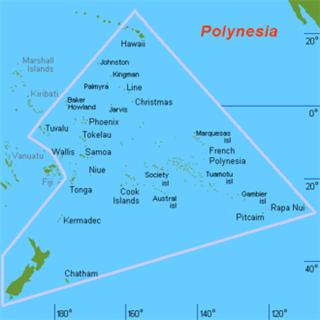
The Māori are the Indigenous Polynesian people of mainland New Zealand. In their language māori means “normal” or “ordinary”, and once set ordinary human beings, tāngata māori, apart from gods and spirits; Māori came to use it of themselves as a people, and also call themselves tangata whenua, “people of the land”, in relation to a particular area or to Aotearoa as a whole. Archaeology, linguistics and genetics show that their ancestry, as part of the wider Austronesian peoples, goes back about 5,000 years to the Indigenous peoples of Taiwan, whose descendants moved through the Philippines, along the edge of Melanesia, where they left Lapita pottery, and across Polynesia to New Zealand last of all.
Māori oral history tells of ancestors arriving from Hawaiki in large ocean-going canoes, waka, and each iwi traces its descent from particular waka in its genealogies, whakapapa. Hawaiki, the spiritual homeland of many eastern Polynesian peoples, is thought by researchers to be the island of Raʻiātea in the Society Islands. When the settlers came is debated. Radiocarbon dates of rat bones and rat-gnawed seeds point to about 1280, and a 2022 study of over 500 sites to 1250–1275 for the North Island and 1280–1295 for the South Island; yet no human remains or artefacts are securely older than the Kaharoa Tephra, the ash of a Mount Tarawera eruption around 1314.
A 2017 study of the archaeological and genetic evidence concluded that the main settlement came in the first half of the 14th century, perhaps as a planned mass migration of at least 500 people, which agrees with genealogies that place the arrival of many waka around 1350. The settlers brought kūmara (sweet potato), taro, yams, gourds, tī, aute (paper mulberry), the Polynesian rat (kiore) and the Polynesian dog. There is no credible evidence that anyone lived in New Zealand before them.
Society
The settlers found a forested land full of birds, among them several species of moa weighing from 20 to 250 kg, and coasts crowded with seals. In the Archaic or “moa-hunter” period, from settlement to about 1500, most villages lay on or near the coast, the Otago region was the centre of cultural development, and people set up temporary inland camps to hunt. Settlements ranged from about 40 people to 300 or 400 with forty buildings, as at the Shag River mouth. Average life expectancy was only 31–32 years, and skeletons from Wairau Bar show a hard life, but many had broken bones that had healed, a sign of a community able to care for the injured.
Moa and other large birds were hunted out within two centuries, about 32 bird species became extinct, and the climate cooled sharply from about 1500. In the Classic period that followed, Māori lived in autonomous settlements of several whānau (extended families) forming a hapū (clan), and hapū with shared ancestry formed iwi, the largest social unit. Society was divided into rangatira, the chiefs and ruling families; tūtūā, commoners; and mōkai, slaves; tohunga were respected experts in sacred arts and knowledge. Hapū and iwi joined forces to gather food and resources and in times of conflict.
Villages had cultivated gardens and land for hunting, fishing and gathering; Helen Leach has shown that Māori used about 36 food plants, many needing long cooking. As people grew in number and competed for resources, warfare increased over wrongs, land and prestige, and fortified villages, pā, were built at strategic places, especially in the more populous north. Defeated enemies were sometimes eaten or enslaved, though warfare and cannibalism were not the dominant part of Māori culture that a later stereotype of “natural warriors” suggests. Before European contact the Māori population was perhaps 100,000 to 110,000.
Beliefs & Worldview
Traditional Māori beliefs have their roots in Polynesian culture. Everyday life was governed by concepts such as tapu, the sacred or restricted; noa, the unrestricted; mana, authority and prestige; and wairua, spirit. Certain objects, places and buildings are tapu and must be made noa by ceremonial action, and many of these practices continue: people remove their shoes before entering a wharenui, a meeting house, out of respect for the ancestors who are represented and spiritually present within it. There are also many Māori deities.
Belief shaped how Māori cared for their land and sea. As resources came under pressure, systems such as tapu and rāhui used religious or supernatural sanctions to stop people from taking certain species at particular seasons or from certain places. A ritual of purification, hurihanga takapau, was practised when fishing to make sure no tapu remained on the catch. Tohunga, specialists in sacred knowledge and skills, held special standing in every community.
Knowledge of the gods, the ancestors and the past was carried in words. Before European contact Māori had no written language, and genealogies, whakapapa, were memorised and passed down from generation to generation. Waiata (songs), tauparapara (chants), mōteatea (poetry) and the haka expressed and taught history and the ties between communities, and whare tapere, houses of entertainment, were places of storytelling, dance and puppetry. Hawaiki, the homeland across the sea from which the ancestors came, remains the spiritual homeland of many eastern Polynesian peoples. After contact many Māori became Christians, and Māori churches such as Rātana and Ringatū arose.
Arts & Knowledge
Each period of Māori history has its own crafts. The Archaic period is known for distinctive “reel necklaces” and for its lack of the weapons and fortifications of later times. The Classic period is marked by finely made pounamu (greenstone) weapons and ornaments, by elaborately carved canoes, a tradition later extended to the great carved meeting houses, wharenui, and by some of the largest war canoes, waka taua, ever made. Carving and weaving developed from Polynesian roots, and the moko kauae, the traditional facial tattoo of women, is worn by some Māori women today.
Performance carried knowledge. The haka, a dance and challenge, grew from Polynesian roots, and kapa haka performance is believed to have begun with the legendary figure Tinirau. Traditional instruments, taonga pūoro, served storytelling, religious ritual and daily tasks such as greeting a new day; they include melodic instruments such as flutes and rhythmic ones such as poi, balls of dried flax on strings that are swung and tapped. The Māori language, te reo Māori, belongs to the Eastern Polynesian languages, close to Cook Islands Māori, Tuamotuan and Tahitian; it stayed so close that the Tahitian navigator Tupaia could interpret for James Cook’s crew in 1769.
Māori knew how to map their own lands, and they took up writing quickly once it came: the language was first written down by Thomas Kendall in 1815, a grammar followed in 1820 with the help of the chiefs Hongi Hika and Waikato, and between 1835 and 1840 William Colenso printed 74,000 Māori-language booklets at Paihia. Many oral stories and poems were written down in these years.
Contact & Exchange

Some Māori voyaged on after settlement: around the 15th century a group crossed to Rēkohu, the Chatham Islands, where they became the Moriori, a related but distinct people with a strong tradition of pacifism. The first European to arrive, Abel Tasman, left in 1642 after a skirmish in which four of his men and at least one Māori were killed. Captain James Cook’s visits in 1769, 1773 and 1777 began lasting contact, though his men shot at least eight Māori within three days of his first landing, and in 1772 Marion du Fresne and 26 of his crew were killed. From the 1780s sealers, whalers and missionaries came; many Māori crewed on their ships, and in 1809 Māori killed 66 people of the ship Boyd in revenge for the flogging of a chief’s son.
Many Māori valued Europeans, whom they called Pākehā, as sources of knowledge and technology, above all firearms. They traded flax and other goods, adopted the potato, which revolutionised farming, and took up European clothing and tools. The new muskets set off the Musket Wars between iwi from 1805 to about 1840, in which many groups were nearly destroyed or driven from their lands; in 1835 iwi from Taranaki invaded the Chatham Islands, killing and enslaving most of the Moriori. Epidemics of influenza, measles and smallpox killed between 10 and 50 per cent of Māori, and their numbers may have fallen from about 100,000 in 1800 to 50,000–80,000 by 1843.
By 1839 as many as 2,000 Europeans lived in New Zealand. The British government sent Captain William Hobson to negotiate with Māori, and on 6 February 1840 the Treaty of Waitangi was signed at Waitangi; during the year more than 500 rangatira signed it. It gave Māori the rights of British subjects and guaranteed their property and tribal authority in return for British sovereignty, but at Waitangi the chiefs signed a Māori translation, the Māori version did not cede sovereignty to the Crown, and its meaning is disputed to this day.
Legacy
Relations stayed largely peaceful for a generation, and many Māori groups ran substantial businesses supplying food to settlers and overseas markets. But disputed land sales and the rise of the Māori King Movement, the Kīngitanga, founded in the 1850s to stop the loss of land, led to the New Zealand Wars of the 1860s. The colonial government invaded the Waikato in 1863 and confiscated land as punishment for what it called rebellion; the Native Land Court turned communal land into individual titles that could be sold, and between 1840 and 1890 Māori sold 95 per cent of their land. In 1877 a court declared the Treaty a “simple nullity”. Laws such as the Tohunga Suppression Act of 1907 and the punishment of children for speaking Māori at school pressed Māori to conform to Pākehā ways, and by 1896 only 42,113 Māori were counted.
The population recovered in the 20th century. Māori had held their own seats in Parliament since 1867, and politicians such as James Carroll, Āpirana Ngata, Te Rangi Hīroa and Māui Pōmare worked to revitalise their people. Māori fought in both world wars in their own battalions. After the Second World War many moved to the cities, and since the 1960s a protest movement and a cultural revival have grown together. Kōhanga reo, Māori-language preschools, opened in 1982, te reo Māori is an official language, and Māori Television began broadcasting in 2004.
In 1975 the Crown set up the Waitangi Tribunal to investigate breaches of the Treaty, and since the 1990s governments have negotiated settlements with many iwi, though some Māori call them far below the value of what was taken. Māori still face higher poverty, poorer health and lower life expectancy than other New Zealanders. At the 2023 census 887,493 people identified as Māori, 17.8 per cent of the population, and about 170,000 Māori live in Australia. The marae, the whānau and the old ties of kinship remain central to Māori life.
The Māori are the Indigenous Polynesian people of New Zealand, whose ancestors arrived in voyaging canoes around 1250–1350. In isolation they developed a culture of their own, from the moa-hunters of the Archaic period to the Classic world of iwi and hapū, pounamu, carved meeting houses and pā. After 1769 war, disease and the loss of land under colonial rule devastated them, but they recovered and today lead a revival of their language and culture.
References
- Walter, Richard, Buckley, Hallie, Jacomb, Chris and Matisoo-Smith, Elizabeth (2017) “Mass Migration and the Polynesian Settlement of New Zealand”. Journal of World Prehistory 30(4).
- Ballara, Angela (1998) Iwi: The Dynamics of Māori Tribal Organisation From c.1769 to c.1945. Wellington: Victoria University Press.
- Buck, P. H. (1949) The Coming of the Māori. Christchurch: Whitcombe and Tombs.
- Irwin, Geoffrey (1992) The Prehistoric Exploration and Colonisation of the Pacific. Cambridge: Cambridge University Press.
- Sutton, Doug G., ed. (1994) The Origins of the First New Zealanders. Auckland: Auckland University Press.
- Simmons, D. R. (1997) Ta Moko: The Art of Māori Tattoo. Rev. ed. Auckland: Reed Publishing.
- McLean, Mervyn (1996) Maori Music. Auckland: Auckland University Press.