Inventions & Discoveries · Communication and computing
Radar
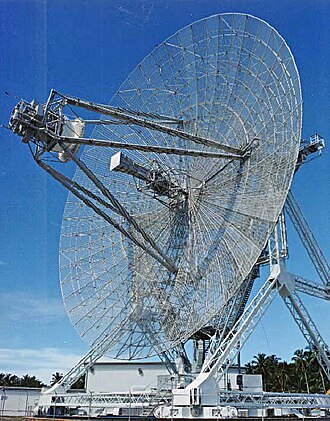
Radar is a system that uses radio waves to find the distance, direction and speed of objects such as aircraft, ships and weather formations; the United States Navy coined the name in 1940 from radio detection and ranging. In 1904 the German inventor Christian Hülsmeyer detected a ship in dense fog with his telemobiloscope, but German military officials rejected it. Pulsed radar was first shown in December 1934 by Robert M. Page at the Naval Research Laboratory, and in Britain Robert Watson-Watt's team built the Chain Home stations, operational from 1936, which helped the Royal Air Force win the Battle of Britain. The cavity magnetron made small sets possible.
On the inventions tree
- First known
- 1904
- Where
- Germany
- Credited to
- Christian Hülsmeyer · Robert M. Page · Robert Watson-Watt
NoteRadar was developed in secret by several countries before and during World War II; Heinrich Hertz had shown in 1886 that radio waves reflect from solid objects, and the first pulsed systems were shown in the United States in 1934 and in Germany and Great Britain in 1935.
Mentioned in 1 profile
See also






Cite this entry
- APA
- The Epoch Institute. (2026). Radar. In The Epoch Institute Encyclopedia. https://the-epoch-institute.org/encyclopedia/radar
- MLA
- “Radar.” The Epoch Institute Encyclopedia, The Epoch Institute, 2026, https://the-epoch-institute.org/encyclopedia/radar. Accessed .
- Chicago
- The Epoch Institute. “Radar.” The Epoch Institute Encyclopedia. 2026. https://the-epoch-institute.org/encyclopedia/radar.
- Harvard
- The Epoch Institute (2026) ‘Radar’, The Epoch Institute Encyclopedia. Available at: https://the-epoch-institute.org/encyclopedia/radar (Accessed: ).
Last reviewed October 2026Random entry ↻