Work / monument · infrastructure
Tōkaidō
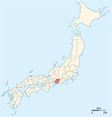
The Tōkaidō was the main road of Japan linking Edo with Kyoto along the Pacific coast, about 500 kilometres long. The name, meaning eastern sea route, also described the coastal provinces it crossed. Under the Tokugawa shogunate it was organised with fifty-three post stations, where travellers and the processions of daimyo rested, a journey famously depicted in Hiroshige's woodblock prints.
Mentioned in 2 state histories
See also


Cite this entry
- APA
- The Epoch Institute. (2026). Tōkaidō. In The Epoch Institute Encyclopedia. https://the-epoch-institute.org/encyclopedia/tokaido
- MLA
- “Tōkaidō.” The Epoch Institute Encyclopedia, The Epoch Institute, 2026, https://the-epoch-institute.org/encyclopedia/tokaido. Accessed .
- Chicago
- The Epoch Institute. “Tōkaidō.” The Epoch Institute Encyclopedia. 2026. https://the-epoch-institute.org/encyclopedia/tokaido.
- Harvard
- The Epoch Institute (2026) ‘Tōkaidō’, The Epoch Institute Encyclopedia. Available at: https://the-epoch-institute.org/encyclopedia/tokaido (Accessed: ).
Last reviewed October 2026Random entry ↻