Language · Sub-Saharan Africa
Swahili
At a glance
- Swahili grew from the Bantu speech of the East African coast, where from around the 8th century merchant towns traded across the Indian Ocean with Arabia, Persia and India, absorbing many Arabic words.
- Written in Arabic script from at least the early 18th century, it developed a rich poetic tradition, and in the 19th century caravans carried it inland from Zanzibar as far as the Great Lakes and the Congo.
- Spread by colonial administrations and, after independence, promoted by Tanzania as its national language, it is today the common language of East Africa and one of the most widely spoken languages of the continent.
Timeline
- c. 800Trading towns such as Shanga and Manda grow on the East African coast, where Swahili takes shape
- 1331Ibn Battuta visits Mombasa and Kilwa and describes the wealth of the Swahili coast
- 1711Letters in Arabic script written at Kilwa, later seized by the Portuguese and kept at Goa, are the oldest known documents in Swahili
- 1728The Utendi wa Tambuka, the oldest dated epic poem in Swahili, is composed
- 19th centuryCaravans from Zanzibar carry Swahili to the Great Lakes and the eastern Congo
- 1930A committee of the British East African territories standardises Swahili on the dialect of Zanzibar
- 1967Tanzania makes Swahili the language of government and of primary schooling
- 2022The first World Kiswahili Language Day is celebrated on 7 July, proclaimed by UNESCO
Origins

Swahili is a Bantu language, one of the hundreds of related languages spoken across central, eastern and southern Africa, which spread with Bantu-speaking farmers over the last three thousand years. Its closest relatives are the languages of the Kenyan and Tanzanian coast and the Comoros islands, such as Pokomo, the Mijikenda languages and Comorian, with which it forms the Sabaki group. Its speakers call it Kiswahili; the name comes from the Arabic sawāḥil, “coasts”.
Swahili took shape in the towns of the East African coast, which grew from around the 8th century at places such as Shanga and Manda in the Lamu archipelago. Their people, African farmers, fishers and traders, built a society oriented towards the Indian Ocean: they traded gold, ivory, mangrove timber and enslaved people for cloth, beads and ceramics from Arabia, Persia, India and China, and gradually adopted Islam. Some of their towns, such as Kilwa, Mombasa, Malindi, Lamu and Zanzibar, became wealthy city-states with stone mosques and palaces.
Earlier scholars believed that Swahili was a mixed language created by Arab settlers. Historians and linguists have since shown that it is fully African in origin, a Bantu language in its grammar and basic vocabulary, which absorbed many words from Arabic, the language of religion and trade, and from Persian, Indian languages and later Portuguese.
The coast was visited by travellers from many lands. The Moroccan Ibn Battuta described Mombasa and Kilwa in 1331, calling Kilwa one of the most beautiful and best-built towns in the world. In 1498 Vasco da Gama found a pilot at Malindi to guide him to India, and the Portuguese dominated the coast for two centuries, until Omani Arabs expelled them from Mombasa in 1698.
Sounds, Script & Grammar
Like other Bantu languages, Swahili sorts its nouns into classes, each marked by a prefix that changes between singular and plural. Words for people take m- in the singular and wa- in the plural, so mtu, “person”, becomes watu, “people”; many words for things take ki- and vi-, so kiti, “chair”, becomes viti. When Swahili borrowed the Arabic word kitāb, “book”, its first syllable was heard as the class prefix ki-, and its plural became vitabu.
The class of a noun determines the form of the adjectives, pronouns and verbs that agree with it, so that the prefixes echo through a sentence. Verbs are built from a string of elements: subject, tense, object and root, so that nitakupenda, “I will love you”, is made of ni-, “I”, -ta-, future, -ku-, “you”, and -penda, “love”. Further suffixes change the meaning of a verb, making it causative, passive, reciprocal or done for someone else.
Swahili has five vowels and a stress that falls regularly on the second-to-last syllable. Unlike most Bantu languages, standard Swahili does not use tone to distinguish words, which makes it easier for speakers of other languages to learn.
Its vocabulary reflects its history. The core is Bantu, but there are many Arabic loanwords, especially in religion, trade, law and abstract ideas, such as dunia, “world”, habari, “news”, and safari, “journey”; there are words from Persian and Indian languages, from Portuguese, such as meza, “table”, and bendera, “flag”, from German, such as shule, “school”, and from English. Swahili was long written in the Arabic script, adapted to its sounds, and from the 19th century missionaries and colonial administrations introduced the Latin alphabet, which is now standard.
Speakers & Spread
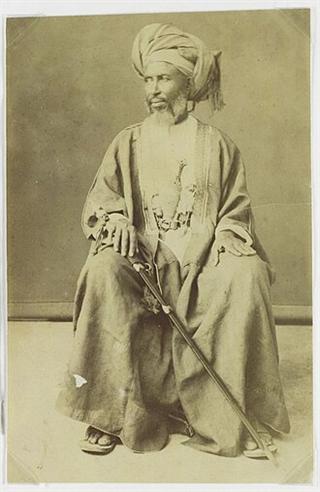
For most of its history Swahili was the language of the coastal towns, from southern Somalia to northern Mozambique and the islands of Zanzibar, Pemba and Lamu, each with its own dialect, such as Kiamu of Lamu, Kimvita of Mombasa and Kiunguja of Zanzibar.
In the 19th century the sultans of Oman moved their capital to Zanzibar, in 1840, and the island became the centre of a commercial empire built on cloves, ivory and the slave trade. Caravans organised by Swahili and Arab merchants, such as the notorious trader Tippu Tip, travelled hundreds of kilometres inland to Lake Tanganyika, Buganda and the eastern Congo, and Swahili spread along their routes as a language of trade. European missionaries, such as Johann Ludwig Krapf and Edward Steere, studied Swahili, wrote grammars and dictionaries and translated the Bible into it.
The colonial powers used Swahili as a language of administration: the Germans in German East Africa, the British in Tanganyika, Kenya and Uganda, and the Belgians in the eastern Congo. In 1930 the British territories established a committee that standardised the language, choosing the dialect of Zanzibar as the basis of Standard Swahili, and Swahili schoolbooks, newspapers and radio spread it further.
After independence, Tanzania under Julius Nyerere made Swahili its national language and the language of government, parliament and primary education, a key tool in building a nation from more than a hundred ethnic groups. Kenya made it a national and later an official language, and Uganda, Rwanda and the Democratic Republic of the Congo, where it is one of four national languages, also give it an official place. It is a working language of the East African Community and the African Union. Most of its speakers, well over a hundred million people, speak it as a second language; first-language speakers live mainly along the coast and in Tanzania’s towns.
Literature & Learning
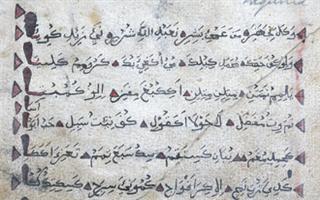
Swahili has one of the oldest written literatures of sub-Saharan Africa. Its classical poetry, composed by Muslim poets of the coast and written in Arabic script, includes long narrative poems, the utenzi or utendi, in stanzas of four short lines, and shorter lyrical and religious poems.
The Utendi wa Tambuka, of 1728, the oldest dated epic in the language, tells of a war between the Prophet Muhammad’s followers and the Byzantine empire. The Al-Inkishafi, “the soul’s awakening”, by Sayyid Abdallah bin Ali bin Nasir in the early 19th century, meditates on the ruins of the once-great town of Pate as a lesson on the vanity of worldly riches. The Utendi wa Mwana Kupona, composed in 1858 by Mwana Kupona, a woman poet of the Lamu archipelago, for her daughter, gives advice on marriage and life and is still widely known. Legends and poems attributed to the hero-poet Fumo Liyongo are among the oldest traditions of the coast.
In the 20th century Swahili literature took new forms. Shaaban Robert, who lived from 1909 to 1962, wrote poetry, essays and novels and is often called the father of modern Swahili literature. After independence, novelists such as Euphrase Kezilahabi and Said Ahmed Mohamed, and the playwright Ebrahim Hussein, explored the changes of modern society, and Nyerere translated Shakespeare into Swahili.
Swahili is also the language of popular culture across East Africa: of taarab music, which blends African, Arab and Indian traditions, of the modern popular music known as bongo flava, of film, radio and newspapers, and of a lively oral tradition of proverbs and riddles.
Change & Descendants

Swahili has changed and grown with its expanding role. The dialects of the coast differ from one another, and the Swahili spoken inland, as a second language, often simplifies the grammar of the standard; in the eastern Congo a distinct variety developed, and in Nairobi young people speak Sheng, a mixed urban language combining Swahili and English with words from other languages.
The standard language has been developed by institutions such as the Institute of Kiswahili Research at the University of Dar es Salaam, founded in 1964, and Tanzania’s National Swahili Council, founded in 1967, which create new terms for science, technology and government, often from Bantu roots as well as by borrowing.
The shift from the Arabic to the Latin script, completed in the 20th century, transformed Swahili writing, though manuscripts of classical poetry in Arabic script are still treasured in families and libraries of the coast.
Swahili has also given words to other languages. English has borrowed safari, itself from Arabic, and words such as bwana, “master”, and in the United States the name of the festival Kwanzaa, created in 1966, comes from a Swahili phrase meaning “first fruits”.
Legacy
Swahili is a striking example of a language that grew from a small coastal community to become the common language of a large part of a continent. It is today one of the most widely used languages of Africa and a symbol of African identity and unity: it was chosen by liberation movements and leaders across the continent as a language that belongs to Africa.
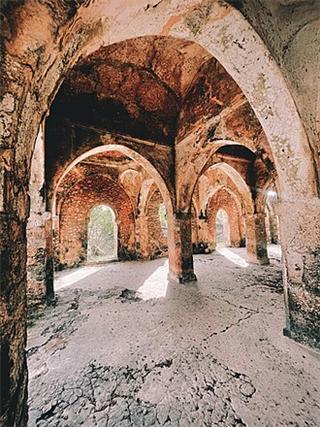
The Swahili coast has left a remarkable heritage of towns and architecture, from the ruins of Kilwa Kisiwani to the old towns of Lamu and Zanzibar, both World Heritage Sites, where Swahili culture, with its poetry, music, cuisine and carved doors, remains alive.
Swahili’s success in Tanzania, where it has created a shared national language among peoples of many languages, is often cited as a model of language policy in Africa, and its use in schools, government and media continues to grow across the region.
International broadcasters, publishers and universities around the world teach and use Swahili, and since 2022 the world celebrates World Kiswahili Language Day each year on 7 July, the first United Nations day dedicated to an African language.
Swahili, a Bantu language that grew in the merchant towns of the East African coast from around the 8th century, absorbed words from Arabic and other languages of the Indian Ocean, developed a written poetry in Arabic script and spread inland with the 19th-century caravans. Promoted by colonial rulers and independent Tanzania, it is today the common language of East Africa, spoken by well over a hundred million people.
Test yourself
5 questions on this page, from its key events and facts.
The questions open here once the page has loaded.
References
- Horton, M. and Middleton, J. (2000) The Swahili: The Social Landscape of a Mercantile Society. Oxford: Blackwell.
- Knappert, J. (1979) Four Centuries of Swahili Verse: A Literary History and Anthology. London: Heinemann.
- Mazrui, A.A. and Mazrui, A.M. (1995) Swahili, State and Society: The Political Economy of an African Language. London: James Currey.
- Nurse, D. and Hinnebusch, T.J. (1993) Swahili and Sabaki: A Linguistic History. Berkeley: University of California Press.
- Nurse, D. and Spear, T. (1985) The Swahili: Reconstructing the History and Language of an African Society, 800–1500. Philadelphia: University of Pennsylvania Press.
- Whiteley, W. (1969) Swahili: The Rise of a National Language. London: Methuen.