
Movement · Europe
Solidarity
At a glance
- Born of the August 1980 strike at the Gdańsk Shipyard, Solidarity grew to 10 million members by September 1981, a third of Poland’s working-age population.
- Martial law, imposed in December 1981 under General Wojciech Jaruzelski, drove the union underground, where it survived with substantial financial support from the Vatican and the United States.
- The Round Table Talks of 1989 led to semi-free elections that Solidarity swept, setting off a chain reaction across the Soviet bloc known as the Revolutions of 1989.
Timeline
- 1976Protests against rising food prices are followed by a crackdown on dissent, and groups such as KOR begin to build opposition networks
- 1979Pope John Paul II visits Poland, a visit Lech Wałęsa later called a significant factor in the creation of Solidarity
- 1980The dismissal of Anna Walentynowicz sets off a strike at the Gdańsk Shipyard, and the government signs the agreement allowing Solidarity to exist
- 1981Solidarity’s first national congress elects Wałęsa its president; in December martial law is imposed and the union’s leaders are jailed
- 1983Lech Wałęsa is awarded the Nobel Peace Prize
- 1989The Round Table Talks lead to semi-free elections, and a Solidarity-led coalition government is formed under Tadeusz Mazowiecki
- 1990Wałęsa is elected President of Poland and later gives up the chairmanship of the union
- 1997Solidarity Electoral Action, the union’s political arm founded in 1996, wins the parliamentary election
Background
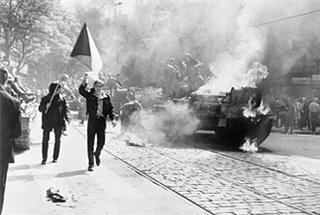
In the 1970s Poland was a satellite state of the Soviet Union, ruled in practice by one party, the Polish United Workers’ Party. The party had bloodily ended a protest in 1970 with machine-gun fire, killing over thirty people and injuring over 1,000, and Soviet-led invasions had crushed the Hungarian Uprising of 1956 and the Prague Spring of 1968. During the decade the government raised food prices while wages stagnated. This and other stresses led to protests in 1976 and to a crackdown on dissent.
Groups such as KOR and ROPCiO then began to build underground networks to monitor and oppose the government, and labour unions formed an important part of them. In 1979 the economy shrank for the first time since the Second World War, by two percent, and foreign debt reached around $18 billion by 1980. That same year, 1979, Pope John Paul II, a native of Poland, visited the country; a figure Poles could identify with, beyond the regime’s reach, he was later named by Lech Wałęsa as a significant factor in Solidarity’s creation.
Ideas mattered too. The philosopher Leszek Kołakowski had lived abroad since the late 1960s and his works were banned, but underground copies shaped the intellectual opposition. His essay Theses on Hope and Hopelessness (1971), which suggested that self-organised groups could gradually widen civil society inside a totalitarian state, helped inspire the dissident movements of the 1970s.
Aims
Solidarity began as a workers’ union. The strike of August 1980 started in defence of Anna Walentynowicz and over everyday economic issues, then became a solidarity strike in sympathy with strikes elsewhere. Its first goal was the right to exist as an independent, self-governing trade union, granted in the agreement of 31 August 1980. It was organised as an industrial union on the One Big Union principle, like the Industrial Workers of the World and the Spanish Confederación Nacional del Trabajo: workers of every trade were grouped by region rather than by craft.
It soon became a broad anti-authoritarian social movement, using civil resistance to advance workers’ rights and social change. Lech Wałęsa and others brought together people associated with the Catholic Church and members of the anti-Soviet left, and Polish nationalism, together with pro-American liberalism, played an important part in its development. In September 1981 its first national congress adopted a republican programme, the “Self-governing Republic”.
Solidarity advocated non-violence. Maciej Bartkowski, in a summary written for the International Center on Nonviolent Conflict, judged that it always pursued its aims with a high degree of nonviolent discipline and self-imposed limitations; the philosopher Slavoj Žižek later described it as one of the “free spaces at a distance from state power” that used “defensive violence” to protect itself.
Course of Events
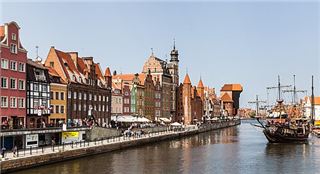
Anna Walentynowicz was dismissed from the Gdańsk Shipyard on 7 August 1980, five months before she was due to retire, for taking part in an illegal trade union. The workers struck on 14 August to demand her reinstatement, and on 31 August the government signed the agreement allowing Solidarity to exist. On 17 September over twenty Inter-factory Founding Committees merged into one national organisation, NSZZ Solidarność, registered on 10 November 1980. Membership peaked at 10 million in September 1981.
On 13 December 1981 the government of General Wojciech Jaruzelski imposed martial law. The union’s 38 regional delegates were arrested and jailed, and after a year in prison its high-ranking members were offered one-way trips to any country that would take them. For several years the government tried, without success, to destroy the union by repression. Operating underground, Solidarity survived, with substantial financial support from the Vatican and the United States.
By the late 1980s it had entered negotiations with the government. The Round Table Talks, from 6 February to 5 April 1989, produced an agreement for semi-free elections on 4 June 1989, the country’s first pluralistic election since 1947. By the end of August a Solidarity-led coalition government had been formed, with Tadeusz Mazowiecki as Prime Minister.
People
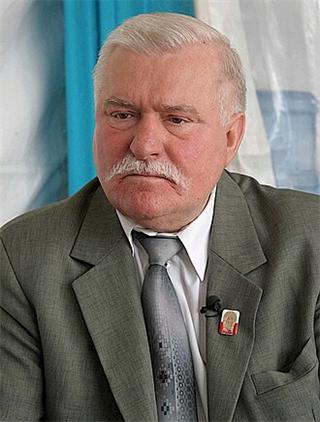
Lech Wałęsa led the movement from its birth. Its first national congress elected him president of the union in September 1981, and he remained its chairman until 1991. In 1983 he was awarded the Nobel Peace Prize, and in December 1990 he was elected President of Poland. Anna Walentynowicz, whose dismissal set off the strike of August 1980, and Alina Pienkowska turned that strike over everyday economic issues into a strike of solidarity with workers in other establishments.
Tadeusz Mazowiecki became Prime Minister of the Solidarity-led coalition in 1989. After Wałęsa the union was led by Marian Krzaklewski (1991–2002), Janusz Śniadek (2002–2010) and Piotr Duda (from 2010). Regional leaders could speak for themselves: during the British miners’ strike of 1984–85, when Wałęsa praised Margaret Thatcher, David Jastrzębski, president of Upper Silesia Solidarity, declared his support for the striking miners.
Behind the leaders stood a mass membership: over 10 million at its height, a third of Poland’s working-age population. Workers and intellectuals acted together; Kołakowski described it as a movement of industrial workers “very strongly supported by the intelligentsia”. Pope John Paul II, though never part of the union, has been named by many world leaders, Wałęsa among them, as one of the main causes of the fall of communism in Poland and in Europe.
Outcomes

The survival of Solidarity was unprecedented in Poland and in the whole Eastern Bloc, a break in the hard-line stance of the ruling party and of the Soviet government. In the elections of 4 June 1989, the first free elections in any Soviet bloc country, the opposition could field candidates against the Communist party for all 100 seats of a new Senate and for one-third of the seats of the Sejm. Solidarity won 99 of the 100 Senate seats and all 161 contestable seats in the Sejm.
The result brought the first noncommunist Prime Minister since the 1940s and, in December 1990, Wałęsa’s election as President. It also set off a chain reaction across the Soviet Union’s satellite states, the mostly bloodless Revolutions of 1989, in Polish the Autumn of Nations, which overthrew each Moscow-imposed regime and led in the end to the dissolution of the Soviet Union in the early 1990s.
Foreign help played a part. The CIA transferred around $2 million a year in cash from 1982, about $10 million over five years, always through third parties; the AFL–CIO raised $300,000 from its members and gave material and cash directly, and the National Endowment for Democracy allocated $10 million. Henry Hyde of the House intelligence committee said the United States supplied clandestine newspapers, broadcasting, money and organisational help and advice.
Legacy
After 1989 Solidarity became a more traditional trade union, with relatively little impact on Polish politics in the early 1990s. Its political arm, Solidarity Electoral Action (AWS), founded in 1996, won the parliamentary election of 1997 but lost in 2001. In 2010 the union had more than 400,000 members. In 2017 it backed a proposal, supported by the Polish bishops, to prohibit Sunday shopping, and a law banning almost all trade on Sundays took effect in 2018; it endorsed the Law and Justice candidates Andrzej Duda in 2020 and Karol Nawrocki in 2025.
Abroad its name travelled. In 2008 democratic opposition groups in Russia formed a Solidarity movement, the American Solidarity Party, a Christian democratic party, takes its name from it, and in 2005 the far-right British National Party named a union after it. Relations with unions in the West were sometimes uneasy: Arthur Scargill of the British National Union of Mineworkers condemned it as an “anti-socialist organization”. Its attempts in the late 1980s to link up with the internal resistance to apartheid in South Africa came to little, hampered, Wałęsa said, by distance and scant media coverage.
Its meaning is still debated. For Kołakowski it was perhaps the closest thing to the working-class revolution that Karl Marx had predicted, though directed against a socialist state.
Solidarity is a Polish trade union founded at the Gdańsk Shipyard in August 1980, the first independent union recognised in a Warsaw Pact country. In 1980–1981 it grew into a movement of 10 million members; it survived martial law underground and in 1989 negotiated the semi-free elections that brought a Solidarity-led government and helped set off the Revolutions of 1989.
Test yourself
4 questions on this page, from its key events and facts.
The questions open here once the page has loaded.
References
- Kubik, Jan, The Power of Symbols Against the Symbols of Power: The Rise of Solidarity and the Fall of State Socialism in Poland (Pennsylvania State University, 1994)
- Osa, Maryjane, Solidarity and Contention: Networks of Polish Opposition (University of Minnesota Press, 2003)
- Ost, David, The Defeat of Solidarity: Anger and Politics in Postcommunist Europe (Cornell University Press, 2005)
- Paczkowski, Andrzej, Revolution and Counterrevolution in Poland, 1980–1989: Solidarity, Martial Law, and the End of Communism in Europe (Boydell & Brewer, 2015)
- Penn, Shana, Solidarity's Secret: The Women Who Defeated Communism in Poland (University of Michigan Press, 2005)
- Staniszkis, Jadwiga, Poland's Self-Limiting Revolution (Princeton University Press, 1984)