
Movement · Islamic Caliphates & Middle East
Arab Spring
At a glance
- Set off by the self-immolation of the Tunisian vendor Mohamed Bouazizi in December 2010, protests spread across the Arab world under the slogan “the people want to bring down the regime”.
- Within little more than a year the rulers of Tunisia, Egypt, Libya and Yemen had been forced from power, while uprisings in Bahrain and Syria were met with violent repression.
- Early hopes gave way to counter-revolution and the civil wars of Syria, Libya and Yemen, which some call the Arab Winter; analysts tie the different outcomes to the strength of institutions, civil society and the middle class, and to the army’s stance.
Timeline
- 2010Tunisian street vendor Mohamed Bouazizi sets himself on fire after his wares are confiscated, and protests begin in Sidi Bouzid
- 2011Zine El Abidine Ben Ali flees Tunisia in January, and Hosni Mubarak resigns in February after 18 days of protests in Egypt
- 2011Gulf Cooperation Council forces enter Bahrain at the government’s request, and the protest camp at Pearl Roundabout is cleared
- 2011The arrest and abuse of children in Daraa sets off protests in Syria that grow into the Syrian civil war
- 2011After a UN-authorised no-fly zone and a bombing campaign led by France, the United States and the United Kingdom, rebels take Tripoli and Muammar Gaddafi is killed at Sirte
- 2012Ali Abdullah Saleh hands the presidency of Yemen to Abdrabbuh Mansur Hadi in exchange for immunity from prosecution
- 2013The Egyptian military overthrows Mohamed Morsi, the president elected in 2012
- 2014Tunisia adopts a new constitution and holds parliamentary and presidential elections, completing its transition to democracy
Background
The protests grew out of widespread dissatisfaction, above all among the young and the trade unions, with the rule of their governments. The causes cited include human rights violations, political corruption, economic decline, unemployment, extreme poverty and a large share of educated but dissatisfied young people; across North Africa and the Gulf, wealth lay in the hands of rulers in power for decades, with little transparency over its redistribution. Some point to wide gaps in income and the Great Recession; others blamed rising food prices on commodity traders and the conversion of crops to ethanol.
Discontent had been building. In Tunisia, protests in the mining area of Gafsa in 2008 lasted for months. In Egypt, which had seen more than 3,000 labour actions since 2004, an attempted strike at the state textile factories of al-Mahalla al-Kubra on 6 April 2008 gave rise to the 6 April Committee of youths and labour activists. A leaked American cable of 2008 described daily demonstrations in Algeria, and in November 2010 Moroccan security forces destroyed the Gdeim Izik protest camp of young Sahrawis in Western Sahara.
The spark came in Tunisia. On 17 December 2010 a municipal inspector confiscated the wares of Mohamed Bouazizi, who could not find work and sold fruit at a roadside stand; an hour later he set himself on fire. His death on 4 January 2011 brought together the unemployed, activists, unionists, students and lawyers in the Tunisian Revolution.
Aims
The demonstrators’ great slogan was ash-shaʻb yurīd isqāṭ an-niẓām, “the people want to bring down the regime”, and on the streets of Egypt the cry was “bread, freedom and social justice”. Their hopes were to end corruption, widen political participation and bring greater economic equity. Protesters spoke of their action not as a “spring” but as an uprising (intifada), an Arab awakening (sahwa) or renaissance (nahda), and of karama, dignity, and thawra, revolution. Some looked to the Turkish model of contested but peaceful elections, a fast-growing economy and a secular constitution under an Islamist government.
Many began with reform rather than revolution in mind. The April 6 Movement called for “coalition and co-operation between all factions and national forces to reach the reform and the peaceful change of the conditions of Egypt”, and one of its activists recalled that “not a single one of us had expected” the crowds in Tahrir Square to demand the regime’s downfall. In Bahrain the protests at first sought political freedom and respect for human rights, not the end of the monarchy.
Contrary to expectations, the uprisings were not led by Islamists, and there was hardly any central leadership. The sociologist Asef Bayat argues that, unlike the revolutions of the 1960s and 1970s, they “lacked any associated intellectual anchor” and did not aim to capture the state; instead of revolution or reform, he speaks of “refolution”.
Course of Events
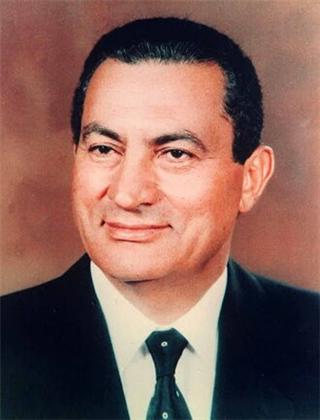
Protests began in Sidi Bouzid on 18 December 2010, and on 14 January 2011 Zine El Abidine Ben Ali fled to Saudi Arabia, ending 23 years in power. Unrest spread to Algeria, Jordan, Egypt and Yemen and beyond, its largest demonstrations often held on a Friday “day of rage”. In Egypt protests began on 25 January; the government tried to cut off the Internet, and on 11 February Hosni Mubarak resigned after 18 days, handing power to the armed forces.
In Bahrain protesters occupied Pearl Roundabout in Manama from February; on 14 March Gulf Cooperation Council forces, mainly Saudi and Emirati troops, arrived at the government’s request, and the camp was cleared. In Libya protests from 15 February turned to war; United Nations Security Council Resolution 1973 authorised a no-fly zone, France, the United States and the United Kingdom bombed pro-Gaddafi forces, rebels took Tripoli in August, and Muammar Gaddafi was killed at Sirte on 20 October 2011. In Syria the arrest and abuse of children in Daraa for writing anti-government slogans set off protests that met harsh clampdowns and grew into the Syrian civil war.
In Yemen Ali Abdullah Saleh was injured in an assassination attempt in June 2011, signed a Gulf Cooperation Council plan in November and handed power to Abdrabbuh Mansur Hadi in February 2012. By mid- to late 2012 the first wave had faded.
People
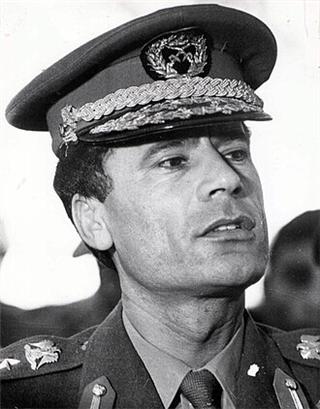
The uprisings drew in many groups: in Tunisia the unemployed, political and human rights activists, trade unionists, students, professors and lawyers; in Egypt computer-literate working-class youths and middle-class students, some calling themselves “the Facebook generation”. Nine in ten Egyptians and Tunisians in one poll said they used Facebook to organise protests. The Internet activist Wael Ghonim said his Facebook page was a “simple reaction to the events in Tunisia”, with no master plan, and the April 6 Movement was one of the leading forces of the Egyptian uprising. In Cairo, mosques were a main platform for coordinating protests.
Tawakkol Karman, a Yemeni human rights activist and politician who called a “Day of Rage” for 3 February 2011, shared that year’s Nobel Peace Prize for organising peaceful protests, and Time magazine named “The Protester” its Person of the Year. In Syria the politician Suhair Atassi became an unofficial spokesperson of the “Syrian revolution”. Islamists were present but did not lead: the Muslim Brotherhood’s old guard joined only when pushed by its young members, and Egypt’s mufti, Ali Gomaa, declared rising against Mubarak haram.
Against them stood rulers long in power: Ben Ali, Mubarak, Muammar Gaddafi, Ali Abdullah Saleh, King Hamad bin Isa Al Khalifa of Bahrain and President Bashar al-Assad of Syria, whose forces met protest with mass arrests, gunfire and tanks.
Outcomes
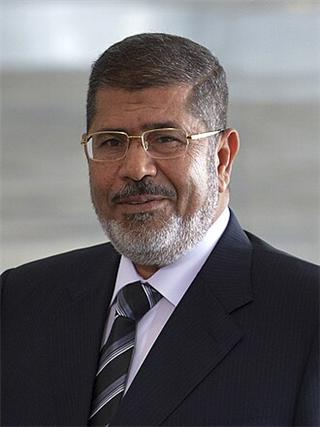
Outcomes varied greatly. In Tunisia a constituent assembly, elected in 2011 with 37% of the vote for the Islamist party Ennahda, prepared a constitution adopted on 26 January 2014 and seen as progressive, and elections that year completed the transition to democracy, though the autocracy since formed there questions that success. In Egypt Mohamed Morsi of the Muslim Brotherhood won the 2012 presidential election, regarded as free and fair, but on 3 July 2013 the military removed him; reports since describe more executions and pro-democracy activists in exile or hiding.
The monarchies of Morocco and the Persian Gulf co-opted the movement and kept order without significant social change. In Bahrain an independent commission found in 2011 that the government had systematically tortured prisoners, and repression went on a decade later; in the United Arab Emirates 69 men were convicted in the “UAE-94” trial after a petition for reform. In Syria and Libya the result was a complete collapse of society: the Syrian civil war killed between about 580,000 and 656,000 people, and in Yemen Houthi rebels overthrew the new government in 2015.
Social scientists link success to strong civil society and institutions, an educated middle class, open media and an army that sided with the protesters, as in Tunisia and Egypt; regimes without major oil wealth or hereditary succession were more likely to fall.
Legacy
The violence and instability that followed is commonly called the Arab Winter: civil wars, regional instability and religious wars between Sunni and Shia Muslims. Observers such as Quinn Mecham and Tarek Osman note the repression of the Muslim Brotherhood, the rise of Islamist state-building where states failed, most expansively the Islamic State, and sectarianism fed by the Iran–Saudi Arabia proxy conflict; Hussein Agha and Robert Malley call sectarianism “a politically expedient fable”. George Lawson sees a “largely unsuccessful revolution”, and Marwan Kabalan argued in 2019 that counter-revolutionary forces were seeking to resurrect military dictatorship.
A new wave of protests from 2018, sometimes called the Second Arab Spring, brought the resignation of the prime ministers Haider al-Abadi of Iraq in 2018 and Saad Hariri of Lebanon in 2020, and the overthrow of Omar al-Bashir of Sudan and Abdelaziz Bouteflika of Algeria in 2019. In December 2024 a rebel offensive led by Hay’at Tahrir al-Sham brought down the Assad regime after 13 years of civil war, and as of 2025 the war in Yemen went on.
The Lebanese novelist Elias Khoury wrote that “perhaps the secret of the Arab Spring lies not in its victories or defeats, but in its ability to liberate people from fear.”
Songs in history
The Arab Spring was a wave of protests and uprisings that began in Tunisia in December 2010 after the self-immolation of Mohamed Bouazizi and spread across the Arab world, forcing out the rulers of Tunisia, Egypt, Libya and Yemen. Its hopes of democracy and social justice were largely overtaken by repression, counter-revolution and civil wars in Syria, Libya and Yemen, though protests returned from 2018.
Test yourself
3 questions on this page, from its key events and facts.
The questions open here once the page has loaded.
References
- Oz Hassan, “Undermining the transatlantic democracy agenda? The Arab Spring and Saudi Arabia’s counteracting democracy strategy”, Democratization 22 (3) (2015)
- Sadek J. Al Azm, “The Arab Spring: Why Exactly at this Time?”, Reason Papers 33 (Fall 2011)