
Movement · Europe
Velvet Revolution
At a glance
- A police attack on a student march in Prague on 17 November 1989, the 50th anniversary of the Nazi storming of Prague’s universities, set off the revolution.
- Within eleven days mass demonstrations, strikes by students and theatres and a two-hour general strike forced the Communist Party to give up its monopoly of power.
- Václav Havel, a dissident playwright, was elected president on 29 December 1989, and in June 1990 Czechoslovakia held its first democratic elections since 1946.
Timeline
- 1948The Communist Party seizes power in Czechoslovakia, beginning 41 years of one-party rule
- 1988The first anti-government demonstrations, among them the Candle Demonstration, are dispersed by the police
- November 1989Riot police attack a student march in Prague on International Students’ Day, and a false report that a student was killed spreads
- November 1989Civic Forum is founded in Prague and Public Against Violence in Bratislava
- November 1989The Communist leadership resigns, a two-hour general strike is held and the Communist Party gives up its leading role
- December 1989President Gustáv Husák appoints the first largely non-communist government since 1948, and Václav Havel is elected president
- 1990Czechoslovakia holds its first democratic elections since 1946
- 1992Czechoslovakia splits peacefully into the Czech Republic and the Slovak Republic
Background
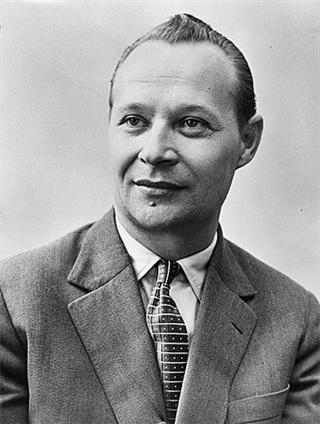
The Communist Party seized power in Czechoslovakia on 25 February 1948, and no official opposition parties operated thereafter. All schools, media and businesses belonged to the state, which made persecution easy. People were blacklisted for being children of former entrepreneurs or non-Communist politicians, for having family in the West, for having supported Alexander Dubček during the Prague Spring of 1968, for promoting religion or for signing Charter 77. Writers and filmmakers could see their work banned for a “negative attitude towards the socialist regime”, and travel to non-communist countries was forbidden. Dissidents published samizdat, home-made periodicals, but most people, fearing dismissal from work or school, did not openly support them.
After Mikhail Gorbachev introduced glasnost and perestroika in 1985, the leadership spoke in favour of reform but made few changes, and the Prague Spring stayed taboo. The first anti-government demonstrations, in 1988 and 1989, were dispersed by the police. Discontent with living standards grew, and in 1989 many signed petitions for the imprisoned Václav Havel and for an end to censorship.
Then the neighbours moved. From August 1989 East Germans occupied the West German embassy in Prague, and after 3 November thousands left Prague by train for the West; on 9 November the Berlin Wall fell. Czechoslovaks watched on foreign and domestic television, and the Soviet Union itself favoured a change in the country’s leadership.
Aims
The revolution began with limited demands. When Civic Forum was founded on 19 November 1989, it called for the dismissal of the officials responsible for the violence of 17 November, an independent investigation and the release of all political prisoners. The Democratic Initiative asked for the government’s resignation and a temporary government of uncompromised members. On 20 November Civic Forum added the abolition of the Communist Party’s “ruling position” in the Constitution. The general strike of 27 November turned these moderate demands into calls for a new government.
Behind the demands lay shared ideals, spread on hundreds of flyers. One of the most widely circulated documents of the summer of 1989, “The Eight Rules of Dialogue”, called for truth, understanding and empathy, informed and respectful discussion, no personal attacks and an open mind. Others spoke of democracy, freedom, nonviolence, fairness and humanness, of self-organisation, political representation and better working conditions. The new movements led by Havel invoked a united society in which the state would be politically restructured.
Whether this was a revolution at all is debated. Theorists such as Jaroslav Krejčí argued that it was not, since a revolution by definition brings change through illegitimate violence; others answer that a situation of contested sovereignty followed by a transfer of power makes it a true revolution.
Course of Events
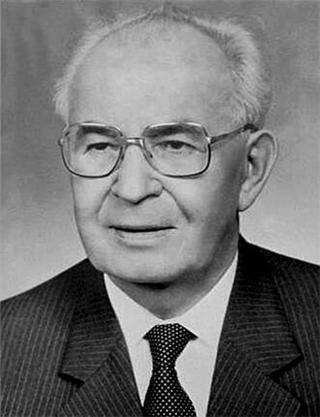
On 16 November 1989 students marched peacefully through Bratislava. The next day, International Students’ Day and the 50th anniversary of the Nazi storming of Prague’s universities, about 15,000 people joined an official march in Prague, then carried on into the centre with anti-Communist slogans. At about 7.30 pm riot police blocked them on Národní Street and attacked. A false story that a student, Martin Šmíd, had been killed, reported by Radio Free Europe, drew hesitant citizens into the protests. Students and theatres went on strike, and on 19 November Civic Forum was founded in Prague and Public Against Violence in Bratislava.
Demonstrations filled Wenceslas Square and spread to every major city. On 21 November Miloš Jakeš declared on television that socialism was the only alternative, and 4,000 members of the People’s Militias were summoned to Prague, then called off; the Minister of Defence promised that the army would never act against the people. On 24 November the whole Presidium, Jakeš included, resigned, and the next day some 800,000 people gathered at Letná.
On 27 November a two-hour general strike, backed by a reported 75% of the population, showed Civic Forum’s power. On 28 November the Communist Party announced that it would give up power, and the provision on its leading role was struck from the Constitution. On 10 December Gustáv Husák swore in the first government in 41 years not dominated by the Communists, and resigned.
People
Students began the revolution. Members of the Socialist Youth Union, most of them privately opposed to the leadership, organised the march of 17 November, which followed the plan of the Stuha movement’s founders, Jiří Dienstbier and Šimon Pánek, to Karel Hynek Mácha’s grave at Vyšehrad. Students of the Academy of Performing Arts in Prague started the strike that spread to universities across the country. Actors refused to perform and read the students’ proclamation to their audiences, and actors and students travelled to factories to win the workers over.
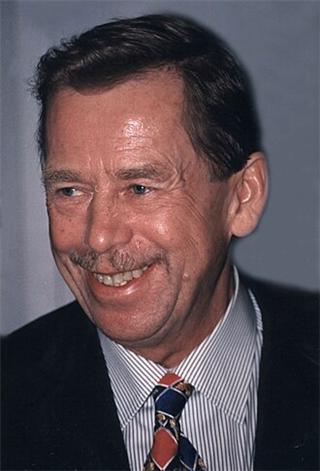
Václav Havel, a playwright and human rights activist, founded Civic Forum with other members of Charter 77 and gave his first television address on 24 November. In Slovakia about 500 artists, scientists and leaders formed Public Against Violence, among them Milan Kňažko and Ján Budaj. Alexander Dubček made his first appearance of the revolution at a Bratislava rally for the release of the political prisoner Ján Čarnogurský, and Cardinal František Tomášek, primate of the Bohemian lands, declared his support for the students.
On the other side, Prime Minister Ladislav Adamec was sympathetic to the students’ demands but was outvoted in his cabinet, while the party leader Miloš Jakeš and the Prague secretary Miroslav Štěpán held to a hard line until they fell. Ordinary people joined in their hundreds of thousands.
Outcomes
Hardly anyone had thought the Communist state could collapse so quickly. Striking students and theatres did not at first seem likely to intimidate a state that could suppress any demonstration, but the mass demonstrations after 17 November brought down the Jakeš leadership, removed the party from its leading role and produced a non-Communist government, and the general strike of 27 November gave Civic Forum the standing to speak for the nation in talks with the state. Outside events were catalysts: the changes in Poland and Hungary and the collapse of the East German regime encouraged Czechs and Slovaks to take to the streets, and Western broadcasters such as Radio Free Europe, Voice of America and the BBC World Service carried uncensored news despite jamming.
Havel was elected President on 29 December 1989, a day after Dubček became speaker of the federal parliament. Within weeks Havel negotiated the removal of about 73,500 Soviet troops, who left within months. Free elections in June 1990 legitimised the new government. In early 1990 the President and his advisers decided to liberalise prices, break up monopolies and privatise the economy; the end of lifelong employment brought unemployment, met with unemployment benefits and a minimum wage. Freedom of religion grew, with renewed ties to the Vatican and Israel.
Legacy
The democratic transition did not hold the federation together. Ethnic tensions between Czechs and Slovaks resurfaced after communism, and disputes over national governance led to the peaceful division of Czechoslovakia into the Czech Republic and the Slovak Republic on 31 December 1992.
The name Velvet Revolution was coined by Rita Klímová, the dissidents’ English translator and later ambassador to the United States, and became the international term, used by Czechs too. Slovaks called it the Gentle Revolution from the beginning, and after 1993 Slovakia kept that name, while the Czech Republic still speaks of the Velvet Revolution. Havel’s election as President was highly choreographed and symbolically significant, with religious elements that the historian Martin Wein has analysed in detail.
The revolution is an early example of the “colour revolutions” around the world. The jingling of keys became one of its best-remembered gestures: it meant both the unlocking of doors and a farewell to the Communists. Slovakia marked the 20th anniversary on 17 November 2009 with a 2-euro coin showing a bell with a key beside its clapper, and Ursula K. Le Guin made jingled keys central to the liberation of her fictional country of Orsinia in the short story “Unlocking the Air”.
Songs in history
The Velvet Revolution, in Slovak the Gentle Revolution, was the non-violent end of Communist one-party rule in Czechoslovakia in November and December 1989. Set off by a police attack on a student march in Prague, it grew through mass demonstrations, strikes and a general strike, and ended with Václav Havel as president, free elections in 1990 and a turn to a market economy.
Test yourself
5 questions on this page, from its key events and facts.
The questions open here once the page has loaded.
References
- Garton Ash, Timothy, We the People: The Revolution of '89 Witnessed in Warsaw, Budapest, Berlin and Prague (Granta Books, 1990)
- Benda, Marek, et al., Studenti psali revoluci [Students wrote the revolution] (Univerzum, 1990)
- Roberts, Adam, and Timothy Garton Ash (eds.), Civil Resistance and Power Politics: The Experience of Non-violent Action from Gandhi to the Present (Oxford University Press, 2009)
- Wein, Martin, A History of Czechs and Jews: A Slavic Jerusalem (Routledge, 2015)
- Schelle, Karel, Roman Lamka and Jaromír Tauchen, The Process of Democratization of Law in the Czech Republic, 1989–2009 (AICELS, 2009)