
Movement · South & Southeast Asia
Non-Aligned Movement
At a glance
- The idea grew from India’s and Yugoslavia’s refusal to take sides in the Korean War and from the Five Principles of Peaceful Coexistence, taken into the declaration of the Bandung Conference of Asian and African states in 1955.
- Founded in Belgrade in 1961 on the initiative of Tito, Nasser, Nehru, Nkrumah and Sukarno, it sought a middle course between the Western and Eastern blocs and campaigned against colonialism, racism and apartheid.
- With 120 members, nearly two-thirds of the members of the United Nations, it is the largest grouping of states after the UN; since the Cold War it has recast itself as a voice of the Global South.
Timeline
- 1950India and Yugoslavia first use the term non-alignment at the United Nations, refusing to take sides in the Korean War
- 1955The Bandung Conference of Asian and African states adopts a declaration that includes the Five Principles and a pledge of neutrality in the Cold War
- 1956Tito, Nehru and Nasser sign the Declaration of Brijuni in Yugoslavia
- 1961The first Conference of Heads of State or Government of Non-Aligned Countries meets in Belgrade
- 1979Fidel Castro chairs the Havana summit; months later the movement is split by the Soviet intervention in Afghanistan
- 1983The seventh summit, in New Delhi, calls the movement “history’s biggest peace movement”
- 1992The movement suspends the membership of Yugoslavia, a founding member, as the country breaks up
- 2024The 19th summit meets in Kampala, Uganda
Background
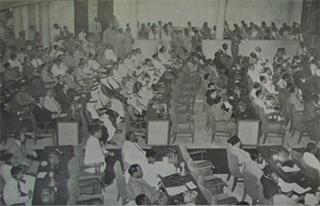
The movement arose after the Korean War, as some countries sought to counterbalance the rapid bi-polarisation of the world in the Cold War, when two great powers formed blocs, the pro-Soviet socialist bloc of the Warsaw Pact and the pro-American capitalist group, many of whose members belonged to NATO, and set out to pull the rest of the world into their orbits. The term non-alignment was first used at the United Nations in 1950 by India and Yugoslavia, which refused to take sides in the alliances of the Korean War, and the Indian diplomat V. K. Krishna Menon used the phrase for the doctrine at the United Nations in 1953. According to Rejaul Karim Laskar, an ideologue of India’s Congress party, it grew from the wish of Jawaharlal Nehru and other leaders of newly independent countries to guard their independence and sovereignty against demands for allegiance to one of two warring superpowers.
Nehru used the phrase in a speech in Colombo in 1954. The Five Principles of Peaceful Coexistence, or Panchsheel, set out by Zhou Enlai and Nehru for Sino-Indian relations, later served as the movement’s basis: mutual respect for territorial integrity and sovereignty, non-aggression, non-interference in domestic affairs, equality and mutual benefit, and peaceful coexistence. The Bandung Conference of Asian and African states, hosted by Indonesia’s president Sukarno in 1955, adopted a declaration that included them and a collective pledge to stay neutral in the Cold War.
Aims
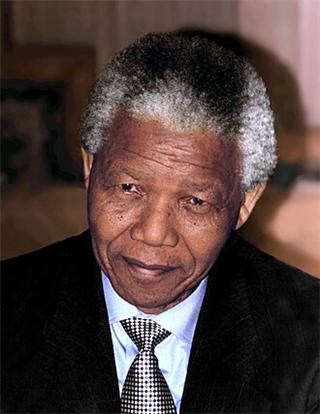
The movement advocated a middle course for the developing world between the Western and Eastern blocs. In Fidel Castro’s Havana Declaration of 1979 its purpose was to ensure “the national independence, sovereignty, territorial integrity and security of non-aligned countries” in their struggle against imperialism, colonialism, neo-colonialism, racism and foreign aggression, occupation or domination, and against great power and bloc politics. The Brioni meeting of 1956 linked the struggle for peace to disarmament, and at Lusaka in 1970 members added the peaceful settlement of disputes, abstention from the military alliances and pacts of the great powers and opposition to foreign military bases.
Members are expected to follow the ten Bandung principles of 1955, among them respect for human rights and the Charter of the United Nations, for the sovereignty and territorial integrity of all nations, recognition of movements for national independence, the equality of all races and nations, non-intervention and the peaceful settlement of disputes. In the 1970s and early 1980s the movement campaigned for a New International Economic Order and a New World Information and Communication Order. Its leaders have ranged from Suharto, a militaristic anti-communist, to Nelson Mandela, a democratic socialist, united by a declared commitment to world peace and security.
Course of Events
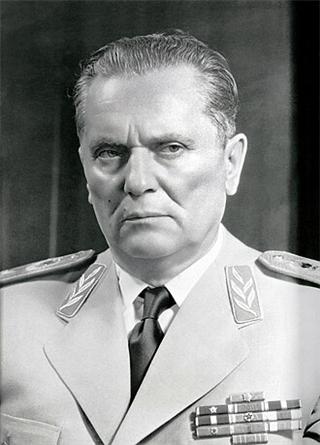
In 1956 Tito, Nehru and Nasser signed the Declaration of Brijuni in Yugoslavia, and in September 1961, on Tito’s initiative, the first Conference of Heads of State or Government of Non-Aligned Countries met in Belgrade. In 1975 members in the United Nations General Assembly, with Arab countries and the support of the Soviet bloc, pushed through Resolution 3379, a non-binding measure that equated Zionism with South Africa’s apartheid as a form of racial discrimination; the same year the movement created the Non-Aligned News Agencies Pool. In the 1970s Cuba sought to lead the movement, and the Havana summit of September 1979, chaired by Fidel Castro, marked the height of Cuban prestige.
In December 1979 the Soviet Union intervened in Afghanistan, then an active member. Non-aligned members voted 56 to 9, with 26 abstaining, to condemn it at the United Nations; Cuba voted with the USSR and lost its standing, and the movement was deeply split. Members also fought one another, India and Pakistan, Iran and Iraq: the seventh summit, planned for Baghdad in 1982, met in New Delhi in 1983. As Yugoslavia broke up, its membership was suspended in 1992. Malta and Cyprus left on joining the European Union in 2004, and Azerbaijan and Fiji joined in 2011.
People

The founders were Josip Broz Tito, the Marxist–Leninist president of Yugoslavia, whose initiative led to the Belgrade conference; Gamal Abdel Nasser of Egypt; Jawaharlal Nehru, prime minister of India; Kwame Nkrumah of Ghana; and Sukarno of Indonesia, host of the Bandung Conference, who gave the movement a significant boost. Bandung also brought together U Nu, V. K. Krishna Menon, Ho Chi Minh, Zhou Enlai, Norodom Sihanouk, U Thant and a young Indira Gandhi. Krishna Menon was the first to use the phrase for the doctrine.
Fidel Castro chaired the movement from the Havana summit of 1979 and became its de facto spokesman, until his silence over Afghanistan cost Cuba its leadership. Later chairs have been figures of very different politics: Suharto, Nelson Mandela, the anti-apartheid activist, Mohamed Morsi, a conservative Islamist, and the Colombian social liberal Ernesto Samper. The chair passes at each summit to the host country, and Iran took it over from Egypt in 2012. The movement’s day-to-day work is done by working groups under a Coordinating Bureau at the United Nations, and its youth branch, the NAM Youth Organization, took that name with the Shusha Accords of 2022 and has over 60 national chapters.
Outcomes
The Non-Aligned Movement had most traction in the 1950s and early 1960s, when non-alignment achieved major successes in decolonization, disarmament and opposition to racism and to apartheid in South Africa. It persisted through the whole Cold War despite conflicts between members and despite some members drawing closer to the Soviet Union, China or the United States. It strongly opposed apartheid governments and supported guerrilla movements in places such as Rhodesia and South Africa, and African concerns about apartheid were linked with Arab and Asian concerns about Palestine, with moderate success. The bloc vote it formed with Arab and Soviet-bloc states produced a majority in the United Nations that systematically condemned Israel in a series of resolutions.
Its weaknesses were as plain. With no strict organisation, by design, and members of very different ideologies, it has rarely taken definitive action on particular issues, preferring to state its criticism or support rather than pass hard-line resolutions, and its size and the divergence of its members’ agendas leave a constant risk of fragmentation. India, a founding member, appears to have downgraded its emphasis on the movement, and the successor states of Yugoslavia have shown little interest in joining.
Legacy
After the Cold War ended in 1991 the movement had to redefine its purpose. It has stressed multilateralism, equality and mutual non-aggression, seeking to be a stronger voice for the Global South and to strengthen its members’ leverage with developed nations. In its own view the poorest nations remain exploited and marginalised, now in a uni-polar world, and it has re-aligned itself against Western hegemony and neo-colonialism, while turning to globalization, neo-liberal policies, poverty and underdevelopment. It calls for reform of the United Nations Security Council, which it considers the most undemocratic part of the UN, and has supported self-determination for Puerto Rico since 1961 and for Western Sahara since 1973; some members have denounced the 2003 invasion of Iraq and other United States policies.
With 120 members, nearly two-thirds of the members of the United Nations and 55% of the world’s population, it remains the largest grouping of states after the UN. Its centres include the Centre for South-South Technical Cooperation in Jakarta, set up after the Cartagena meeting of 1995, and others in Cuba, Iran and India. It marked its 50th and 60th anniversaries in Belgrade in 2011 and 2021, met online against Covid-19 in 2020 and in Kampala in 2024, and its 20th summit is expected in Uzbekistan.
The Non-Aligned Movement is a forum of 120 countries not formally aligned with or against any major power bloc. Founded in Belgrade in 1961 by Tito, Nasser, Nehru, Nkrumah and Sukarno on principles agreed at Bandung in 1955, it sought a middle course in the Cold War and won successes against colonialism and apartheid; since 1991 it has sought to speak for the Global South, though its members are often divided.
Test yourself
5 questions on this page, from its key events and facts.
The questions open here once the page has loaded.
References
- Dinkel, Jürgen, The Non-Aligned Movement: Genesis, Organization and Politics (1927–1992) (Brill, 2019)
- Lüthi, Lorenz M., “The Non-Aligned Movement and the Cold War, 1961–1973”, Journal of Cold War Studies 18.4 (2016)
- Miskovic, Natasa, Harald Fischer-Tiné and Nada Boskovska (eds), The Non-Aligned Movement and the Cold War: Delhi-Bandung-Belgrade (Routledge, 2014)
- Arnold, Guy, The A to Z of the Non-aligned Movement and Third World (Scarecrow Press, 2010)
- Potter, William, Nuclear Politics and the Non-aligned Movement: Principles vs Pragmatism (Routledge, 2017)