
Culture · Central & East Asia
Longshan culture
At a glance
- The Longshan culture is named after the town of Longshan in Shandong, near the Chengziya site found in 1928, and is best known for thin, polished black pottery made on the potter’s wheel.
- In the 3rd millennium BCE its population grew sharply: towns were walled with rammed earth, a few centres grew to over 200 hectares, and the dagger-axe points to more frequent warfare.
- Around 2000 BCE its population fell sharply and large settlements were abandoned, except in central Henan, where the culture developed into the Bronze Age Erlitou culture.
Timeline
- 3000–2600 BCEThe Miaodigou II phase in Henan, Shanxi and Shaanxi marks the passage from the Yangshao culture to the Henan Longshan
- by 2800 BCESheep and goats, domesticated on the Loess Plateau, reach western Henan and then spread across the middle and lower Yellow River
- 2600–2000 BCEIn the late period regional variants flourish, settlements form hierarchies and some thirty towns are walled with rammed earth
- c. 2000 BCEThe population falls sharply and large centres are abandoned, possibly through climate change at the end of the Holocene Climatic Optimum
- 1928The Chengziya site near Longshan in Shandong is found, and excavated in 1930 and 1931
- 1950sExcavations at Shanxian in western Henan identify the Miaodigou II phase
- 1963Kwang-chih Chang describes a uniform “Longshanoid horizon”, which he replaces in 1986 with a “Chinese interaction sphere” of regional cultures
Origins
The Longshan culture, sometimes called the Black Pottery Culture, was a late Neolithic culture of the middle and lower Yellow River valley in northern China, from about 3000 to 1900 BCE. It is named after the town of Longshan, “Dragon Mountain”, in Zhangqiu, Shandong, near the Chengziya site, found in 1928 and first excavated in 1930 and 1931. Excavations in the 1950s at Shanxian in western Henan identified a Miaodigou II phase (3000–2600 BCE), transitional between the earlier Yangshao culture and the Henan Longshan. A minority of archaeologists would assign it to the Yangshao, but most treat it as the early Henan Longshan. In Shandong the Longshan developed out of the Dawenkou culture, and some scholars count the late Dawenkou as its early phase.
The culture’s limits have been redrawn. Until the 1950s black pottery was the main diagnostic, and every site with it was called Longshan. In 1963 Kwang-chih Chang described a “Longshanoid horizon”, a fairly uniform culture spreading from the Central Plain. Later finds showed much more regional variety: the lower Yangtze culture of the time is now the Liangzhu culture, the name Longshan is kept for the middle and lower Yellow River, and variants in Henan, Shanxi and Shaanxi are told apart from the Shandong or “classic” Longshan. In 1986 Chang turned to distinct regional cultures stimulated by contact, and Yan Wenming proposed a “Longshan era” for the late Neolithic of the whole area.
Society
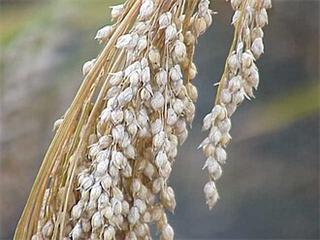
Longshan farmers grew foxtail millet above all, with traces of broomcorn millet, rice and wheat; rice grains are known from Shandong and southern Henan, and a small rice field from the Liaodong peninsula. They had special tools for digging, harvesting and grinding grain. Pigs were the main source of meat; sheep and goats reached western Henan by 2800 BCE, dogs were eaten, especially in Shandong, and cattle mattered less. At Liangchengzhen foxtail millet was grown mostly as fodder, and rice was the preferred human food. Silkworms were raised to make silk on a small scale.
In the late period (2600–2000 BCE) the Neolithic population reached its peak and settlements formed hierarchies. In enclosed landscapes, such as the Fen River basin and the Rizhao plain, a few centres grew to over 200 hectares; in more open country local centres of 20 to 60 hectares were more numerous and evenly spaced. Cities had separate quarters for classes and occupations, large elite residences and ritual buildings, and some large houses had clay drainpipes. Growing populations and social ranking suggest competing chieftainships ruled by dynastic lineages. Rammed-earth walls surround 20 towns in Shandong, 9 in the Central Plain and Taosi in southern Shanxi, and the dagger-axe, a purely military weapon, points to more frequent fighting. In the Shandong Longshan the gap between rich and poor was far smaller, and there seems to have been less violence.
Beliefs & Worldview
Longshan people practised divination by heating the shoulder blades of cattle, pigs, sheep and deer; such scapulae have been found in Shaanxi and southern Henan. Evidence of human sacrifice becomes more common in Shaanxi and the Central Plain in the late Longshan period.
Burials show the ranks of the living. At Taosi, the largest Longshan settlement of the middle Yellow River, mortuary practices point to a complex society with at least three social ranks. High-quality black pottery was placed in ritual burials, and its disappearance at the end of the 3rd millennium BCE went with the culture’s decline. The cities of the late period held ritual structures beside their large elite residences, and jade was worked into prestige objects at centres such as Liangchengzhen and Yaowangcheng.
A potsherd from Dinggong in Shandong bears 11 inscribed symbols, but scholars disagree over whether it belongs to the Neolithic, and nothing is known of what the symbols meant.
Arts & Knowledge
The Longshan culture is noted for its highly polished black pottery, also called egg-shell pottery. Its potters used the wheel and made thin-walled vessels with great skill; the ware spread across North China and is found in the Yangtze valley and as far as the southeastern coast. Already in the Miaodigou II phase tools and pottery were much improved on those of the Yangshao culture, and the quick wheel came into wide use.
Crafts were centred in the large towns. Liangchengzhen and Yaowangcheng in Shandong produced pottery, stone tools and textiles, and there is evidence of fermented drinks and of prestige goods of jade and metal, so they were also regional centres of production and exchange. The late period saw more widespread and skilled making of copper tools, rings and bells, with a few objects of bronze and brass, paving the way for the Bronze Age cultures that followed; most scholars place the start of the Chalcolithic in the Longshan of 2600–2000 BCE.
Builders raised town walls of rammed earth and improved the making of wells: the Hougang II variant of northern Henan and southern Hebei has the first wells of the Yellow River area, dug by a method that early Bronze Age states there went on using. Houses of the Sanliqiao II variant were built above ground, sunk partly into it, or dug sideways into loess cliffs, their walls often plastered.
Contact & Exchange
Longshan communities were tied to their neighbours. Ceramic styles of central Henan in the Miaodigou II phase resemble those of the late Dawenkou culture to the east and the late Qujialing culture to the south, which suggests trade, and middle and late Dawenkou sites (3500–2600 BCE) spread towards central Henan and northern Anhui. Kwang-chih Chang’s “Chinese interaction sphere” describes regional cultures whose growth was spurred by such contact. Recent research also points to interaction across Eurasia in the late 3rd millennium BCE, seen in the transfer of technologies such as pottery and metalworking.
Within the Longshan world, neighbouring centres competed. On the Rizhao coast Liangchengzhen (273 ha) and Yaowangcheng (368 ha), about 35 km apart, each sat among economically integrated settlements with few between them, which suggests rival polities. North of the Mount Tai massif stood four evenly spaced walled centres, Chengziya, Dinggong, Tianwang and Bianxianwang, the largest enclosing only 20 ha. In western and central Henan the Wangwan III sites tripled in number from Yangshao times and formed competing systems of several centres. At Taosi the rammed-earth wall was destroyed late in its history amid signs of violence and political upheaval, and a new centre of 230 ha, Fangcheng, rose 20 km to the southeast.
Legacy

Towards the end of the 3rd millennium BCE the population fell sharply in most of the region and many large centres were abandoned, possibly through environmental change linked to the end of the Holocene Climatic Optimum. In the Wei River valley the Kexingzhuang II sites already show a decline that scholars put down to migration caused by environmental change. The basin of the Yi and Luo rivers in central Henan was the exception: there population and social complexity grew fast, and material culture runs on without a break through a Xinzhai phase to the Erlitou culture. A 70-hectare walled centre at Xinzhai is said to lead “typologically directly to early Erlitou”. At Taosi there is no such continuity, which suggests a collapse there and later expansion from the Erlitou core. In Shandong the Longshan was followed by the Bronze Age Yueshi culture.
The discovery of the Longshan culture mattered to a debate over the origins of Chinese civilisation: J. G. Andersson, who excavated Yangshao in 1921, had traced its painted pottery to the west, a view Chinese researchers questioned. The Longshan’s bronze, its many towns and its thin black pottery made on the quick wheel are taken as signs of unprecedented growth in production, and of a widening gap between rich and poor. Modern Shandong, home of the tall Longshan people, has the tallest people of any Chinese province.
The Longshan culture was a late Neolithic culture of the middle and lower Yellow River valley, c. 3000–1900 BCE, famed for its thin, wheel-made black pottery. Its farmers grew millet and rice and kept pigs, sheep and goats; its population peaked in walled towns and rival centres, then fell around 2000 BCE, except in central Henan, where it gave rise to the Erlitou culture.
References
- Liu, Li (2005), The Chinese Neolithic: Trajectories to Early States, Cambridge University Press, ISBN 978-0-521-81184-2.
- Liu, Li; Chen, Xingcan (2012), The Archaeology of China: From the Late Paleolithic to the Early Bronze Age, Cambridge University Press, ISBN 978-0-521-64310-8.
- Shao, Wangping (2005), "The formation of civilization: the interaction sphere of the Longshan period", in Allan, Sarah (ed.), The Formation of Chinese Civilization: An Archaeological Perspective, Yale University Press, pp. 85–123, ISBN 978-0-300-09382-7.
- Shelach-Lavi, Gideon (2015), The Archaeology of Early China, Cambridge University Press, ISBN 978-0-521-19689-5.
- Sun, Bo (2013), "The Longshan culture of Shandong", in Underhill, Anne P. (ed.), A Companion to Chinese Archaeology, John Wiley & Sons, pp. 435–458, ISBN 978-1-4443-3529-3.
- Zhao, Chunqing (2013), "The Longshan culture in central Henan province, c.2600–1900 BC", in Underhill, Anne P. (ed.), A Companion to Chinese Archaeology, John Wiley & Sons, pp. 236–254, ISBN 978-1-4443-3529-3.