
Culture · Europe
Bell Beaker culture
At a glance
- Bell Beaker is an archaeologists’ label for a set of objects and customs, named after a drinking vessel shaped like an upside-down bell, that appears across western Europe from about 2800 BCE.
- Beaker groups spread copper, gold and later tin-bronze working along sea and river routes, from Ireland’s Ross Island mines to Portugal, Sicily and Hungary.
- Its early spread from Iberia seems to have involved little migration, but its later spread carried steppe-related ancestry that replaced about 90% of Britain’s gene pool.
Timeline
- c. 2800 BCEThe earliest maritime-style bell beakers appear at the Tagus estuary in Portugal
- c. 2600 BCEMaritime Bell Beakers reach the Lower Rhine
- c. 2500 BCEBeakers arrive in Britain and Ireland, and Bell Beaker groups reach Csepel Island in Hungary
- c. 2400–2200 BCECopper is mined and smelted at Ross Island in Ireland
- c. 2300 BCEThe Pömmelte enclosure is built in central Germany, and the Únětice culture succeeds the Bell Beaker in central Europe
- c. 2200–2100 BCEBritain switches all its metalwork to tin-bronze
- c. 1700 BCEBeakers fall out of use in Britain and Ireland
- 1904John Abercromby introduces the English name Bell Beaker
Origins
The Bell Beaker culture is named after its most typical object, a drinking vessel shaped like an upside-down bell. The German prehistorian Paul Reinecke coined the term Glockenbecher, and John Abercromby introduced the English form Bell Beaker in 1904. Whether it was a single culture has long been controversial: in 1995 Christian Strahm used the term “Bell Beaker phenomenon” as a compromise, to avoid calling it a culture at all. In its early phase its objects turn up in scattered pockets across Europe rather than in one continuous area, without a typical architecture or burial custom, and only in its later phase does it come together as a coherent archaeological culture.
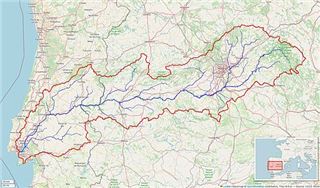
The earliest examples of the “maritime” beaker design come from the Tagus estuary in Portugal, radiocarbon dated to about the 28th century BCE, and may have been inspired by the earlier, smaller Copoz beakers of the same area. Turek sees forerunners in northern Africa, arguing that the maritime style grew out of sea contacts between Iberia and Morocco. Many studies since the 2000s describe the phenomenon as a synthesis of elements, “an idea and style uniting different regions with different cultural traditions and background”.
The culture lasted for different lengths of time in different places. In central Europe it ended about 2300 BCE, when the Únětice culture followed; in Britain it lasted from about 2450 BCE, with the first single graves, until as late as 1800 BCE; in some areas of Europe it lasted until about 1650 BCE. In its early phase it was the western neighbour of the Corded Ware culture of central Europe, and its spread became one of the central questions in the twentieth-century debate between migration and the diffusion of ideas.
Society

Bell Beaker settlements are still little known and have proved very hard to find. Where they have been studied, as in southern Germany and among the eastern group of central Europe, they show mixed farming and animal husbandry, while millstones and spindle whorls show that people lived settled lives in lasting homes. Albertfalva in Hungary, dating from 2470 to 1950 BCE, is a well-excavated example. On the Balearic Islands perforated pots, traditionally thought to have been used for cheese, point to dairying, and spindles to the spinning of wool. Pollen studies show more barley grown as beakers spread, which may be linked to brewing beer.
In its mature phase the culture combined copper, arsenical bronze and gold working, long-distance exchange and archery with growing social ranks and regional elites. Some richly equipped child burials in central Europe suggest that some people were born into their position, though studies of graves there did not lead to strong conclusions about social divisions. In Ireland single graves suggest a society of family groups, and in Denmark, Apel argued, the skill of making flint daggers passed down within certain families, although Debbie Olausson found only a low degree of craft specialisation, probably a division of labour between households.
Daily life changed in other ways too. In Denmark people adopted woven wool clothes fastened with pins and buttons, in place of clothing of leather and plant fibres, and lived in two-aisled timber houses. In Britain the archaeologist Mike Parker Pearson has noted a much higher level of labour mobilisation after the Beaker people arrived, and they introduced mummification, burial in log coffins and head-shaping there.
Beliefs & Worldview
The Beaker people left no writing, so their beliefs are inferred from graves, monuments and objects, and a shared set of religious ideas is presumed rather than proven. The typical Beaker burial was a single body, often crouched, under a mound and with weapons, in marked contrast to the collective burials without weapons of the earlier Neolithic in western Europe. A 2014 review, however, found single burials, communal burials and the reuse of older tombs throughout the Beaker zone. Customs varied by region: cremation occurs in places, and in Ireland beakers were rarely placed in graves at all, food vessels being used instead.
Great circular enclosures suggest shared rituals. La Loma del Real Tesoro II near Carmona in Spain (c. 2600–2200 BCE) may have been used for them. At Pömmelte in central Germany, built about 2300 BCE and used until about 1900 BCE, the main entrances face sunrise and sunset midway between the solstices and equinoxes, and the site has been read as a monument for “ceremonies linked to calendrical rites and seasonal feasting”. Its plan and size closely match those of Stonehenge, which was much elaborated in this period, and an enclosure of about 2000 BCE near Tiel in the Netherlands had entrances aligned to the solstices and equinoxes.
Gold lunulae, sometimes found with pairs of gold discs, as at Coggalbeg in Ireland and Cabeceiras de Basto in Portugal, have been linked to sun worship. The archaeologist Mary Cahill connects them to a “great solar cult” reaching across western and central Europe to Scandinavia and reads the discs as “the day and night sun”, while Timothy Darvill has argued that Stonehenge worked as a solar calendar. These remain interpretations.
Arts & Knowledge
Archaeologists distinguish two main international styles of beaker: the All Over Ornamented type, covered in impressions, with an All Over Corded subset, and the Maritime type, decorated with bands of comb or cord impressions; regional styles followed later. Beakers may have been designed for drinking alcohol, and beer and mead have been identified in some, but others were used to smelt copper, held food or served as funerary urns. The Beaker “package” also included copper daggers, V-perforated buttons and stone wrist-guards for archers.
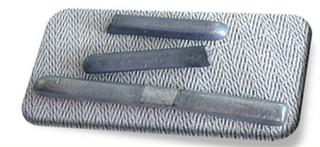
Metal was central. At Ross Island in Ireland, the earliest known Irish copper mines, from about 2500 BCE, local ores were smelted into the first copper axes of Britain and Ireland; between 2500 and 2200 BCE Ross Island seems to have been Ireland’s only source of copper, and two thirds of British copper objects carry its signature. Tin from Cornwall and Devon was used to make bronze from about 2200 BCE, and Britain became the first region of Europe to switch all its metalwork to tin-bronze, in 2200–2100 BCE. Ireland produced the bronze halberd, a broad blade mounted on a handle about a metre long, used about 2400–2000 BCE and later adopted widely in Europe.
Gold was worked into lunulae, discs and ornaments, and the gold of the Irish lunulae and of the Nebra sky disc both came from Cornwall. In Denmark lanceolate flint daggers were made in the style of the daggers circulating in Beaker Europe, giving the years 2400–1800 BCE their name, the Dagger Period. The Ferriby boats from the Humber Estuary, dating from as early as 2030 BCE, are Europe’s oldest sewn-plank boats.
Contact & Exchange
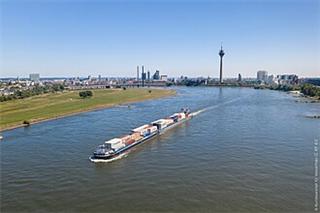
Bell Beaker people travelled by sea and river. From the Tagus estuary the first moves were by sea: south into the Mediterranean, with enclaves in south-western Spain, southern France and the Po Valley, and north to Brittany, from where routes along the Loire and Seine brought maritime beakers to the Lower Rhine about 2600 BCE. The spread along these long-used sea routes seems to have been linked directly to the search for copper and other rare raw materials. On the Rhine Beaker groups met the Corded Ware culture, and from there they spread east as far as the Vistula in Poland; another expansion reached Csepel Island in Hungary by about 2500 BCE.
How the culture spread is its central question. Gordon Childe pictured “missionaries” spreading copper working from Iberia, Stephen Shennan a mobile elite imposing itself, and in the mid-1970s Colin Burgess and Shennan proposed a “pots, not people” model in which local peoples adopted a package of knowledge and objects. Ancient DNA has partly resolved the debate. Olalde and colleagues (2018) found only limited genetic affinity between early Beaker people in Iberia and in central Europe, suggesting that migration played a limited role at first, but the later spread was strongly linked to migration. In Britain it brought high levels of steppe-related ancestry and replaced about 90% of the gene pool within a few centuries, and in Iberia between about 2500 and 2000 BCE about 40% of the ancestry and nearly all the male lineages were replaced by people with steppe ancestry.
Contacts reached far. Strontium analysis in Bavaria found that 18–25% of the people in Beaker graves came from well outside the area. Irish copper reached the Netherlands and Brittany, Cornish gold went to Ireland and the continent, and a glass bead from Mesopotamia was found in the Tiel enclosure. Bell Beaker artefacts appear in mainland Greece and the Aegean from about 2200–2000 BCE, and European Bronze Age ancestry, including ancestry linked to Beaker groups, has been found among the Guanches of the Canary Islands.
Legacy

The Bell Beaker culture did not end at one moment. In central Europe it gave way about 2300 BCE to the Únětice culture, and elsewhere to a series of Bronze Age cultures: the Elp and Hilversum cultures in the Netherlands, the Atlantic Bronze Age along Europe’s Atlantic coast and the Nordic Bronze Age in Scandinavia. Beakers lasted longest in Britain and Ireland, where they fell out of use around 1700 BCE after food vessels and cinerary urns had appeared. In Denmark the typical Beaker features were gone before the turn of the millennium, blended into local culture. The trade routes the Beaker people opened stayed firmly in use.
Its genetic legacy was large. A 2024 study, still a preprint, found that the steppe ancestry of Beaker populations came from the Corded Ware culture rather than directly from the Yamnaya culture, and Beaker-related ancestry contributed to later peoples of Italy, including the Iron Age Etruscans. Bell Beaker populations had higher frequencies of blond hair, blue eyes and light skin than others in Europe, and these became more common in Britain after their arrival. Their language remains conjecture: James Mallory associates the Beaker culture with a hypothetical “North-West Indo-European” cluster of dialects, ancestral to the Celtic, Italic, Germanic and Balto-Slavic branches.
Some of the best-known monuments of prehistoric Europe belong to this age. Stonehenge was extensively elaborated, with rich burials nearby such as the Amesbury Archer and the later Bush Barrow, and Silbury Hill was built in the early Bell Beaker period. In Ireland the arrival of the Beaker culture was accompanied by the destruction of smaller tombs at Knowth and collapses of the great cairn at Newgrange, marking the end of the Neolithic tradition of megalithic passage tombs.
The Bell Beaker culture is the archaeologists’ name for a set of objects and customs, led by a bell-shaped drinking vessel, that spread across western and central Europe from about 2800 to 1800 BCE. Beaker groups carried copper, gold and bronze working along sea and river routes. Ancient DNA shows that its early spread involved little migration, but its later spread transformed the populations of Britain and Iberia.
References
- Harding, A. and Fokkens, H. (eds) (2013) The Oxford Handbook of the European Bronze Age. Oxford: Oxford University Press.
- Case, H. (2001) The Beaker Culture in Britain and Ireland: Groups, European Contacts and Chronology. In Nicolis, F. (ed.) Bell Beakers Today: Pottery, People, Culture, Symbols in Prehistoric Europe, vol. 2. Trento: Servizio Beni Culturali Ufficio Beni Archeologici, 361–377.
- Mallory, J. P. (1997) Beaker Culture. In Encyclopedia of Indo-European Culture. Fitzroy Dearborn.
- Olalde, I. et al. (2018) The Beaker phenomenon and the genomic transformation of northwest Europe. Nature 555: 190–196.