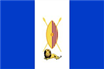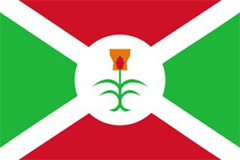
Sub-Saharan Africa
Kingdom of Burundi
At a glance
- A sacred kingship in the hills east of Lake Tanganyika, whose dynasty tradition traces to Ntare Rushatsi around 1680.
- Ntare IV Rugamba roughly doubled its territory in the early 19th century, giving Burundi borders close to today’s.
- It survived German and Belgian rule to become independent in 1962, but army officer Michel Micombero abolished it in 1966.
Rise & Fall
- c. 1680Ntare Rushatsi founds the royal dynasty, according to tradition
- c. 1800Burundi and Rwanda partition the Kingdom of Bugesera
- c. 1885Mwezi IV Gisabo’s warriors repel the slave-trading forces of Rumaliza
- 1903Mwezi IV submits to German rule in the Treaty of Kiganda
- 1916Belgian troops occupy Burundi during the First World War
- 1961UPRONA wins the elections; its leader, Prince Louis Rwagasore, is assassinated
- 1962Burundi becomes independent as a constitutional monarchy under Mwambutsa IV
- 1966Michel Micombero deposes Ntare V and proclaims a republic
Foundation
The Kingdom of Burundi took shape in the late seventeenth century in the high, well-watered hills east of Lake Tanganyika, along the ridge that divides the Congo and Nile basins. Its traditions name Ntare Rushatsi, also called Cambarantama, as the founder of the royal line, and genealogies place his reign around 1680, although older versions of the king list pushed the dynasty back into the sixteenth century. Two cycles of legend describe his coming: one brings him from Buha, to the south-east, the other from Rwanda across the Kanyaru river. Historians read both as dynastic legends rather than literal records of a migration. Ntare is remembered for drawing the chiefdoms of the hills under one dynasty, and his eighteenth-century successors, Mwezi Ndagushimiye, Mutaga Senyamwiza and Mwambutsa Mbariza, are known mainly from court tradition. The great expansion came under Ntare IV Rugamba (c. 1796–c. 1850), who roughly doubled the kingdom. Around 1800 Burundi and Rwanda partitioned the Kingdom of Bugesera, Burundi taking its southern part, and Ntare’s armies pushed east and south into lands now in Tanzania. By the middle of the nineteenth century the kingdom’s borders came close to those of the modern state.
Socioeconomy
Burundi was a land of scattered homesteads rather than villages. Each family lived in its own enclosure (rugo) among banana groves on the hillsides, and the hill was the basic unit of local life. Farmers grew sorghum and eleusine, the region’s old cereals, bananas, many brewed into beer, and American crops such as beans and maize, which spread before colonial rule; cattle were the main measure of wealth and honour. Through ubugabire, a patron gave a cow to a client in return for loyalty and services, binding families across social ranks. Burundians were Hutu, Tutsi or Twa, with the ganwa, princes of royal descent, standing apart from and above all three. Hutu, the large majority, were mostly cultivators; Tutsi were associated with cattle, though Hutu also kept herds and many Tutsi farmed; the Twa, a small minority, were potters and hunters. Intermarriage between Hutu and Tutsi was common, and Hutu lineages held important ritual offices at court. Religion centred on Imana, the creator, on the spirits of the dead, and on the kubandwa initiation cult of the spirit Kiranga. The kingdom stood largely apart from long-distance trade: Swahili and Arab caravans reached Ujiji on Lake Tanganyika by the mid-nineteenth century, but Burundi’s kings kept them, and the slave raiding that came with them, out of the interior.
Military
Military power rested on the princes and chiefs, who owed the mwami contingents of fighting men in time of war; commoners could be called up, and warriors fought on foot with spears, bows and shields. These forces carried the expansion of the early nineteenth century, when Ntare IV Rugamba annexed southern Bugesera and lands to the east and south and fought Rwanda on the northern frontier. After his death they were turned inward, as Mwezi IV Gisabo (r. c. 1850–1908), who came to the throne as a boy, fought his elder brothers and the Batare princes, descendants of Ntare who held much of the east and south. Against outsiders the kingdom proved formidable. In the mid-1880s Mwezi’s warriors defeated an attempt by Rumaliza, the Swahili-Arab trader of Ujiji, to push into Burundi. After Germany set up a military post at Usumbura on the lake shore in 1896, Mwezi refused to submit for seven years. The decisive campaign came in 1903, when Captain Robert von Beringe marched against him with askari and machine guns, supported by his rivals Kilima and Maconco. Defeated in battle, Mwezi submitted in the Treaty of Kiganda.
Governance & Law
The mwami was a sacred king rather than an absolute one. His person was bound up with the fertility of land, herds and people; he reigned to the sound of the royal drums, of which Karyenda was the most sacred, and each year he presided over the muganuro, the festival of the sorghum sowing, which renewed the bond between king and country. Ritual specialists known as banyamabanga, drawn mostly from Hutu lineages, kept the secrets of kingship and from the nineteenth century took part in choosing a new king, Hutu families guarded the drum sanctuaries, and the queen mother could wield great influence, above all during a regency. Real power was shared with the ganwa. Kings placed their sons over provinces, and over generations these princes formed rival lineages, the Batare descended from Ntare IV, the Bezi from Mwezi IV, and the older Bataga and Bambutsa, whose quarrels shaped politics into the twentieth century. Under the princes, chiefs (batware) collected tribute in produce, livestock and labour, while disputes on the hills were settled by bashingantahe, respected men, Hutu as well as Tutsi, chosen as guardians of custom. Because the four regnal names, Ntare, Mwezi, Mutaga and Mwambutsa, rotated and the genealogies were kept orally, versions of the king list differ in length and numbering: the founder is Ntare I in some lists and Ntare III in others.
Global & Regional Impact
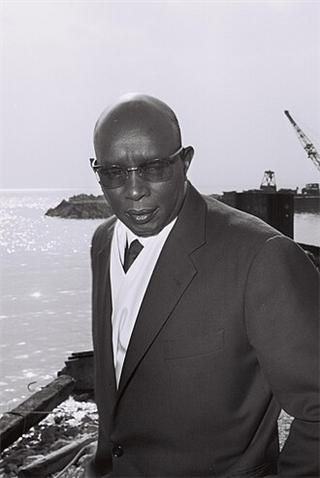
Like Rwanda, Burundi is one of the few African countries whose borders largely follow those of a precolonial kingdom, and nearly all Burundians, Hutu, Tutsi and Twa alike, speak one language, Kirundi. The kingdom also showed unusual staying power. It kept the slave-trading networks of the nineteenth century at bay, resisted German conquest for years and, unlike the monarchy of neighbouring Rwanda, which was swept away in 1959–1961, survived colonial rule to bring the country to independence. Prince Louis Rwagasore, eldest son of Mwambutsa IV, who led the nationalist party UPRONA to victory in 1961, is honoured as the hero of independence, and the anniversary of his death, 13 October, is a public holiday. The royal culture outlived the throne. The drums of the court sanctuaries, played by drummers descended from the families who guarded them, became Burundi’s best-known art; Burundian drummers toured abroad from the 1960s, and in 2014 UNESCO inscribed the ritual dance of the royal drum on its Representative List of the Intangible Cultural Heritage of Humanity. The colonial period left a heavier legacy: European writers read the kingdom through racial theories that cast the Tutsi as foreign conquerors, an interpretation historians now reject, and colonial administration hardened social categories that had once been more fluid.
Decline & Fall
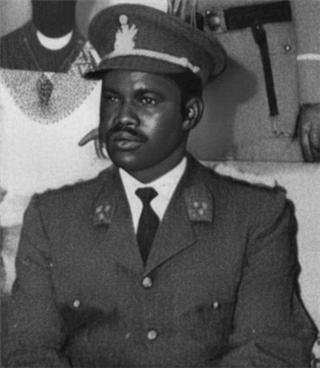
German conquest ended the kingdom’s sovereignty: Germany, which claimed Burundi from 1890, ruled through the mwami after Mwezi IV Gisabo’s submission in 1903. Mwezi died in 1908 and his son Mutaga IV Mbikije in 1915, leaving the infant Mwambutsa IV as king. Belgium occupied the country in 1916 and from 1922 governed it as part of Ruanda-Urundi, a League of Nations mandate and later a United Nations trust territory, keeping the monarchy but making the mwami a figurehead and favouring ganwa and Tutsi as chiefs. In 1961 UPRONA, led by Prince Louis Rwagasore, won 58 of 64 seats, but on 13 October he was assassinated by a gunman hired by leaders of the rival Christian Democratic Party, sons of the Batare chief Pierre Baranyanka. Burundi became independent as a constitutional monarchy on 1 July 1962, but the crown could not hold the balance. In 1965 Prime Minister Pierre Ngendandumwe was murdered, the king appointed a ganwa, Léopold Biha, prime minister although Hutu candidates had won most seats in May, and a failed coup by Hutu officers in October, followed by killings and repression, left the army under Captain Michel Micombero the strongest force in Burundi. Mwambutsa IV went into exile. In July 1966 his son deposed him and took the name Ntare V; on 28 November, while the king was abroad, Micombero abolished the monarchy and proclaimed a republic.
The Kingdom of Burundi united the hills east of Lake Tanganyika under a sacred dynasty for nearly three centuries, gave the modern country its borders and its royal drum culture, and, unlike Rwanda’s monarchy, survived colonial rule to lead Burundi to independence before an army officer abolished it in 1966.
Test yourself
5 questions on this page, from its key events and facts.
The questions open here once the page has loaded.
References
- Chrétien, J.-P. (2003) The Great Lakes of Africa: Two Thousand Years of History. Translated by S. Straus. New York: Zone Books.
- Gahama, J. (1983) Le Burundi sous administration belge: la période du mandat, 1919–1939. Paris: Karthala.
- Lemarchand, R. (1970) Rwanda and Burundi. London: Pall Mall Press.
- Lemarchand, R. (1996) Burundi: Ethnic Conflict and Genocide. Washington, DC: Woodrow Wilson Center Press; Cambridge: Cambridge University Press.
- Mworoha, É. (1977) Peuples et rois de l'Afrique des lacs: le Burundi et les royaumes voisins au XIXe siècle. Dakar: Nouvelles Éditions Africaines.
- Vansina, J. (1972) La légende du passé: traditions orales du Burundi. Tervuren: Musée royal de l'Afrique centrale.
Connections
Open the full connections map →