Glossary · Term · language
Biblical Hebrew
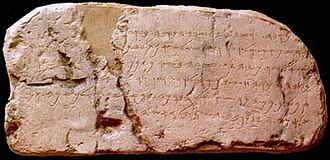
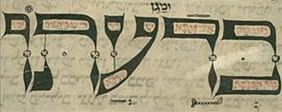
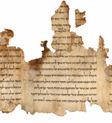
Biblical Hebrew, also called Classical Hebrew, is an archaic form of the Hebrew language, of the Canaanitic branch of the Semitic languages, spoken by the Israelites in the Land of Israel. It is attested in inscriptions from about the 10th century BCE, when it was almost identical to Phoenician, and persisted as a spoken first language through the Second Temple period, which ended in 70 CE, before developing into Mishnaic Hebrew. It was first written in the Paleo-Hebrew alphabet, displaced after the Babylonian captivity by the Imperial Aramaic alphabet, and its vowel marks, the Tiberian vocalization, were added by the Masoretes in the Middle Ages.
Mentioned in 3 profiles
See also





Cite this entry
- APA
- The Epoch Institute. (2026). Biblical Hebrew. In The Epoch Institute Encyclopedia. https://the-epoch-institute.org/encyclopedia/biblical-hebrew
- MLA
- “Biblical Hebrew.” The Epoch Institute Encyclopedia, The Epoch Institute, 2026, https://the-epoch-institute.org/encyclopedia/biblical-hebrew. Accessed .
- Chicago
- The Epoch Institute. “Biblical Hebrew.” The Epoch Institute Encyclopedia. 2026. https://the-epoch-institute.org/encyclopedia/biblical-hebrew.
- Harvard
- The Epoch Institute (2026) ‘Biblical Hebrew’, The Epoch Institute Encyclopedia. Available at: https://the-epoch-institute.org/encyclopedia/biblical-hebrew (Accessed: ).
Last reviewed October 2026Random entry ↻