
Language · Ancient Near East
Phoenician
At a glance
- Phoenician was spoken in the cities of the northern Levant and carried by Tyro-Sidonian trade and colonies across the Mediterranean, where it became a lingua franca of the maritime world in the Iron Age.
- Its alphabet, an abjad that wrote only consonants, passed to the Greeks and, through the Etruscans, to the Romans, and is generally believed to be at least a partial ancestor of almost all modern alphabets.
- Almost nothing written on papyrus or parchment survived the damp coasts, so the language is known from about 10,000 inscriptions; a bilingual found in Malta let Jean-Jacques Barthélemy decipher it in 1758.
Timeline
- c. 1050 BCEThe alphabet, first attested on inscribed bronze arrowheads, comes to be called Phoenician rather than Proto-Canaanite
- 9th–7th century BCEPhoenician loses its old case endings, as Akkadian spellings of the name ‘Gift of Baal’ show
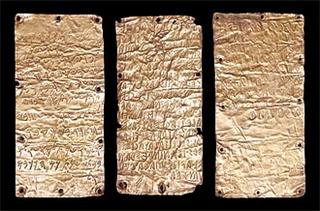
- c. 500 BCEThe Pyrgi Tablets are inscribed in Etruscan and Phoenician
- 3rd century BCEPunic writers begin to mark final vowels with the letter aleph
- c. 149 BCECarthage is destroyed, after which the cursive Neo-Punic script becomes predominant
- 1st century BCEPhoenician seems to die out in the eastern Mediterranean
- 6th centuryPunic, the western form of the language, seems to die out, perhaps lingering into the 9th century
- 1758Jean-Jacques Barthélemy deciphers the alphabet from the Cippi of Melqart, a Greek and Punic bilingual
Origins
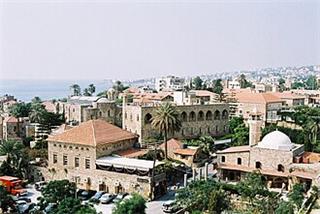
Phoenician is a Canaanite language of the Northwest Semitic division of the Semitic family, similar to and mutually intelligible with Biblical Hebrew and the other languages of its subgroup. Its speakers called it śpt knʿn, ‘language of Canaan’, and their land Pūt; the name Phoenician was first given to the language by Samuel Bochart in his Geographia Sacra. Its sounds came from those of Proto-Northwest Semitic through a series of mergers: from Canaanite to Phoenician, for example, the sibilants ś and š fell together, as did ḫ and ḥ, and ʕ and ġ, changes that also happened at one point or another in Biblical Hebrew.
The Phoenicians were the first state-level society to make extensive use of the Semitic alphabet. Their script grew out of the Proto-Canaanite alphabet: by convention it is called Proto-Canaanite until the mid-11th century BCE, when it is first attested on inscribed bronze arrowheads, and Phoenician only after 1050 BCE.
From a traditional perspective Phoenician was made up of several dialects. According to some sources it developed into a Tyro-Sidonian dialect, which spread across the Mediterranean through trade and colonisation and gave rise to Punic, and the ancient dialect of Byblos, known from only a few dozen inscriptions, which played no part in the expansion. The differences are so slight and the records so few, however, that it is unclear whether Phoenician was a separate, united dialect or only a loosely defined part of a broader language continuum.
Sounds, Script & Grammar
Phoenician was written in an abjad, an alphabet of consonants only. Unlike the abjads of Aramaic, Biblical Hebrew and Arabic, it left even long vowels unwritten: bt /beːt/ ‘house’, from earlier *bayt-, where Hebrew spells byt. Punic writers began to mark vowels in the 3rd century BCE, first with a final aleph for any final vowel; Neo-Punic, after the destruction of Carthage, used letters for particular vowels, waw for u and yod for i. Late inscriptions in Greek and Latin letters, with Phoenician names written in other languages, are the main source for its vowels. They show the Canaanite shift carried further than in Hebrew: ‘head’ was rūs, where Hebrew has rōš.
As in other Semitic languages, words are built on consonantal roots, with vowel changes for grammar, but Phoenician kept many roots of one or two consonants, such as kn ‘to be’ and mt ‘to die’. Nouns are marked for two genders, for singular and plural with traces of the dual, and for state, the construct being the form of a noun followed by its possessor. The old case endings were lost between the 9th and 7th centuries BCE. The definite article was ha-, doubling the next consonant.
Verbs inflect for person, number, gender, tense and mood, with a suffix conjugation for the past, as in paʻal ‘he did’, and a prefix conjugation for present and future, yapʻul. Derived stems express the passive, the factitive and the causative. The basic word order is verb, subject, object, and there is no verb ‘to be’ in the present tense.
Speakers & Spread
Phoenician was spoken by the Phoenicians in the northern Levant, in the areas of present-day Lebanon, the Western Galilee, parts of Cyprus and Syria and adjacent parts of Anatolia, and at least as a prestige language in the rest of Anatolia. Extensive Tyro-Sidonian trade and commercial dominance made it a lingua franca of the maritime Mediterranean in the Iron Age.
It travelled with the Phoenician colonies along the coasts of the south-western Mediterranean, in present-day Tunisia, Morocco, Libya and Algeria, and to Malta, the west of Sicily, south-west Sardinia, the Balearic Islands and southernmost Spain. In the west it developed into the distinct Punic language, spoken in the Tyrian colony of Carthage. Cypriot Phoenician had forms of its own, such as ʼz for ‘this’ where standard Phoenician has z.
In the east the language was in use as late as the 1st century BCE, when it seems to have died out there. Punic lasted far longer, arguably into the time of Augustine of Hippo, and until the 6th century CE, perhaps even the 9th. It lived throughout beside the Berber languages native to North Africa, and may have survived the Muslim conquest of the Maghreb in some isolated place: the geographer al-Bakri describes people in Sirte speaking a language that was neither Berber, Latin nor Coptic. Its kinship with the conquerors’ language, also Semitic, probably eased the Arabisation of the Punic speakers.
Literature & Learning
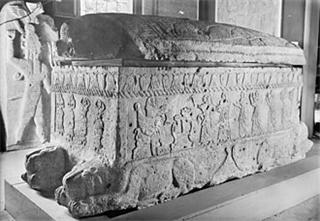
Phoenician, with Punic, is known mainly from about 10,000 inscriptions and occasional glosses in books written in other languages. The Phoenicians are believed to have written much more, but their script was easy to write on papyrus or parchment, and in the damp air and soil of their coastal cities these rotted away: virtually no Phoenician history or trading records survive, and no Tyrian sources from the time of Hiram I. What remains is monumental inscriptions on stone, a few letters or notes on broken pottery and three fragmentary papyri.
Among the key inscriptions are the sarcophagi of Ahiram, Tabnit and Eshmunazar II, the Bodashtart inscriptions and the Temple of Eshmun, the Kilamuwa Stela, the Karatepe bilingual, the Çineköy inscription, the Nora Stone, the Mdina Steles, the Cippi of Melqart and the Pyrgi Tablets. Roman authors such as Sallust mention books in Punic, but none survive except in translation, as Mago’s treatise does, or in snippets, as in the plays of Plautus, whose Poenulus gives Punic words in Latin spelling, such as chyl, ‘all’.
The known inscriptions multiplied in the 19th century. In 1828 Hamaker had only 13 at his disposal; in 1837 Wilhelm Gesenius gathered the 70 then known in his Scripturae linguaeque Phoeniciae monumenta; and by 1869 Schröder, in Die phönizische Sprache, could say that Gesenius had known only a quarter of the material he had at hand himself.
Change & Descendants
Phoenician changed most visibly in its western form. The Punic of Carthage developed somewhat different, more cursive letter shapes, and around the time of the Second Punic War an even more cursive form, Neo-Punic, appeared beside the conservative one and became predominant some time after the destruction of Carthage in about 149 BCE. Late inscriptions from what is now Constantine in Algeria, of the 1st century BCE, write Punic in the Greek alphabet, and many from Tripolitania in the 3rd and 4th centuries CE use the Latin alphabet.
The sounds changed too. In later Punic the laryngeal and pharyngeal consonants, sounds made deep in the throat, seem to have been lost entirely, so that the article could be written with aleph or ayin as well as he. The feminine ending -t was dropped, as in the name rendered in Latin as Himilco, from ʼḥmlkt, ‘brother of the queen’; p may have become f, and b became v before a consonant, as in lifnim, ‘for his son’. Whether Phoenician ever softened its stops as Hebrew and Aramaic did is still debated.
The vowels shifted further than in Hebrew: stressed a became o, as in samō, ‘he heard’, beside Hebrew šāmaʻ, and spellings such as chyl and even chil for kull, ‘all’, suggest that u went on to be fronted and then unrounded. Phoenician itself died out in the east by the 1st century BCE; Punic outlived it by centuries before its speakers were Arabised.
Legacy
The Phoenician alphabet is the language’s greatest legacy. Carried by Phoenician trade to the Maghreb and Europe, it was adopted by the Greeks, then adapted by the Etruscans, whose version the Romans modified into the Latin alphabet; it became the source of all modern European scripts and is generally believed to be at least a partial ancestor of almost all modern alphabets. Punic writers seem still to have understood how the Greeks and Romans had turned its letters into vowels, and used he for e and aleph for a in the same way.
Punic words survive in modern Berber dialects, such as agadir, ‘wall’, from Punic gader, and Tifinagh, the name of the Libyco-Berber alphabet still used irregularly by the Tuareg, may derive from a cognate of the name ‘Punic’, though a direct descent of the script is debated. By one theory the name of Hispania comes from the Punic I-Shaphan, ‘coast of hyraxes’, because Phoenician explorers mistook its many rabbits for hyraxes; the word gorilla goes back to a Punic name for ‘hairy people’ met by Hanno the Navigator.
The language was decoded in 1758 by the French scholar Jean-Jacques Barthélemy, using the Cippi of Melqart, a bilingual in Ancient Greek and Punic found in Malta in 1694. In turn Phoenician has helped to read Etruscan: since the bilingual Pyrgi Tablets of around 500 BCE were found in 1964, more Etruscan has been deciphered by comparison with the better understood Phoenician.
In the Research Series
Phoenician was the Canaanite Semitic language of the Phoenician cities of the Levant, a lingua franca of the Iron Age Mediterranean carried by their trade and colonies. Written in a consonantal alphabet that the Greeks, Etruscans and Romans adapted, it is known from about 10,000 inscriptions; it died out in the east by the 1st century BCE, while its western form, Punic, lasted until about the 6th century CE.
References
- Hackett, Joe Ann, “Phoenician and Punic”, in Roger D. Woodard (ed.), The Ancient Languages of Syria-Palestine and Arabia (Cambridge University Press, 2008)
- Segert, Stanislav, “Phoenician and the Eastern Canaanite Languages”, in Robert Hetzron (ed.), The Semitic Languages (London: Routledge, 1997)
- Krahmalkov, Charles R., A Phoenician-Punic Grammar (Leiden: Brill, 2001)
- Segert, Stanislav, A Grammar of Phoenician and Punic (München: C.H. Beck, 1976)
- Tomback, Richard S., A Comparative Semitic Lexicon of the Phoenician and Punic Languages (Missoula, MT: Scholars Press, 1978)
- Holmstedt, Robert D. and Aaron Schade (eds.), Linguistic Studies in Phoenician: In Memory of J. Brian Peckham (Winona Lake, IN: Eisenbrauns, 2013)