
Language · Central & East Asia
Classical Chinese
At a glance
- Classical Chinese, the written language of Confucius, the philosophers and the historians of ancient China, remained the standard written language of China for more than two thousand years, long after the spoken language had changed beyond recognition.
- Written in characters that record meaning as well as sound, it was read across East Asia: Korea, Japan and Vietnam used it for government, scholarship and literature, each reading it with its own pronunciation.
- Replaced by the vernacular in the 20th century, it remains the foundation of Chinese literature and idiom and is still studied in schools throughout East Asia.
Timeline
- c. 1250 BCEDiviners of the Shang kings carve the earliest known Chinese writing on oracle bones at Anyang
- 5th–3rd centuries BCEThe Analects, the Mencius and the Zhuangzi set the model of the classical written language
- 221 BCEThe First Emperor of Qin standardises the Chinese script across his empire
- 100Xu Shen completes the Shuowen Jiezi, the first dictionary to analyse the structure of characters
- 868The Diamond Sutra in Chinese, the earliest dated printed book, is made in China
- 1446King Sejong of Korea promulgates the Hangul alphabet as an alternative to Chinese characters
- 1716The Kangxi Dictionary is completed, listing more than 47,000 characters
- 1920China’s Ministry of Education orders primary schools to teach the vernacular instead of Classical Chinese
Write in Classical Chinese
Type in the script itself: every key shows a sign with its value and how it sounds. Then make a picture of what you wrote, to save, copy or share.
The keyboard opens here once the page has loaded.
Origins
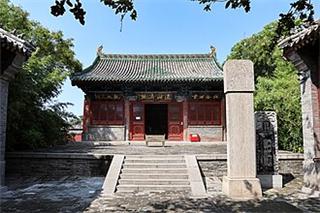
Chinese belongs to the Sino-Tibetan family, together with Tibetan, Burmese and hundreds of languages of the Himalayas and Southeast Asia. Its earliest written records are the oracle-bone inscriptions of the Shang dynasty, carved from about 1250 BCE at the royal capital near present-day Anyang. Diviners of the Shang kings asked questions of the ancestors and gods, about harvests, weather, war, hunting and childbirth, by applying heat to cattle shoulder blades and turtle shells and reading the cracks; they carved the questions and sometimes the answers on the bones.
The oracle bones were rediscovered only in 1899, when scholars recognised characters on “dragon bones” sold as medicine. More than a hundred thousand fragments have since been found, bearing some four thousand different characters. The script is already a mature system, which suggests that writing had developed earlier, though no earlier stage has been firmly identified.
Under the Zhou dynasty, which overthrew the Shang around 1046 BCE, long inscriptions were cast in bronze ritual vessels, recording royal gifts, appointments and victories; the longest has nearly five hundred characters. Texts were also written with brush and ink on bamboo and wooden strips tied together into scrolls, which have mostly perished, though many have been recovered from tombs.
The language known as Classical Chinese is that of the great texts of the Spring and Autumn and Warring States periods, from the 6th to the 3rd centuries BCE: the Analects of Confucius, the Mencius, the Zhuangzi, the Xunzi, the Han Feizi and the Zuo Commentary on the Spring and Autumn Annals. Its concise style, grammar and vocabulary became the model for all later writing. When the First Emperor of Qin unified China in 221 BCE, his minister Li Si standardised the script, which had developed regional variants, and the Han dynasty that followed made the classics the foundation of education.
Sounds, Script & Grammar
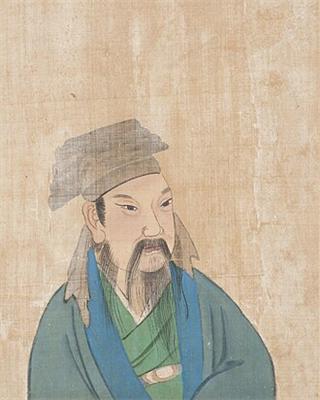
Chinese characters represent units of meaning that are also syllables of speech. A few began as pictures, such as those for sun, moon, horse and tree, or as abstract signs, but the great majority are compounds combining a sign that suggests the meaning with a sign that suggests the pronunciation: the character for “river” combines a sign for water with a character of similar sound. Xu Shen, whose dictionary, the Shuowen Jiezi, was completed in 100 CE, analysed the structure of 9,353 characters and grouped them under 540 radicals.
The script evolved from the seal forms of the Zhou and Qin to the clerical script of the Han and the regular script, mature by the 4th century CE, which is still the basis of printed characters, while the running and cursive scripts allowed rapid writing and became arts of calligraphy. Paper, developed under the Han and improved in the early 2nd century CE, and woodblock printing, from the Tang dynasty, spread written texts as never before.
Classical Chinese is extraordinarily concise. Words were mostly of one syllable and did not change form for tense, number or case; meaning depended on word order and on small grammatical particles, which marked statements, questions, exclamations and relationships between ideas. A single character could serve as noun, verb or adjective according to its place in the sentence, and many classical sentences can be read in more than one way, a quality valued by poets and commentators.
Because characters do not record pronunciation exactly, the pronunciation of Classical Chinese changed with the spoken language, and texts were read aloud in the pronunciation of each age and region. Scholars reconstruct the sounds of Old Chinese from rhymes in ancient poetry, the phonetic parts of characters and comparisons with related languages, and the rhyme dictionary Qieyun of 601 records the pronunciation of Middle Chinese.
Speakers & Spread

Classical Chinese was above all a written language. By the time of the Han dynasty, the spoken language had already moved away from the language of the classics, and over the following centuries the gap widened until a text in Classical Chinese, read aloud, could not be understood by a listener who had not studied it. Yet educated men and some women continued to write in the classical style, modelled on the ancient texts, for official documents, history, philosophy, letters, essays and poetry.
Its mastery was the key to power in imperial China. The civil service examinations, held from the Sui dynasty in 605 until 1905, tested candidates on the classics and their ability to compose in Classical Chinese, and the literati who passed them governed the empire. Classical Chinese also united a country whose spoken varieties, such as Mandarin, Cantonese, Wu and Min, were mutually unintelligible: officials from every province shared the same written language.
Classical Chinese spread across East Asia with Confucian learning, Buddhism and the model of the Chinese state. In Korea, Japan and Vietnam, it was the language of government, law, scholarship and much literature for more than a thousand years. Each country read it in its own pronunciation, derived from Chinese, and Japanese scholars developed a system of marks, kanbun kundoku, for reading Chinese texts in Japanese word order. Japan’s earliest official history, the Nihon Shoki of 720, was written in Classical Chinese, as were the state documents of Korea’s Joseon dynasty and Vietnam’s examinations, held in Chinese until 1919.
Buddhism added a vast body of texts. From the 2nd century CE, translators such as the Kuchean monk Kumarajiva, in the early 5th century, and the pilgrim Xuanzang, in the 7th, rendered Indian scriptures into Chinese, creating the Chinese Buddhist canon, which was read throughout East Asia.
Literature & Learning

Classical Chinese carries one of the world’s longest literary traditions. Its foundations are the Five Classics, among them the Book of Songs, the oldest collection of Chinese poetry, and the Book of Changes, and the works of the philosophers, among them Confucius, Mencius, Laozi, Zhuangzi, Mozi and Han Feizi, and the Art of War of Sunzi.
History was a central genre. Sima Qian’s Records of the Grand Historian, completed around 94 BCE, created the model for the twenty-four official dynastic histories that followed, and Sima Guang’s Comprehensive Mirror to Aid in Government, of 1084, narrated 1,362 years of history year by year.
Poetry was the most prestigious form of writing. The Tang dynasty, from the 7th to the 10th centuries, was its golden age, with poets such as Li Bai, Du Fu and Wang Wei; a collection of the complete poems of the Tang compiled in 1705 contains nearly fifty thousand poems by more than two thousand poets. The lyrics of the Song dynasty, by poets such as Su Shi and Li Qingzhao, and the prose essays of writers such as Han Yu and Ouyang Xiu, who revived an “ancient style” of clear and vigorous prose, are classics still read today.
Chinese scholars also compiled works of immense scale: the Yongle Encyclopedia, completed in 1408, filled more than eleven thousand volumes, and the Complete Library of the Four Treasuries, compiled in the 1770s and 1780s, copied some 3,500 works in more than 36,000 volumes. In Korea, Japan and Vietnam, writers produced histories, poetry and philosophy in Classical Chinese, alongside literatures in their own languages.
Change & Descendants
Classical Chinese changed far less than the spoken language. Writers of every age imitated the classics, though later writing differs in vocabulary and style from that of the Warring States, and from the Tang and Song dynasties a written vernacular, closer to speech, developed beside it in Buddhist sermons, popular stories and plays. The great novels of the Ming and Qing dynasties, such as Journey to the West and Dream of the Red Chamber, were written largely in the vernacular.
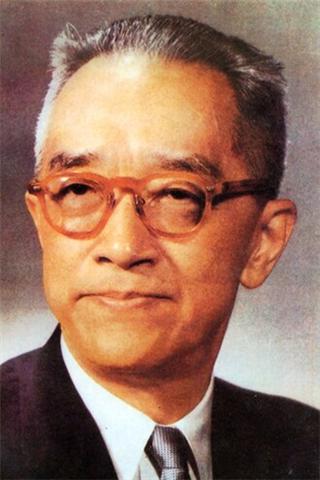
In the 19th and early 20th centuries, reformers blamed the difficulty of Classical Chinese for the low level of literacy in China. In 1917 the scholar Hu Shi called for a literature written in the living language, and Lu Xun’s story “A Madman’s Diary”, of 1918, showed what modern vernacular literature could do. The May Fourth Movement of 1919 made the vernacular a cause of national renewal, and in 1920 the Ministry of Education ordered primary schools to teach it in place of the classical language.
Across East Asia the classical language also gave way. Korea had invented its own alphabet, Hangul, in 1446, though the elite continued to write in Chinese until the late 19th century; Japan had developed its kana syllabaries from Chinese characters in the 9th century and mixed them with characters in its writing; and Vietnam, which had used Chinese and its own vernacular characters, adopted a Latin alphabet in the 20th century.
The characters themselves continued to evolve: the People’s Republic of China introduced simplified characters in the 1950s and 1960s, while Taiwan, Hong Kong and Macau kept the traditional forms.
Legacy
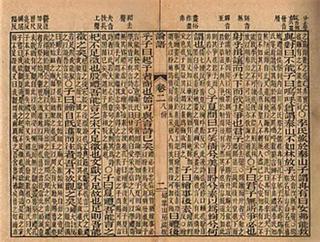
Classical Chinese is the foundation of Chinese civilisation’s written heritage, and through it of the culture of East Asia. Its characters are still written by more than a billion people in China and the Chinese diaspora, and in Japan as kanji; Korea uses them in a limited way as hanja.
The vocabulary of Korean, Japanese and Vietnamese is filled with words of Chinese origin, by many estimates more than half of their vocabularies. In the 19th century Japanese scholars coined new words from classical Chinese roots to translate Western concepts, such as “economy”, “society” and “science”, and many of these were borrowed back into Chinese.
Modern Chinese is full of four-character idioms drawn from classical texts and stories, such as “drawing a snake and adding feet”, for spoiling something by doing too much. Classical poems and essays are memorised by schoolchildren, and Classical Chinese is taught in schools in mainland China, Taiwan and Hong Kong, while Japanese and Korean students study its texts as part of their own heritage.
Calligraphy, the art of writing characters with the brush, remains one of the most admired arts of East Asia, and the classical texts, from the Analects to Tang poetry, continue to be translated and read around the world.
Classical Chinese, the written language of the Zhou classics, rooted in the oracle-bone inscriptions of the Shang, remained the standard written language of China for more than two thousand years and the shared written language of Korea, Japan and Vietnam. Replaced by the vernacular after 1919, it survives in the characters, idioms and literature of East Asia.
Test yourself
5 questions on this page, from its key events and facts.
The questions open here once the page has loaded.
References
- Baxter, W.H. and Sagart, L. (2014) Old Chinese: A New Reconstruction. New York: Oxford University Press.
- Boltz, W.G. (1994) The Origin and Early Development of the Chinese Writing System. New Haven: American Oriental Society.
- Keightley, D.N. (1978) Sources of Shang History: The Oracle-Bone Inscriptions of Bronze Age China. Berkeley: University of California Press.
- Norman, J. (1988) Chinese. Cambridge: Cambridge University Press.
- Pulleyblank, E.G. (1995) Outline of Classical Chinese Grammar. Vancouver: UBC Press.
- Wilkinson, E. (2018) Chinese History: A New Manual. 5th edn. Cambridge, MA: Harvard University Asia Center.