
Language · Ancient Near East
Aramaic
At a glance
- Aramaic, first written by the Aramaean kingdoms of Syria in the 9th century BCE, became the common language of the Assyrian, Babylonian and Persian empires, used from Egypt to the borders of India.
- It was the everyday language of Jesus and of the Jews of his time, the language of parts of the Bible and most of the Talmud, and, as Syriac, of one of the great literatures of Eastern Christianity.
- Its alphabet is the ancestor of the Hebrew, Arabic and Syriac scripts and of many others in Asia, and its modern forms are still spoken by Assyrian, Chaldean, Syriac, Jewish and Mandaean communities, though they are endangered.
Timeline
- c. 850 BCEA statue at Tell Fekheriye in Syria carries one of the oldest Aramaic inscriptions, beside an Akkadian text
- 8th century BCEThe Assyrian empire uses Aramaic beside Akkadian, spreading it across the Near East
- 5th century BCEPapyri of the Jewish garrison at Elephantine in Egypt record the Aramaic of the Persian empire
- c. 260 BCEThe Indian emperor Ashoka has an edict inscribed in Greek and Aramaic at Kandahar
- 1st centuryJesus and his disciples speak Aramaic in Galilee
- c. 500The Babylonian Talmud, written largely in Aramaic, takes shape
- 7th centuryAfter the Arab conquests, Arabic begins to replace Aramaic across the Near East
- 2014The advance of the Islamic State drives Aramaic-speaking Christians from their towns in northern Iraq
Write in Aramaic
Type in the script itself: every key shows a sign with its value and how it sounds. Then make a picture of what you wrote, to save, copy or share.
The keyboard opens here once the page has loaded.
Origins

Aramaic takes its name from the Aramaeans, Semitic-speaking peoples who appear in Assyrian records at the end of the 2nd millennium BCE and in the following centuries founded kingdoms across Syria and upper Mesopotamia, such as Aram-Damascus, Hamath, Sam’al and Bit Adini. Their language belongs to the Northwest Semitic group, together with Hebrew and Phoenician.
The Aramaeans wrote their language in the alphabet of their Phoenician neighbours, twenty-two letters for consonants. The oldest substantial Aramaic inscriptions date from the 9th century BCE: a statue of a local ruler at Tell Fekheriye in north-eastern Syria, inscribed in both Akkadian and Aramaic around 850 BCE, and the stele of Tel Dan, set up by a king of Damascus, which mentions the “house of David”. In the 8th century BCE the treaties of Sefire and the inscriptions of the kings of Sam’al show a language of royal power.
The Aramaean kingdoms were conquered by Assyria in the 9th and 8th centuries BCE, but their language conquered the conquerors. The Assyrians deported hundreds of thousands of people across their empire, among them many Aramaic speakers, and Aramaic, written quickly with ink on leather and papyrus, proved easier to use than Akkadian cuneiform. By the 8th century BCE, Assyrian officials used Aramaic beside Akkadian, and palace reliefs show pairs of scribes, one writing cuneiform on clay, the other Aramaic on a scroll.
According to the Book of Kings, when an Assyrian envoy addressed the people of Jerusalem in Hebrew in 701 BCE, the officials of King Hezekiah asked him to speak in Aramaic instead, which they understood and the common people did not: Aramaic had become the language of diplomacy.
Sounds, Script & Grammar
Aramaic is a Semitic language, building words from roots of usually three consonants combined with patterns of vowels, prefixes and suffixes, much as Hebrew and Arabic do. A distinctive feature is the “emphatic state”: instead of a definite article placed before the noun, as in Hebrew, Aramaic added an ending -ā, so that malkā meant “the king”; in later Aramaic this form became the ordinary form of the noun.
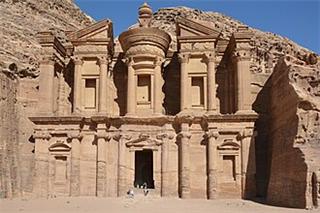
The Aramaic alphabet of twenty-two letters, written from right to left, recorded only consonants; later, Jewish and Syriac scholars developed systems of dots and signs to mark the vowels. As Aramaic spread, its script developed local forms, many of which became independent scripts. The Jews adopted the Aramaic “square script” after the Babylonian exile, and it is the Hebrew alphabet still used today; the Nabataeans of Petra developed a form that became the Arabic script; the Christians of Edessa developed Syriac. In the east, Aramaic gave rise to the scripts of Middle Persian, Parthian and Sogdian, and through Sogdian to the Old Uyghur, Mongolian and Manchu scripts; in north-western India it was the source of the Kharosthi script.
Persian scribes even wrote their own language with Aramaic words used as signs: in Middle Persian texts the Aramaic word for “king”, MLK', was written but read as the Persian word shah.
Aramaic has had many forms over its three thousand years. Scholars distinguish Old Aramaic, of the early inscriptions; Imperial Aramaic, the standard language of the Persian empire; the Middle Aramaic dialects of the early centuries CE, among them Jewish Palestinian Aramaic, Nabataean, Palmyrene, Syriac, Jewish Babylonian Aramaic and Mandaic; and the Neo-Aramaic languages spoken today. The dialects divide into a western and an eastern branch.
Speakers & Spread
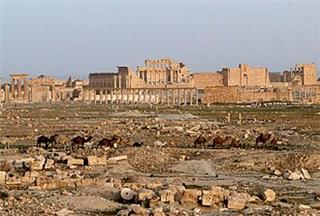
Aramaic reached its greatest extent as the language of empires. The Neo-Babylonian empire continued to use it, and the Persian Achaemenid empire, from 539 BCE, made Imperial Aramaic its main language of administration from Egypt to Bactria. Letters and contracts written in Aramaic have been found at Elephantine, a Jewish military colony on the Nile, from the 5th century BCE, and in Bactria in present-day Afghanistan from the 4th century BCE. The Indian emperor Ashoka, in the 3rd century BCE, addressed the peoples of his north-western frontier in Aramaic, as in his bilingual inscription at Kandahar.
After Alexander’s conquests, Greek replaced Aramaic as the language of government, but Aramaic remained the spoken language of most of the Near East, and local forms flourished in the kingdoms and cities of the region, at Petra, Palmyra, Hatra and Edessa.
After the Babylonian exile, Aramaic became the everyday language of many Jews, and parts of the books of Daniel and Ezra were written in it. In the 1st century CE it was the language of Jesus and his disciples in Galilee, and the Gospels preserve some of his Aramaic words, such as talitha koum, “little girl, get up”, and his cry from the cross, Eloi, Eloi, lama sabachthani. Jewish scholars in Palestine and Babylonia wrote the Talmuds largely in Aramaic.
Christians of Edessa, present-day Şanlıurfa in Turkey, made their dialect, Syriac, the language of a great Christian tradition from the 2nd and 3rd centuries. Missionaries of the Church of the East carried Syriac to India, Central Asia and China, where a stone set up at Xi’an in 781 records the arrival of Christianity in Chinese and Syriac.
The Arab conquests of the 7th century brought a slow change of language. Over the following centuries, Arabic replaced Aramaic as the spoken language of most of the Near East, while Syriac remained a language of worship and scholarship. Aramaic survived in villages of the mountains of northern Iraq, south-eastern Turkey and north-western Iran and in a few villages of Syria. The massacres of Assyrian and other Christians during the First World War, emigration and the wars in Iraq and Syria in the 21st century have scattered its speakers across the world.
Literature & Learning
The oldest Aramaic literature includes the Story and Proverbs of Ahiqar, the tale of a wise counsellor at the Assyrian court, found on a papyrus at Elephantine and later translated into many languages. The Hebrew Bible contains Aramaic chapters in the books of Daniel and Ezra, and the Dead Sea Scrolls include Aramaic works, such as fragments of the Book of Enoch.
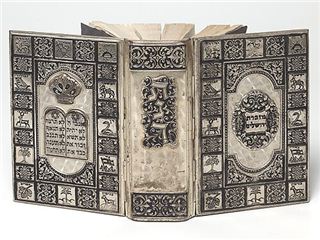
Jewish literature in Aramaic is vast. The Targums, translations of the Hebrew Bible into Aramaic, were read in synagogues; the Babylonian Talmud, the central text of rabbinic Judaism, completed around 500 to 600, is written largely in Jewish Babylonian Aramaic. The Kaddish, the prayer recited by mourners, and the Kol Nidre of the Day of Atonement are in Aramaic, and the Zohar, the classic of Jewish mysticism written in 13th-century Spain, was composed in a literary Aramaic.
Syriac literature is one of the richest of late antiquity. Its Bible, the Peshitta, was translated from the 2nd century onwards; the poet and theologian Ephrem the Syrian, who died in 373, wrote hymns that are still sung; and writers such as Aphrahat, Jacob of Serugh and, in the 13th century, Bar Hebraeus produced theology, history and science. Syriac scholars translated Greek philosophy, medicine and science, and in Abbasid Baghdad Syriac Christians such as Hunayn ibn Ishaq translated these works into Arabic, a crucial link in the transmission of Greek learning to the Islamic world and later to Europe.
The Mandaeans, a Gnostic community of southern Iraq and Iran, wrote their scriptures, such as the Ginza Rabba, in Mandaic Aramaic, and the prophet Mani wrote his scriptures in a form of Syriac.
Change & Descendants
Aramaic is one of the few languages spoken and written continuously for some three thousand years, but its role has changed dramatically. Once a language of empires spoken by millions from Egypt to Iran, it has become the language of small communities, many of them living far from their ancestral homelands.
The Neo-Aramaic languages spoken today descend from different branches. Western Neo-Aramaic survives only in Maaloula and two other villages near Damascus. Turoyo is the language of the Syriac Christians of Tur Abdin in south-eastern Turkey. The North-eastern Neo-Aramaic dialects, spoken by Assyrian and Chaldean Christians and formerly by Jews of Kurdistan, most of whom moved to Israel in the 1950s, are the largest group. Neo-Mandaic is spoken by a few Mandaeans in Iran.
Aramaic left a deep mark on its neighbours. Hebrew absorbed many Aramaic words and forms, among them abba, “father”; Arabic borrowed Aramaic words, many of them religious and cultural terms, and Persian was long written with Aramaic signs. Its scripts spread further than the language itself, to the Hebrew, Arabic, Mongolian and Indian alphabets.
In the 20th and 21st centuries Aramaic speakers have suffered persecution, war and displacement, and UNESCO lists their languages as endangered. Communities in the diaspora, from Sweden and Germany to the United States and Australia, and in northern Iraq, where schools teach in Syriac, work to preserve and teach their language.
Legacy
Aramaic was the first great common language of the Middle East, used for a thousand years by peoples of many origins and religions, and its influence on the history of writing is unmatched: through its descendants, the Aramaic alphabet is the ancestor of the scripts used today by hundreds of millions of people, from Hebrew and Arabic to the traditional Mongolian script.
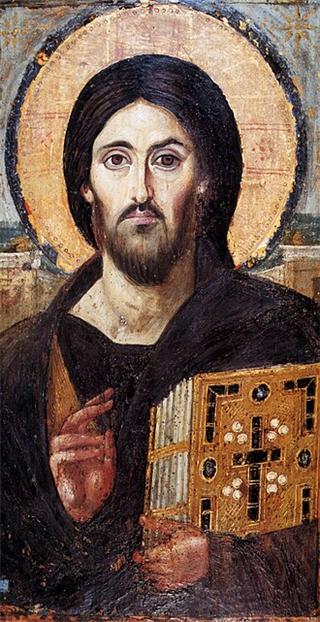
It holds a special place in religious history. It was the language of Jesus, of parts of the Bible, of the Talmud and the Kaddish, of the Syriac churches, of the Mandaeans and of Mani. The Syriac churches, among them the Syriac Orthodox Church, the Assyrian Church of the East, the Chaldean Catholic Church and the Maronite Church, still use it in their liturgies, and the Syriac Christians of Kerala in India preserve a heritage that goes back to Syriac missionaries.
As a bridge between Greek learning and Arabic science, Syriac scholarship played a key role in the transmission of knowledge between civilisations.
Today, the survival of Aramaic depends on small communities scattered by war and emigration. Their efforts to preserve the language, in schools, churches, media and online, keep alive one of the oldest continuously spoken languages of the world.
Aramaic, the Semitic language of the Aramaeans of Syria, written from the 9th century BCE, became the common language of the Assyrian, Babylonian and Persian empires, the language of Jesus, of the Talmud and of Syriac Christianity, and the source of the Hebrew, Arabic and many Asian scripts. After three thousand years it is still spoken by small, endangered communities.
References
- Beyer, K. (1986) The Aramaic Language: Its Distribution and Subdivisions. Translated by J.F. Healey. Göttingen: Vandenhoeck & Ruprecht.
- Brock, S. (2006) An Introduction to Syriac Studies. Piscataway: Gorgias Press.
- Creason, S. (2004) 'Aramaic', in Woodard, R.D. (ed.) The Cambridge Encyclopedia of the World's Ancient Languages. Cambridge: Cambridge University Press, pp. 391–426.
- Daniels, P.T. and Bright, W. (eds) (1996) The World's Writing Systems. New York: Oxford University Press.
- Gzella, H. (2015) A Cultural History of Aramaic: From the Beginnings to the Advent of Islam. Leiden: Brill.
- Khan, G. and Noorlander, P.M. (eds) (2021) Studies in the Grammar and Lexicon of Neo-Aramaic. Cambridge: Open Book Publishers.