Language · Europe
Latin
At a glance
- Latin, the language of Latium and Rome, spread with Roman power across the western Mediterranean and became the language of law, government and a great literature from Cicero and Virgil onwards.
- Spoken Latin changed region by region into the Romance languages, among them Spanish, Portuguese, French, Italian and Romanian, now the first languages of nearly 900 million people.
- Written Latin outlived the Roman Empire by more than a thousand years as the language of the Church, the universities, science and diplomacy in Europe.
Timeline
- c. 6th century BCEThe earliest Latin inscriptions, among them the Lapis Niger in the Roman Forum
- 240 BCELivius Andronicus stages the first Latin play adapted from a Greek original
- 1st century BCEThe golden age of Latin literature: Cicero, Caesar, Lucretius, Virgil and Horace
- c. 382–405Jerome translates the Bible into Latin: the Vulgate
- 813The Council of Tours orders sermons to be preached in the “rustic Roman tongue” or in German
- 842The Oaths of Strasbourg, the earliest surviving text in an early form of French
- 1687Isaac Newton publishes his Principia in Latin
- 1962–1965The Second Vatican Council opens the way to the Mass in the languages of the people
Origins
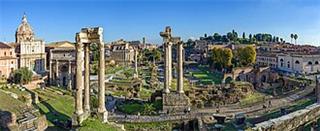
Latin belongs to the Italic branch of the Indo-European family, which also includes Oscan and Umbrian, once spoken in central and southern Italy, and Faliscan, its close neighbour. It was the language of the Latini, the people of Latium, the plain south of the Tiber, and of their most successful city, Rome. In the early centuries of the first millennium BCE it was one language among many in Italy, overshadowed by the Etruscans to the north and by the Greek cities of the south.
The earliest Latin texts are short inscriptions of the 6th century BCE, among them the Lapis Niger, a damaged stone found beneath the black paving of the Roman Forum, and the Duenos vase, a small triple vessel whose inscription runs around its sides. A gold brooch from Praeneste with a still older text was long suspected of being a forgery; scientific study has since argued for its authenticity. These early texts show a language with older forms that Romans of the classical age would barely have recognised.
The Romans took their alphabet from the Etruscans, who had adapted it from the alphabet of Greek colonists in Italy. The language of early Rome was shaped by contact with both peoples: Etruscan supplied words for public life and perhaps some personal names, and Greek, through trade, religion and later through literature, supplied a vast vocabulary.
As Rome conquered Italy between the 5th and 3rd centuries BCE, Latin spread with its colonies, its roads and its armies, and gradually replaced Oscan, Umbrian, Etruscan and the other languages of the peninsula. By the 1st century CE most of them survived only in inscriptions. The language of Rome had become the language of Italy, and it would soon become the language of much of the western Mediterranean.
The Romans distinguished the polished language of literature and oratory from the everyday speech of soldiers, traders and farmers, which scholars call Vulgar Latin. The two were never separate languages, but the gap between them widened with time, and it is from everyday speech that the Romance languages descend.
Sounds, Script & Grammar
Latin is a highly inflected language. Nouns, pronouns and adjectives change their endings according to their role in the sentence, in six cases: the nominative for the subject, the genitive for possession, the dative for the indirect object, the accusative for the direct object, the ablative for means, manner, place and separation, and the vocative for address, with traces of a locative in the names of towns. Nouns fall into five patterns, called declensions, and three genders, masculine, feminine and neuter. Latin has no articles: “rex” can mean “a king” or “the king”.
Verbs carry person, number, tense, mood and voice in their endings, in four main patterns or conjugations. A single word such as “amabimur” means “we shall be loved”. Because the endings show who does what to whom, word order is free and serves emphasis and style; prose tends to place the verb at the end of the clause, while poets arranged words with great artistry.
Classical pronunciation can be reconstructed from the evidence of spelling, grammarians and loanwords. The letter c was always hard, as in “cat”, so that Cicero began with the same sound as “kick”; v was pronounced like English w; ae sounded like the vowel in “eye”. Vowel length distinguished words, and Latin poetry was built on patterns of long and short syllables rather than stress.
The Roman alphabet had twenty-one letters in the early period; Y and Z were added in the 1st century BCE to write words borrowed from Greek. The Romans wrote in capitals, often without spaces between words. The distinction between I and J and between U and V, and the letter W, came much later. Lowercase letters developed from the handwriting of late antiquity and the early Middle Ages; the Carolingian minuscule of about 800 is the ancestor of the lowercase letters printed today.
Latin also had a large vocabulary of abstract and technical terms, many coined by Cicero and other writers to render Greek philosophy, and an enormous capacity to build new words from roots and prefixes, a resource later exploited by every science.
Speakers & Spread

Latin spread with Roman rule. In the western provinces, Spain, Gaul, the Alps and the Danube lands, and North Africa, it was learned by local elites who sought Roman citizenship and careers, by the communities that grew up around legionary camps and colonies, and eventually by much of the population, who gave up Celtic, Iberian and other languages. In the eastern Mediterranean, by contrast, Greek remained the common language; Latin served the army and the law, and Roman officials in the east often used Greek themselves.
Latin was the language of Roman law and administration, and in the later empire of the Christian Church in the west. Tertullian, around 200, was among the first Christian writers to use it, and Jerome’s translation of the Bible, the Vulgate, completed in the early 5th century, became the standard text of Western Christianity for more than a thousand years.
When the Western Roman Empire broke up in the 5th century, the Germanic kingdoms that replaced it in Italy, Gaul and Spain continued to govern in Latin and their rulers gradually adopted the speech of their subjects. In Britain, the Rhineland and North Africa, however, Latin speech gave way to English, German and, after the 7th century, Arabic and Berber.
Through the Middle Ages, Latin was no one’s mother tongue, but it was the language of the Church, of the universities, of law and of much government and correspondence across western and central Europe, learned in school by every educated person. Magna Carta of 1215 was written in Latin, and in the Kingdom of Hungary it remained the language of government until 1844.
From the Renaissance onwards, the national languages took over these roles one by one. French replaced Latin in diplomacy in the 17th and 18th centuries, and scholars increasingly wrote in their own languages. Latin remained the language of the Catholic liturgy until the 1960s and is still the official language of the Holy See.
Literature & Learning

Latin literature began in the 3rd century BCE in close dialogue with Greek. Livius Andronicus, a Greek from southern Italy, translated the Odyssey and staged the first Latin play adapted from a Greek original in 240 BCE; Plautus and Terence wrote comedies, and Ennius wrote an epic history of Rome in Greek metre.
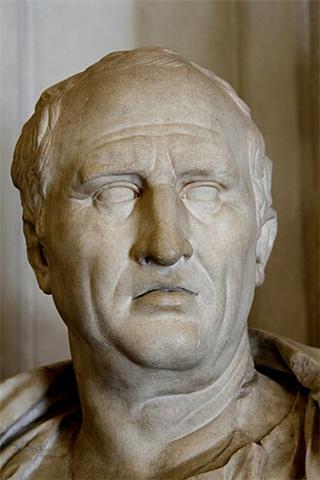
The 1st century BCE and the reign of Augustus produced the classics of the language. Cicero’s speeches, letters and philosophical works set the standard for Latin prose; Julius Caesar wrote clear accounts of his own wars; Lucretius put Epicurean philosophy into verse; Catullus wrote lyric poetry of startling directness. Virgil’s Aeneid gave Rome a national epic, Horace wrote odes and satires, Ovid retold the myths of transformation in the Metamorphoses, and Livy wrote a history of Rome from its foundation. The writers of the following century, among them Seneca, Tacitus, Pliny the Elder and Juvenal, are often called the silver age.
Christian writers such as Tertullian, Ambrose and Augustine of Hippo, whose Confessions and City of God shaped Western thought, made Latin the language of theology. In the Middle Ages Latin carried philosophy, history, poetry and science: Bede’s history of the English Church, the hymns of the liturgy, the poems of the wandering scholars and the works of Thomas Aquinas were all written in Latin.
The humanists of the Renaissance, beginning with Petrarch, sought to recover the language of Cicero and wrote a revived classical Latin, now called Neo-Latin. Erasmus wrote in it, as did Thomas More in Utopia. Science spoke Latin for two more centuries: Copernicus’s On the Revolutions of the Heavenly Spheres of 1543, William Harvey’s account of the circulation of the blood, Newton’s Principia of 1687 and the works in which Carl Linnaeus named plants and animals with two Latin words were all written in it.
Classical Latin texts were preserved through the Middle Ages largely by copying in monasteries and cathedral schools, and the recovery of lost works by Renaissance scholars, such as Poggio Bracciolini’s discovery of Lucretius in 1417, helped shape modern thought.
Change & Descendants
Spoken Latin never stopped changing. Across the provinces it developed regional differences in sounds, grammar and vocabulary, which grew larger once the empire fell and the regions lost touch with one another. Over several centuries the speech of each region became a new language: the Romance languages, which include Spanish, Portuguese, Galician, Catalan, French, Occitan, Italian, Sardinian, Romansh and Romanian.
The changes followed regular patterns. The case endings wore away and were replaced by prepositions and a fixed word order; articles developed from the demonstratives “ille” and “unus”; new future tenses were built from the infinitive and the verb “habere”, which is why the Spanish “cantaré” and the French “chanterai” both mean “I shall sing”. Everyday words often replaced literary ones: the horse is “caballus” rather than “equus” in Spanish “caballo” and French “cheval”, and “testa”, a pot, became the word for head in French and Italian.
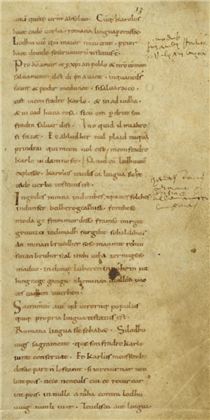
For a long time people in the former Roman lands thought of their speech as simply the way Latin was spoken. The break became clear in the Carolingian age, when reformers restored a classical pronunciation of written Latin: in 813 the Council of Tours ordered priests to preach in the “rustic Roman tongue” or in German, so that the people could understand. The Oaths of Strasbourg of 842, sworn by two of Charlemagne’s grandsons, are the earliest surviving text in an early form of French.
Latin itself continued in two forms: Medieval Latin, a living language of learning that took new words and a looser syntax, and the revived classical Latin of the humanists. Each country also developed its own pronunciation of Latin, so that an English scholar and an Italian priest might read the same text very differently; the Catholic Church adopted an Italian pronunciation.
Legacy

Latin is the most influential language in the history of Europe. Its daughters, the Romance languages, are spoken as a first language by nearly 900 million people, and Spanish, Portuguese and French spread with European empires to the Americas, Africa and beyond. English, though a Germanic language, took a large share of its vocabulary from Latin, directly and through French: by most estimates more than half of English words have Latin roots.
The Latin alphabet is now the most widely used writing system in the world, adapted for languages from Vietnamese to Turkish and Swahili. Latin vocabulary supplies the international terminology of law, medicine, biology and many other sciences, and every scientific name of a living species is a Latin or Latinised binomial; until 2012 the formal description of a new plant had to be written in Latin.
Roman law, written in Latin and codified under Justinian in the 6th century, underlies the civil-law systems of continental Europe and Latin America. Latin phrases remain in daily use, from “et cetera” and “per cent” to legal terms such as “habeas corpus”.
For centuries Latin was the foundation of education in Europe and its colonies, the language through which educated people met the literature and thought of antiquity. It is still taught in schools and universities, studied in its own right and for the access it gives to two thousand years of writing. The Catholic Church continues to publish its official documents in Latin, and the Vatican has coined Latin words for modern things, from the computer to the internet.
Latin, the language of ancient Rome, spread with Roman rule across the western Mediterranean, produced one of the world’s great literatures and became the parent of the Romance languages. For more than a thousand years after the fall of the Western Roman Empire it remained the written language of the Church, scholarship, science and law in Europe, and its alphabet and vocabulary are used around the world today.
Test yourself
5 questions on this page, from its key events and facts.
The questions open here once the page has loaded.
References
- Adams, J.N. (2007) The Regional Diversification of Latin, 200 BC–AD 600. Cambridge: Cambridge University Press.
- Clackson, J. and Horrocks, G. (2007) The Blackwell History of the Latin Language. Oxford: Blackwell.
- Leonhardt, J. (2013) Latin: Story of a World Language. Translated by K. Kronenberg. Cambridge, MA: Belknap Press of Harvard University Press.
- Ostler, N. (2007) Ad Infinitum: A Biography of Latin. London: HarperPress.
- Palmer, L.R. (1954) The Latin Language. London: Faber and Faber.
- Wright, R. (1982) Late Latin and Early Romance in Spain and Carolingian France. Liverpool: Francis Cairns.