Language · Ancient Near East
Hebrew
At a glance
- Hebrew, a Canaanite language of the Iron Age kingdoms of Israel and Judah, is the language of most of the Hebrew Bible, written and edited over many centuries in the 1st millennium BCE.
- Displaced in daily life by Aramaic, Greek and later other languages, it lived on for nearly two thousand years as the language of Jewish prayer, law, poetry, philosophy and correspondence across the world.
- Revived as a spoken language from the late 19th century, it is today the language of Israel and of some 9 million speakers, a unique case of a language reborn as the mother tongue of a nation.
Timeline
- 10th century BCEThe Gezer calendar, one of the oldest inscriptions in a Hebrew or related Canaanite dialect, lists the months of the farming year
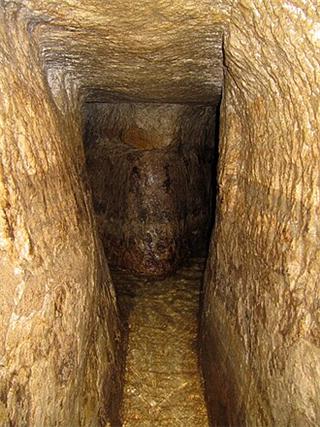
- c. 700 BCEThe Siloam inscription records the cutting of a water tunnel under Jerusalem
- c. 200The Mishnah, the code of Jewish law, is compiled in Mishnaic Hebrew
- c. 930The Aleppo Codex, a masterpiece of the Masoretic text with its vowel signs, is written in Tiberias
- 1881Eliezer Ben-Yehuda settles in Jerusalem and begins his campaign to revive spoken Hebrew
- 1922The British Mandate for Palestine recognises Hebrew as an official language beside English and Arabic
- 1947The first Dead Sea Scrolls, including the oldest known manuscripts of the Hebrew Bible, are found near Qumran
- 1953Israel founds the Academy of the Hebrew Language
Write in Hebrew
Type in the script itself: every key shows a sign with its value and how it sounds. Then make a picture of what you wrote, to save, copy or share.
The keyboard opens here once the page has loaded.
Origins
Hebrew belongs to the Canaanite group of Northwest Semitic languages, together with Phoenician, Moabite, Ammonite and Edomite, all of them closely related dialects spoken in the Levant in the Iron Age. The Bible calls it “the language of Canaan” and yehudit, “Judaean”; the name Hebrew, ivrit, came into use later.
The earliest inscriptions in Hebrew or closely related dialects date from around the 10th century BCE. The Gezer calendar, a small limestone tablet listing the months of the agricultural year, and an ostracon from Khirbet Qeiyafa, in Judah, are among them, though scholars debate whether their language is Hebrew or another Canaanite dialect. From the 9th and 8th centuries BCE, inscriptions are clearly Hebrew: the administrative ostraca of Samaria, capital of the northern kingdom of Israel, and the Siloam inscription, carved around 700 BCE in a tunnel dug to bring water into Jerusalem, which describes the moment when the two teams of diggers met.
Two small silver amulets found at Ketef Hinnom in Jerusalem, from around 600 BCE, bear a version of the Priestly Blessing from the Book of Numbers, the oldest known text also found in the Bible. The Lachish letters, written on potsherds by officers of Judah as the Babylonian army advanced in 588 or 587 BCE, preserve the Hebrew of the last days of the kingdom.
Hebrew was first written in the Paleo-Hebrew alphabet, a form of the Phoenician alphabet of twenty-two letters. After the Babylonian exile, Jews gradually adopted the Aramaic script, known as the square script, which became the Hebrew alphabet used ever since; the older letters survived for a time on coins and in the Samaritan script.
Sounds, Script & Grammar
Like other Semitic languages, Hebrew builds words from roots of usually three consonants, combined with patterns of vowels and affixes. From the root s-p-r come sefer, “book”, sofer, “scribe”, sippur, “story”, and mispar, “number”. Verbs are formed in a system of patterns, the binyanim, which express active, passive, causative, intensive and reflexive meanings of the same root.
Biblical Hebrew had a distinctive verbal system, in which narratives were told in a form combining the conjunction “and” with a verb form, and its usual word order placed the verb before the subject. Hebrew has two genders, masculine and feminine, which mark verbs as well as nouns and adjectives, and a dual for some pairs, such as yadayim, “hands”.
The Hebrew alphabet of twenty-two letters is written from right to left and originally recorded only consonants. Some letters came to be used for long vowels, and between the 8th and 10th centuries CE the scholars known as the Masoretes, in Tiberias, created a complete system of vowel points and accent marks, to preserve the exact reading of the Bible as it was chanted in the synagogue. Modern Hebrew is usually written without vowel points, except in poetry, children’s books and texts for learners.
Modern Hebrew has kept the morphology of the ancient language, while its sound system and syntax have been shaped by the languages of its first modern speakers, above all Yiddish and other European languages, and by Arabic: its standard pronunciation follows the Sephardi tradition, its word order is usually subject, verb and object, and it has a simple system of past, present and future tenses.
Speakers & Spread
Hebrew was the language of the kingdoms of Israel and Judah until their conquest by Assyria in 722 BCE and by Babylon in 587 or 586 BCE. During and after the Babylonian exile, Aramaic, the common language of the Persian empire, became the everyday language of many Jews, but Hebrew continued to be spoken in Judaea for centuries. The Dead Sea Scrolls, from the 3rd century BCE to the 1st century CE, are mostly in Hebrew, and letters of Simon bar Kokhba, the leader of the revolt against Rome in 132 to 135 CE, were written in Hebrew as well as in Aramaic and Greek.
Mishnaic Hebrew, the language of the Mishnah, the code of Jewish law compiled around 200 CE, reflects a spoken language that differed from Biblical Hebrew. By the 3rd and 4th centuries, however, Hebrew had ceased to be anyone’s mother tongue, and Jews spoke Aramaic, Greek and later Arabic, Persian, the Judaeo-Spanish known as Ladino and Yiddish, among other languages.
For the next sixteen centuries Hebrew was not a dead language but a language of learning and worship, leshon ha-kodesh, “the holy tongue”. Jews prayed, studied, wrote law, commentary, philosophy, science and poetry in it, corresponded in it across the diaspora, and taught it to their children, who could read it but did not speak it at home.
In the 18th and 19th centuries, writers of the Jewish Enlightenment used Hebrew for modern literature and journalism, and the Zionist movement made its revival as a spoken language a national cause. Eliezer Ben-Yehuda, who settled in Jerusalem in 1881, insisted on speaking only Hebrew at home and compiled a great dictionary; teachers in the new Jewish settlements of Palestine taught in Hebrew, and the language spread with the schools. In 1913 a dispute over the language of instruction at the new Technion in Haifa ended in victory for Hebrew. The British Mandate recognised Hebrew as an official language in 1922, and in 1948 it became the main language of the new State of Israel, where immigrants from around the world learned it in intensive courses. Today it is spoken by some 9 million people.
Literature & Learning

The Hebrew Bible, the Tanakh, is the foundational work of Hebrew literature: the Torah, the historical and prophetic books, the Psalms, the wisdom of Proverbs and Job, and the poetry of the Song of Songs, composed and edited over many centuries and reaching its final form in the last centuries BCE. Its oldest surviving manuscripts are among the Dead Sea Scrolls, found from 1947 near Qumran, such as the Great Isaiah Scroll, copied around 125 BCE.
Rabbinic literature continued in Hebrew: the Mishnah, the commentaries of the Midrash, and the prayers of the synagogue, while the Talmud mixed Hebrew with Aramaic. From the 6th century, poets in Palestine composed liturgical poems, piyyutim, of great complexity. The Masoretes of Tiberias fixed the text of the Bible with its vowels and accents; the Aleppo Codex, written around 930, is the most famous of their manuscripts.
In medieval Spain, Jewish poets writing in Hebrew under the influence of Arabic poetry created a golden age of Hebrew verse, both sacred and secular: Samuel ha-Nagid, Solomon ibn Gabirol and Judah Halevi, whose “Songs of Zion” express longing for the Land of Israel. Scholars such as Rashi, in 11th-century France, wrote commentaries on the Bible and Talmud still studied today, and Maimonides wrote his great code of Jewish law, the Mishneh Torah, in clear Hebrew in the 12th century.
Modern Hebrew literature began in the Enlightenment; Abraham Mapu’s The Love of Zion, of 1853, is considered the first Hebrew novel. Hayim Nahman Bialik became the national poet of the Hebrew revival, Shmuel Yosef Agnon won the Nobel Prize in Literature in 1966, and writers such as Yehuda Amichai, Amos Oz and David Grossman have made Israeli literature known around the world.
Change & Descendants
Hebrew has passed through several stages: Biblical Hebrew, itself changing between the earliest poems and the latest books; the Hebrew of the Dead Sea Scrolls; Mishnaic Hebrew, with a new vocabulary and a present tense formed from the participle; Medieval Hebrew, enriched by translators, such as the Ibn Tibbon family of Provence, who created a philosophical and scientific vocabulary modelled on Arabic; and Modern Hebrew.
The revival required thousands of new words for modern life. Ben-Yehuda and his successors coined them from ancient roots, coining milon, “dictionary”, from mila, “word”, and later bodies did the same: the Hebrew Language Committee, founded in 1890, and its successor, the Academy of the Hebrew Language, founded in 1953, which continues to propose new terms; maḥshev, “computer”, for example, was formed from the root of “thinking” and “calculating”. Modern Hebrew has also borrowed many international words and absorbed expressions from Yiddish, Arabic and English.
Through translations of the Bible, Hebrew words have entered languages around the world: English has amen, hallelujah, sabbath, cherub, jubilee and messiah, and many biblical expressions. The Hebrew alphabet was also used to write Yiddish, Ladino, Judaeo-Arabic and other Jewish languages.
In 2018 a law defined Hebrew as the official language of Israel, giving Arabic, previously also official, a special status.
Legacy
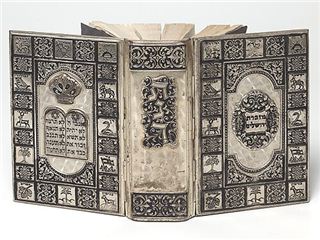
Hebrew is the language of the Hebrew Bible, one of the most influential texts in human history, sacred to Jews, and to Christians as the Old Testament, and revered in Islam. Its stories, laws, prophecies and poems, read in translation across the world, have shaped religion, law, ethics, art and literature, and the study of the Hebrew original has been part of Christian as well as Jewish scholarship since the Renaissance.
For two thousand years Hebrew sustained the unity of Jewish communities scattered from Yemen to Poland and from Morocco to India, who shared its prayers, texts and learning even when they spoke different languages.
Its revival as a spoken language is unique in history. No other language that had ceased to be anyone’s mother tongue has become the everyday language of a nation, and the Hebrew revival has inspired movements to revitalise endangered languages elsewhere.
Today Hebrew is the language of a vibrant modern culture of literature, theatre, music, film, science and technology in Israel, and it continues to be studied around the world as the key to the Bible and to three thousand years of Jewish writing.
Hebrew, the Canaanite language of ancient Israel and Judah, is the language of the Hebrew Bible. Replaced in daily speech by Aramaic and other languages, it remained for two thousand years the language of Jewish prayer, law, poetry and learning, and was revived as a spoken language from the late 19th century to become the language of Israel, spoken by some 9 million people.
Test yourself
5 questions on this page, from its key events and facts.
The questions open here once the page has loaded.
References
- Fellman, J. (1973) The Revival of a Classical Tongue: Eliezer Ben Yehuda and the Modern Hebrew Language. The Hague: Mouton.
- Hoffman, J.M. (2004) In the Beginning: A Short History of the Hebrew Language. New York: New York University Press.
- Kutscher, E.Y. (1982) A History of the Hebrew Language. Jerusalem: Magnes Press.
- Sáenz-Badillos, A. (1993) A History of the Hebrew Language. Translated by J. Elwolde. Cambridge: Cambridge University Press.
- Schniedewind, W.M. (2013) A Social History of Hebrew: Its Origins Through the Rabbinic Period. New Haven: Yale University Press.
- Zuckermann, G. (2020) Revivalistics: From the Genesis of Israeli to Language Reclamation in Australia and Beyond. New York: Oxford University Press.