Institution
Ecclesia
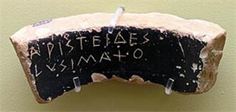
The ecclesia, or ekklesia, was the assembly of the citizens in the city-states of ancient Greece, best known from Athens, where it was open to all male citizens; in 594 BCE Solon allowed all Athenian citizens to take part regardless of class. The Athenian assembly declared war, elected the strategoi and other officials, had the final say on legislation and called magistrates to account after their year of office. Its agenda was set by the Boule, and it voted by show of hands, counting of stones and broken pottery. A typical meeting probably held around 6,000 of 30,000–60,000 citizens; it met on the Pnyx, and around 300 BCE its meetings moved to the Theatre of Dionysus.
Mentioned in 2 profiles
Great speeches
See also

Cite this entry
- APA
- The Epoch Institute. (2026). Ecclesia. In The Epoch Institute Encyclopedia. https://the-epoch-institute.org/encyclopedia/ecclesia-ancient-greece
- MLA
- “Ecclesia.” The Epoch Institute Encyclopedia, The Epoch Institute, 2026, https://the-epoch-institute.org/encyclopedia/ecclesia-ancient-greece. Accessed .
- Chicago
- The Epoch Institute. “Ecclesia.” The Epoch Institute Encyclopedia. 2026. https://the-epoch-institute.org/encyclopedia/ecclesia-ancient-greece.
- Harvard
- The Epoch Institute (2026) ‘Ecclesia’, The Epoch Institute Encyclopedia. Available at: https://the-epoch-institute.org/encyclopedia/ecclesia-ancient-greece (Accessed: ).
Last reviewed October 2026Random entry ↻