Europe
Athens
At a glance
- Athens unified Attica and in 508/507 BCE created the democracy that let the citizen Assembly decide war, finance and law.
- Its fleet won at Salamis in 480 BCE and led the Delian League, which Athens turned into a tribute-paying Aegean empire.
- Defeated by Sparta in 404 BCE and dominated by Macedon after 338 BCE, it stayed the cultural capital of Greece until Sulla's sack.
Rise & Fall
- 594 BCESolon's reforms cancel debts on the person and abolish debt bondage
- 508 BCECleisthenes reorganises the citizen body and founds the democracy
- 480 BCEThe Athenian-led Greek fleet defeats Xerxes I at Salamis
- 447 BCEConstruction of the Parthenon begins under Pericles
- 404 BCEAthens surrenders to Sparta at the end of the Peloponnesian War
- 338 BCEPhilip II of Macedon defeats Athens and Thebes at Chaeronea
- 86 BCESulla storms Athens after it sides with Mithridates VI
Foundation

Athens was inhabited continuously from the Neolithic, and in the Late Bronze Age the Acropolis carried a fortified Mycenaean palace. Unlike many Mycenaean centres it was not destroyed around 1200 BCE, and in the early Iron Age it remained one of the largest communities in Greece, known for its Protogeometric and Geometric pottery from the cemetery of the Kerameikos. Over the following centuries the villages of Attica, an area of some 2,500 square kilometres, were drawn into a single state centred on Athens, a process the Athenians credited to the hero Theseus and called the synoikismos. Kingship gave way to rule by aristocratic magistrates; the list of annual archons begins in 683/682 BCE. An attempt by the nobleman Cylon to seize power as tyrant, probably in 632 BCE, failed, and in 621 BCE Draco gave the city its first written laws, remembered for their severity. Debt and land shortage then brought Attica close to civil war, and in 594 BCE Solon was appointed archon to mediate. His reforms cancelled debts secured on persons, abolished debt bondage and divided citizens into four property classes, the basis of the constitution that later reformers built upon.
Socioeconomy

Classical Attica probably held 250,000–300,000 people, of whom perhaps 30,000–60,000 were adult male citizens; the rest were citizens' families, resident foreigners known as metics, and a large enslaved population that worked in households, workshops and the silver mines. Pericles' law of 451 BCE restricted citizenship to children of two Athenian parents. Most citizens farmed, and olive oil was the chief agricultural export, while Attic black-figure and then red-figure pottery dominated Mediterranean markets in the sixth and fifth centuries. The rich silver mines of Laurion supplied the tetradrachms stamped with Athena's owl, among the most trusted coins of the Greek world, and a new vein found in 483 BCE paid for the fleet. Attica could not feed itself, so the harbour of Piraeus, laid out as a planned town in the fifth century, imported grain from the Black Sea, Egypt and Sicily, and securing that supply shaped Athenian policy for centuries. Religious life centred on Athena Polias, honoured every four years in the Great Panathenaia, and on festivals such as the City Dionysia, where tragedies and comedies were staged, and the Eleusinian Mysteries of Demeter and Kore. Women were excluded from political life but held important priesthoods and roles in cult.
Military
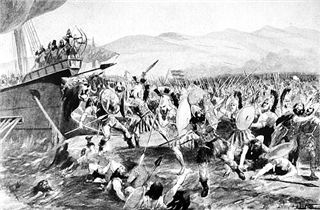
In the sixth century Athens fought as a hoplite state, its heavy infantry drawn from citizens able to afford armour. In 490 BCE, under the generalship of Miltiades, about 10,000 Athenians and Plataeans defeated the Persian landing force at the Battle of Marathon. At the urging of Themistocles the city then built a fleet of some 200 triremes, which formed the core of the Greek navy that defeated Xerxes I at the Battle of Salamis in 480 BCE, and Athenians fought at Plataea in 479 BCE. Naval power, rowed largely by the poorest citizens, the thetes, became the basis of Athenian strength and of the Delian League: under Cimon the allies destroyed a Persian fleet and army at the Battle of the Eurymedon around 466 BCE. The Long Walls joining Athens to Piraeus, completed around 457 BCE, made the city a fortified island. A great expedition to Egypt ended in disaster around 454 BCE. In the Peloponnesian War of 431–404 BCE Athens survived a devastating plague and won at Pylos in 425 BCE, but lost most of a vast armament in the Sicilian Expedition of 415–413 BCE, and Lysander's destruction of its last fleet at Aegospotami in 405 BCE forced surrender.
Governance & Law
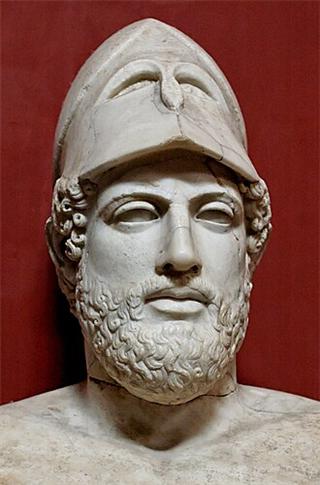
Cleisthenes' reforms of 508/507 BCE, after the fall of the tyrant Hippias, created the democracy. Citizens were registered in about 139 local demes, grouped into ten new tribes that cut across regional loyalties, and each tribe supplied fifty members, chosen by lot, to the Council of 500, which prepared business for the Assembly, or ekklesia, of all adult male citizens. Most magistracies were filled by lot for one year, while the ten generals, the strategoi, were elected and could be re-elected, which allowed Pericles to lead the city as general for much of the period from 443 to 429 BCE. Ostracism, first used in 487 BCE, let the Assembly exile a leading politician for ten years. In 462/461 BCE Ephialtes stripped the aristocratic Council of the Areopagus of most of its powers, and large popular juries, paid from public funds, took over most judicial business. The democracy was overthrown twice, by the oligarchy of the Four Hundred in 411 BCE and by the Thirty Tyrants installed by Sparta in 404 BCE, but was restored in 403 BCE and lasted, with pay for attending the Assembly and a code of laws revised by legislative boards, until the Macedonian regent Antipater imposed a property qualification in 322 BCE.
Global & Regional Impact
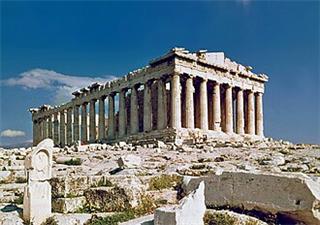
Athens is the best documented Greek city and the source of much of what later ages regarded as Classical. Its democracy, the most radical of the ancient world, became a reference point, admired or feared, for political thinkers from Aristotle to the eighteenth-century revolutionaries. The building programme begun under Pericles, including the Parthenon (447–432 BCE) designed by Ictinus and Callicrates with sculpture overseen by Phidias, and the Propylaea and Erechtheion, set a standard for architecture copied in Rome and again from the Renaissance onward. Athenian festivals produced tragedy and comedy: the surviving plays of Aeschylus, Sophocles, Euripides and Aristophanes remain the foundation of Western drama. Herodotus is said to have given readings of his work in Athens, and Thucydides wrote the history of its war with Sparta. Socrates, tried and executed in 399 BCE, left his mark through his pupils; Plato founded the Academy around 387 BCE, Aristotle the Lyceum in 335 BCE, and Zeno and Epicurus opened their Stoic and Epicurean schools around 300 BCE, making Athens the philosophical capital of the Mediterranean into Roman times. The Attic dialect became the basis of the koine, the common Greek of the Hellenistic world and of the New Testament.
Decline & Fall
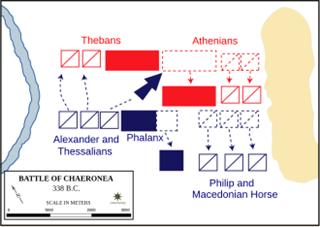
Defeat in 404 BCE ended the Athenian empire, but the city recovered quickly. It founded the Second Athenian League in 378 BCE, though the revolt of Chios, Rhodes, Cos and Byzantium in the Social War of 357–355 BCE weakened it. Athens, urged on by Demosthenes, joined Thebes against Philip II of Macedon and was defeated at the Battle of Chaeronea in 338 BCE; Philip treated the city leniently, and it joined his League of Corinth. After Alexander's death its revolt in the Lamian War failed, and in 322 BCE Antipater placed a garrison in Piraeus and restricted citizenship. Demetrius of Phalerum governed for Cassander from 317 to 307 BCE, and after defeat in the Chremonidean War Antigonus II Gonatas occupied the city in 262 BCE. Athens bought out the Macedonian garrison in 229 BCE and drew close to Rome, which gave it the island of Delos as a free port in 167/166 BCE. In 88 BCE, under the leadership of Athenion and then Aristion, Athens sided with Mithridates VI of Pontus against Rome. Sulla besieged the city and stormed it on 1 March 86 BCE, ending its independent political life, although Athens survived as a privileged free city and university town of the Roman Empire.
Athens matters as the birthplace of democracy and the leading city of Classical Greece: its navy defeated Persia and built an Aegean empire, while its drama, philosophy, historiography and architecture shaped Hellenistic, Roman and later European culture long after the city lost its political independence.
Test yourself
5 questions on this page, from its key events and facts.
The questions open here once the page has loaded.
References
- Hansen, M.H. (1991) The Athenian Democracy in the Age of Demosthenes. Oxford: Blackwell.
- Meiggs, R. (1972) The Athenian Empire. Oxford: Clarendon Press.
- Osborne, R. (2009) Greece in the Making, 1200–479 BC. 2nd edn. London: Routledge.
- Habicht, C. (1997) Athens from Alexander to Antony. Cambridge, MA: Harvard University Press.
- Thucydides, History of the Peloponnesian War, trans. R. Warner. Harmondsworth: Penguin, 1954.
Connections
Open the full connections map →