Europe
Knossos
At a glance
- Knossos grew from the ruins of the Minoan palace into one of the two leading Greek city-states of Iron Age Crete.
- It was governed by annual kosmoi and a council of elders, with men's messes and age groups for citizen training.
- Long rivalry with Gortyn and Lyttos ended when Quintus Caecilius Metellus conquered Crete for Rome in 69–67 BCE.
Rise & Fall
- c. 800 BCERich burials in the North Cemetery show Knossos among the wealthiest Aegean towns
- c. 450 BCETreaty between Knossos and Tylissos made under the arbitration of Argos
- c. 425 BCEKnossos begins striking silver coins showing the Labyrinth
- c. 220 BCEKnossos seizes and destroys its rival Lyttos in the Lyttian War
- c. 216 BCEPhilip V of Macedon becomes protector of the Cretan Koinon
- c. 71 BCECretans defeat the Roman fleet of Marcus Antonius near Kydonia
- 69–67 BCEQuintus Caecilius Metellus conquers Crete, including Knossos
Foundation
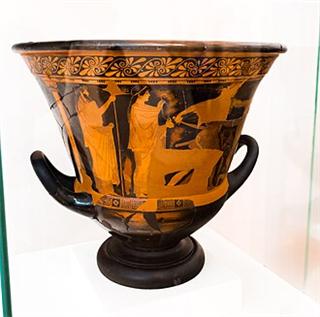
Knossos lies a few kilometres inland from the north coast of central Crete, on the Kairatos stream. Its Bronze Age palace, the largest of Minoan Crete, was destroyed in the fourteenth or thirteenth century BCE (the date of its final destruction is still debated), but the site was never abandoned. In the early Iron Age a substantial town grew up around the ruins, and the rich tombs of the North Cemetery, used from the eleventh to the seventh century BCE, contain bronzes, gold jewellery and pottery imported from Cyprus, the Levant and Athens, showing that Knossos was one of the most prosperous and outward-looking communities of the Aegean around 900–700 BCE. By the Archaic period its inhabitants spoke the Doric dialect common to most of Crete, and Knossos had become a polis with its own territory, institutions and port at Amnisos and later at Herakleion, the site of modern Heraklion. Greek memory linked the city to its Bronze Age past: the Iliad names Knossos first among the Cretan cities led by Idomeneus, and the Odyssey calls it the great city where Minos ruled. Like much of Crete, Knossos is archaeologically less visible in the sixth century BCE, but it re-emerged in the Classical period as, with Gortyn, one of the two strongest cities of the island.
Socioeconomy

Knossian society followed the pattern ancient writers described for Crete as a whole. Full citizens formed a privileged class, while the land was worked by dependent rural populations, called by various names in Cretan sources, who were bound to the soil and excluded from political life; Aristotle compared them to the helots of Sparta, though he noted they were less rebellious. Citizen men ate together in men's houses, the andreia, whose meals Aristotle says were funded from public produce, and boys were trained in groups called agelai. The economy rested on cereals, olives, vines and stock-raising in the territory between the coast and the uplands, with trade through the harbours of Amnisos and Herakleion. From the later fifth century Knossos struck silver coins showing a stylised labyrinth on one side and often the Minotaur or a head of Hera, Demeter or Apollo on the other, an explicit claim on the Minoan legends. Excavations have revealed a sanctuary of Demeter in use from the eighth century BCE into Roman times. In the Hellenistic period Cretan mercenaries, especially archers, served across the eastern Mediterranean, and piracy and slave raiding became a significant, and notorious, part of the island's economy, in which Knossos shared.
Military
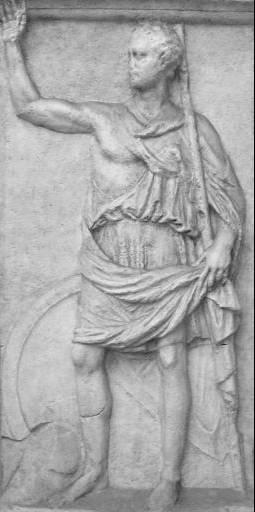
Like other Cretan poleis, Knossos fielded a citizen army trained through the agelai and men's houses, and Cretans were famed above all as archers and light troops. Warfare on the island was endemic, as the cities competed for land, harbours and allies, and many interstate treaties survive as inscriptions. In the Hellenistic period Knossos and Gortyn, sometimes allied and sometimes enemies, sought to dominate Crete. According to Polybius, by the late third century they had brought most of the island under their control, with the exception of Lyttos. In the Lyttian War of about 221–219 BCE Knossos, supported by Aetolian troops, attacked Lyttos, and while the Lyttian army was away on campaign the Knossians seized the city and destroyed it around 220 BCE. The war split Gortyn into rival factions and drew in Philip V of Macedon and the Achaean League on the side of Knossos' opponents. Through the second century Knossos and Gortyn alternately cooperated and fought, while Cretan cities clashed with Rhodes in the Cretan War of about 205–200 BCE. When Rome turned on Crete, the Cretans defeated Marcus Antonius at sea near Kydonia around 71 BCE, but Quintus Caecilius Metellus then reduced the cities one by one, including Knossos, between 69 and 67 BCE.
Governance & Law
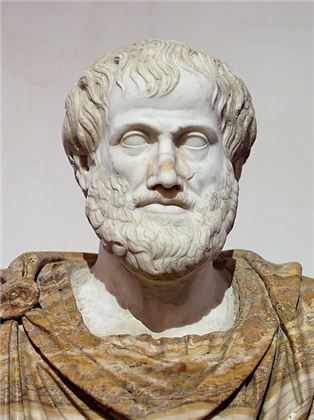
Knossos was governed by the institutions shared by the Cretan poleis. Executive power lay with a board of annual magistrates, the kosmoi, ten in number according to Aristotle, drawn from certain privileged kinship groups and led by a chief kosmos who gave his name to the year. Former kosmoi formed a council of elders, while the citizen assembly had limited powers, chiefly to ratify decisions taken by the magistrates and council. Aristotle, in the Politics, criticised this system for its narrow recruitment and the habit of suspending the kosmoi during factional struggles. Knossos conducted its foreign affairs through sworn treaties; an inscription of about 450 BCE records an agreement between Knossos and Tylissos made under the arbitration of Argos, and in the Hellenistic period Knossos concluded treaties of alliance and shared citizenship with many Cretan cities. The young men of Dreros swore an oath, preserved on stone, to be hostile to Lyttos and friendly to Knossos. In the late third century the cities of Crete formed a federal Cretan Koinon with a common court for disputes between cities, in which Knossos was a leading member, and Philip V was recognised as its protector around 216 BCE. Its cohesion was weak, and the Koinon repeatedly broke apart in local wars.
Global & Regional Impact

Knossos' chief legacy lies in the way it carried the memory of Bronze Age Crete into Greek culture. The myths of Minos, the lawgiver king of Knossos, of Daedalus and the Labyrinth, of Theseus, Ariadne and the Minotaur, circulated throughout the Greek world, and the city deliberately advertised them on its coinage. The seer Epimenides, traditionally said to be a Knossian, was remembered for purifying Athens after the sacrilege of the Cylonian conspiracy, and a line attributed to him, that Cretans are always liars, is quoted in the New Testament letter to Titus. Cretan institutions fascinated political thinkers. Ephorus and Aristotle compared them with those of Sparta, and Plato set his last dialogue, the Laws, among three old men walking from Knossos to the cave of Zeus on Mount Ida, one of them a Knossian named Kleinias who is charged with founding a new Cretan city. Under Rome Knossos became the colony of Colonia Iulia Nobilis Cnosus and later a bishopric. Its greatest modern impact came from archaeology: excavation of the Minoan palace by Arthur Evans from 1900 revealed the Bronze Age civilisation he named Minoan, while later work by the British School at Athens has made Iron Age Knossos one of the best known Greek towns of its era.
Decline & Fall
The decline of independent Knossos was tied to the fate of Crete within the expanding Roman world. Endless wars among the Cretan cities, competition between Knossos and Gortyn, and the island's reputation as a base for pirates and slavers made Crete a target for Roman intervention, especially once Rome undertook to suppress piracy in the eastern Mediterranean. Cretan support for Mithridates VI of Pontus and refusal of Roman demands to surrender pirate leaders and hostages led to war. After the defeat of Marcus Antonius around 71 BCE the Romans sent Quintus Caecilius Metellus with three legions in 69 BCE. He defeated the Cretans near Kydonia and then besieged the cities in turn; at Knossos the Cretan commander Lasthenes held out before escaping, and by 67 BCE the island was conquered, a campaign that earned Metellus the surname Creticus. Crete became a Roman province, later combined with Cyrene, with its capital at Gortyn, Knossos' old rival. Knossos lost its independence and much of its importance, but was refounded as a Roman colony, probably under Octavian or Augustus in the late first century BCE, and continued as a prosperous provincial town through the Roman period.
Knossos matters as the city that bridged Minoan and Greek Crete: built over the greatest Bronze Age palace, it became one of the island's two leading Iron Age poleis, kept the legends of Minos alive on its coins, shaped Greek ideas of Cretan law, and fought Gortyn and Lyttos until Rome's conquest in 67 BCE.
References
- Willetts, R.F. (1955) Aristocratic Society in Ancient Crete. London: Routledge & Kegan Paul.
- Chaniotis, A. (1996) Die Verträge zwischen kretischen Poleis in der hellenistischen Zeit. Stuttgart: Franz Steiner.
- Hansen, M.H. and Nielsen, T.H. (eds) (2004) An Inventory of Archaic and Classical Poleis. Oxford: Oxford University Press.
- Sanders, I.F. (1982) Roman Crete. Warminster: Aris & Phillips.
Connections
Open the full connections map →