Social ladder · 508–322 BCE (from the reforms of Cleisthenes to the end of the democracy)
Social Hierarchy of Classical Athens
From Rich Citizens to Enslaved
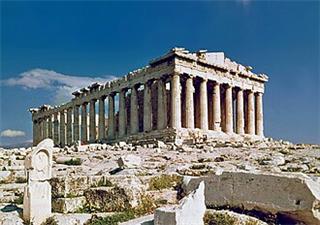
Athens had no king. From the reforms of Cleisthenes in 508 BCE the Assembly of all adult male citizens governed the city, so its ladder begins not with a ruler but with the richest citizens. The first divide was birth. Only citizens could vote, hold office and own land in Attica, and after Pericles’s citizenship law of 451 BCE a citizen had to be born of an Athenian father and an Athenian mother. Among the citizens, the four property classes of Solon, graded by the yield of a man’s land, still decided who could hold certain offices and how he served in war. Below the citizens lived the metics, free foreigners and freed slaves who paid a special tax and had no vote, and at the bottom the enslaved, perhaps a quarter to a third of the people or more. The democracy belonged to a minority: the citizen men.
Period 508–322 BCE (from the reforms of Cleisthenes to the end of the democracy)People 250,000–300,000Ranks 6Profile Athens
The ladder
By rank, the ladder is drawn as a pyramid. To scale, each bar is as wide as that rank’s share of the people. Shares marked est. are estimates where no count survives; their boxes and bars are dashed.
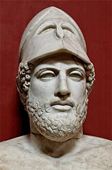
Nobility and officials · c. 0.5–2% (est.)
Pentakosiomedimnoi (Richest citizens)
The richest Athenians were expected to pay for warships and for the plays at the city’s festivals.
At the top stood the pentakosiomedimnoi, the “five-hundred-measure men”, whose land yielded at least 500 medimnoi of grain, oil or wine a year; Solon had defined the class in 594 BCE by wealth rather than birth. Only they could serve as the treasurers of Athena, and the rich were prominent among the elected generals and the leading speakers. Their wealth was expected to serve the city through the liturgies: a trierarch equipped and commanded a warship for a year, at a cost of several thousand drachmas, and a choregos paid for a chorus at the drama festivals. A great fortune lay in land, houses, silver and slaves: the general Nicias hired out a thousand slaves to the silver mines of Laurion. Under the democracy the rich kept their prestige but lost their old hold on power. They had to win votes in the Assembly and account for every office they held, and a leader the people feared could be ostracised, as Cimon was in 461 BCE.
Moving in or out. Membership depended on wealth, not birth: a family rose into the class as its fortune grew and fell out of it when the fortune was lost, while ostracism sent a leading man into exile for ten years without taking his property.
How many? Estimate: the liturgical class of 300 to 1,200 men (on some estimates 1,500–2,000), with their families, among 250,000–300,000 people.
Nobility and officials · c. 1–3% (est.)
Hippeis (Knights)
Knights were rich Athenians who could afford a horse and rode in the city’s cavalry.
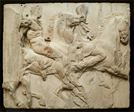
The hippeis, or knights, were the second class: men whose land yielded at least 300 medimnoi a year, enough, in Aristotle’s account, to keep a horse. They supplied the city’s cavalry. Athens built up its mounted force after the Persian Wars, and by the start of the Peloponnesian War in 431 BCE it numbered 1,000 citizen horsemen and 200 mounted archers. The Council inspected each new rider and his horse, the state paid an allowance towards their keep, and the cavalry officers came from the two richest classes. In war the horsemen scouted, raided and screened the infantry; in peace they drilled and rode in the city’s festival processions, and horsemen fill much of the Parthenon frieze. The knights were a byword for wealth and privilege: in Aristophanes’s comedy The Knights, staged in 424 BCE, they form the chorus that attacks the popular leader Cleon.
Moving in or out. Membership followed income, not birth: a family entered the class when its land yielded 300 measures and left it when its fortune shrank.
How many? Estimate: the 1,000 cavalrymen of 431 BCE and the rest of their class, perhaps 1,000–2,000 men, with their families.
Picture: Two horsemen from the south frieze of the Parthenon, Athens, c. 440 BCE · Sanjay ach · CC BY-SA 4.0 · Wikimedia Commons
Free commoners · c. 12–20% (est.)
Zeugitai (Hoplite class)
Farmers of the hoplite class bought their own shields and spears and fought side by side.
The zeugitai were the citizens whose land yielded at least 200 medimnoi a year. The name probably means men who owned a yoke of oxen, or men who stood “yoked” together in the battle line. They provided the hoplites, the heavy infantry who paid for their own shield, helmet, spear and armour and fought shoulder to shoulder in the phalanx, as at the Battle of Marathon in 490 BCE. Many worked their own farms in the Attic countryside, some with a slave or two. Cleisthenes’s Council of 500 was restricted to men of this class and above, and in 457 BCE they were admitted to the archonship. Scholars debate whether the zeugitai were ordinary family farmers or a wealthier minority, with many hoplites drawn from the poorer citizens. When the Peloponnesian War began in 431 BCE, Pericles’s strategy brought the farmers of Attica inside the city walls while the Spartans ravaged their land, and many died in the plague that broke out in the crowded city.
Moving in or out. Membership followed the yield of a man’s land, so a poorer citizen who prospered could rise into the class, and a farmer ruined by debt or war could sink out of it.
How many? Estimate: perhaps 10,000–15,000 citizen men of the hoplite census in 431 BCE (Thucydides counts 13,000 hoplites in the field army and 16,000 more on garrison duty, among them metics), with their families.
Free commoners · About 33% (the rest, est.)
Thetes (Poorer citizens)
Poorer citizen men could vote in the Assembly, serve on juries and row the city’s warships.
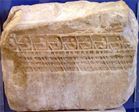
The thetes were the citizens whose land yielded less than 200 medimnoi a year, or who had none: smallholders, craftsmen, shopkeepers and labourers in the city and the port of Piraeus. They were the largest class of citizens. Solon gave them a vote in the Assembly and a place on juries, and the democracy made that vote count: from the time of Pericles jurors were paid, three obols a day from the early years of the Peloponnesian War, so that a poor man could afford to sit, and after 403 BCE citizens were paid for attending the Assembly too. Their power rested on the fleet. Thetes, with metics and hired foreigners, rowed the triremes that won at Salamis in 480 BCE and held the empire together, and a fleet of 200 triremes needed some 34,000 oarsmen, paid for their service. Critics of the democracy, such as the anonymous writer known as the Old Oligarch, complained that the poor ruled because they manned the ships.
Moving in or out. A poorer citizen whose farm or trade prospered could rise into the hoplite class; after the defeat in the Lamian War in 322 BCE, at least 12,000 poorer citizens were stripped of their citizenship.
How many? Everyone not counted in the other ranks: the citizens and their families among whom the thetes were the majority; adult male citizens numbered perhaps 60,000 in the mid-5th century and about 30,000 in the 4th. The three richer classes are estimates, so this share is one too.
Picture: Rowers of a trireme: the Lenormant relief, Athens, c. 410–400 BCE · Marsyas · CC BY-SA 2.5 · Wikimedia Commons
Free commoners · 10–20%
Metoikoi (Metics)
Metics were free people from other places who lived and worked in Athens but could not vote.
Metics were free people who lived in Athens without being citizens: Greeks from other cities drawn by its trade and wealth, some non-Greeks, and freed slaves. The status probably took shape in the mid-5th century. Every metic registered in his deme, needed a citizen sponsor (prostates), and paid the metoikion, 12 drachmas a year for a man and his household and 6 for an independent woman. Metics served in the army and the fleet and, if rich, paid the war tax and performed liturgies, but they could not vote, hold office or own land or a house in Attica without a special grant. They could bring cases in court, but could be tortured as witnesses, and a metic who failed in his duties could be sold as a slave. Many were craftsmen, traders, bankers and teachers. The family of the orator Lysias, invited from Syracuse by Pericles, ran a shield workshop with 120 slaves in the Piraeus.
Moving in or out. Citizenship was granted only rarely, by a special vote of the Assembly, as it was to the freed slave and banker Pasion; in 404 BCE the Thirty Tyrants seized the property of rich metics and put Lysias’s brother Polemarchus to death.
How many? Roughly: a census of about 317 BCE counted 10,000 metics beside 21,000 citizens (adult men in both cases), and one modern estimate (in James Renshaw’s survey) puts the metic men of 431 BCE at about 25,000; with their families perhaps a tenth to a fifth of the population.


Enslaved · 25–40%
Douloi (Enslaved people)
andrapoda, demosioi (public slaves)
Enslaved people were owned by others and made to work without pay; some were later freed.
Slaves did much of the work of Attica. Most were foreigners, Thracians, Carians, Scythians, Syrians and others, bought from traders or taken in war, and their children were born slaves. Most free households seem to have owned at least one, and owning none was a sign of poverty. Slaves worked on farms, in houses, workshops and shops, and some ran businesses of their own, paying their owner a fixed fee. The worst lot was in the silver mines of Laurion, where modern estimates put 20,000 to 30,000 slaves, some of them children, at work in narrow and dangerous galleries. The city itself owned slaves, the demosioi, who served as clerks, testers of coinage and, as a corps of Scythian archers, its police. By law a slave was property: he could be sold, was flogged for offences that cost a free man a fine, and gave evidence in court only under torture. Yet the killing of a slave was punished, and slaves took part in some festivals and the Eleusinian Mysteries.
Moving in or out. Owners could free their slaves, often in return for the slave’s own savings, and a freed slave became a metic with duties to the former owner; the slaves who rowed at the Battle of Arginusae in 406 BCE were freed and may have been made citizens.
How many? Roughly: modern estimates put the slaves of Attica at about 80,000 or more in the 5th century, a quarter to a third or more of a population of 250,000–300,000; the 150,000 claimed by the orator Hyperides and the 400,000 of a later census are thought exaggerated.
Picture: A slave girl holds out a jewel box to her mistress: the grave stele of Hegeso, Athens, c. 410–400 BCE · Marsyas · CC BY 2.5 · Wikimedia Commons

Born into history
Where would you have stood? Chance places you on the ladder, as birth placed most people: weighted by how many each rank held.
Moving up and down
Rank in Athens rested on two things: birth, which decided citizenship, and wealth, which decided a citizen’s class. The property classes were open in both directions, since a man who prospered could register in a higher class and one ruined by debt or war fell back, and under the democracy even the poorest citizens sat on juries and, from the mid-5th century, could hold the offices filled by lot. The line between citizen and outsider was much harder to cross. Pericles’s citizenship law of 451 BCE excluded anyone without an Athenian mother as well as father, and when a gift of grain from Egypt was shared out a few years later, many men were struck from the registers. Grants of citizenship by vote of the Assembly ran to hundreds, not thousands, in a century; the slave Pasion, who became a banker, a metic and finally a citizen, was exceptional. Slaves seized their own chances: after the Spartans fortified Decelea in 413 BCE, more than 20,000 escaped to them.
Women on the ladder
The law kept every citizen woman under a male guardian, her kyrios, first her father, then her husband. Citizen women could not vote, plead in court or make a contract worth more than a medimnos of barley, and no evidence shows them owning land. Girls married at about fourteen, often to much older men their families chose, and brought a dowry that had to be returned if the marriage ended; either spouse could seek divorce. The ideal wife stayed indoors, weaving and running the household, but poorer women fetched water, sold goods in the market and worked for wages. After 451 BCE only a citizen mother could bear a citizen. Religion gave women their largest public role: the priestess of Athena Polias had real influence, and citizen women ran the Thesmophoria. Metic women, among them Aspasia of Miletus, the partner of Pericles, could go to court; enslaved women baked, wove and served, and the law did not recognise their families.
Compare with another society
Test yourself
4 questions on the ladder of Classical Athens.
The questions open here once the page has loaded.
Sources and further reading
- Davies, J. K. (1971) Athenian Propertied Families, 600–300 B.C. Oxford: Clarendon Press.
- Finley, M. I. (1980) Ancient Slavery and Modern Ideology. London: Chatto & Windus.
- Garlan, Y. (1988) Slavery in Ancient Greece. Trans. J. Lloyd. Ithaca: Cornell University Press.
- Hansen, M. H. (1991) The Athenian Democracy in the Age of Demosthenes: Structure, Principles and Ideology. Oxford: Blackwell.
- Pomeroy, S. B. (1975) Goddesses, Whores, Wives, and Slaves: Women in Classical Antiquity. New York: Schocken Books.
- Whitehead, D. (1977) The Ideology of the Athenian Metic. Cambridge: Cambridge Philological Society.
The shares are of the whole population, children included. Where a scholar has counted or estimated a rank, its share follows that work, named on the rank; where no count survives, the share is an estimate, marked est. and drawn dashed, made from what the rank was and did, from related figures and from the same rank in comparable societies, and its note says what it rests on. Population: modern estimates for Attica, the territory of Athens, around 430 BCE and in the 4th century BCE.
Cite this page
- APA
- The Epoch Institute. (2026). Social Hierarchy of Classical Athens. In Social Ladders. https://the-epoch-institute.org/societies/athens
- MLA
- “Social Hierarchy of Classical Athens.” Social Ladders, The Epoch Institute, 2026, https://the-epoch-institute.org/societies/athens. Accessed .
- Chicago
- The Epoch Institute. “Social Hierarchy of Classical Athens.” Social Ladders. 2026. https://the-epoch-institute.org/societies/athens.
- Harvard
- The Epoch Institute (2026) ‘Social Hierarchy of Classical Athens’, Social Ladders. Available at: https://the-epoch-institute.org/societies/athens (Accessed: ).