
Form of government · Europe
Direct democracy
At a glance
- In a direct democracy the citizens vote on laws and policies themselves, in an open assembly or a referendum, rather than leaving them to elected representatives.
- Athens from 508 to 322 BCE is the classic case: an assembly of male citizens, a council and juries chosen by lot governed, while women, slaves and resident foreigners had no vote.
- Switzerland keeps the tradition alive in two cantonal open-air assemblies and in frequent national referendums and initiatives, devices also used by many US states.
Timeline
- 508 BCECleisthenes reorganises the Athenians into ten tribes and creates the Council of Five Hundred
- 462 BCEEphialtes strips the Council of the Areopagus of most of its powers; pay for jurors follows under Pericles
- 403 BCEThe Athenians restore their democracy after the rule of the Thirty Tyrants
- 322 BCEAfter the Lamian War, Macedon imposes a property qualification and ends the Athenian democracy
- 1848Switzerland’s federal constitution makes every constitutional amendment subject to a popular vote
- 1891Swiss citizens gain the popular initiative to propose amendments to the federal constitution
- 1898South Dakota becomes the first US state to adopt the initiative and the referendum
- 1990The Federal Supreme Court orders Appenzell Innerrhoden to admit women to its Landsgemeinde
How It Works

Direct democracy is government in which the citizens make the laws and the main decisions themselves instead of choosing representatives to make them. Two forms dominate the record. The first is the sovereign assembly, open to every qualified citizen, who may attend, speak and vote, as in classical Athens, the Swiss Landsgemeinden and the town meetings of New England. The second, devised for states too large to gather in one place, is the popular vote. A referendum lets the electorate accept or reject a measure; it may be compulsory, as for constitutional amendments in Switzerland, or demanded by a petition of citizens against a law already passed. An initiative lets a set number of citizens put a proposal of their own to the vote, and the recall lets voters remove an official before the end of a term. A state that keeps a parliament but gives its citizens these powers is called a semi-direct democracy, as Switzerland has been since the 19th century.
In Athens the Assembly (ekklesia), open to all adult male citizens, met on the hill of the Pnyx about forty times a year in the 4th century BCE and decided by show of hands on war and peace, treaties, finance and honours. Its business was prepared by the Council of Five Hundred (boule), fifty men from each of the ten tribes chosen by lot for a year. Justice lay with large juries drawn by lot from a panel of 6,000 citizens over thirty, without professional judges. Most of the 700 or so magistrates were also chosen by lot for a single year, examined before they took office and audited when they left it; the ten generals, the other military commanders and a few financial officers were elected, because their posts called for skill.
What limits such a government is law and procedure rather than a ruler. An Athenian who proposed an unlawful decree could be prosecuted under the graphe paranomon, and after 403 BCE permanent laws were set apart from the Assembly’s decrees and could be changed only by special boards of lawgivers. Modern referendums are bound by constitutions, courts and signature thresholds, and in Switzerland a constitutional amendment needs a double majority, of the voters and of the cantons. Direct democracy differs from representative democracy in who takes the final decision, and from aristocracy and the classical republic in that ordinary citizens, not a hereditary or elected elite, hold it.
Origins
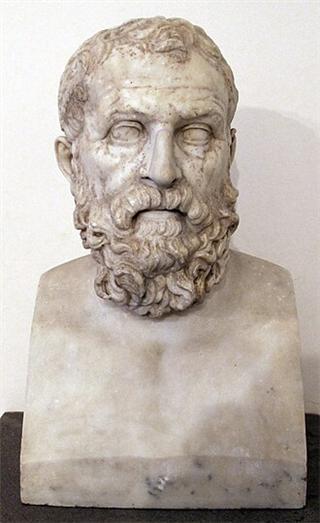
Assemblies of free men are older than the state. Homer’s epics show warriors summoned to an assembly to hear their leaders, and the Roman historian Tacitus describes the Germanic peoples deciding great matters in assemblies that rejected a proposal with a murmur and approved it by clashing their spears. The first well-documented government by such an assembly is that of Athens. In 594 BCE the archon Solon cancelled the debts that had reduced poor Athenians to bondage, graded the citizens by wealth and gave every citizen the right to appeal to a popular court. His settlement gave way to the tyranny of Peisistratus and his sons. After the tyrant Hippias was expelled in 510 BCE, the aristocrats Isagoras and Cleisthenes contended for power. When Isagoras called in King Cleomenes I of Sparta, who tried to dissolve the council, the Athenian people rose and besieged the Spartans on the Acropolis until they left, and Cleisthenes, who in Herodotus’ phrase had taken the people into his party, carried his reforms in 508–507 BCE.
Cleisthenes grouped the citizens of about 140 villages and city wards, the demes, into ten new tribes, each mixing districts of the city, the coast and the inland, so that old regional and aristocratic loyalties counted for less, and he formed the Council of Five Hundred from them; ostracism, a vote to exile a citizen for ten years, is traditionally credited to him. In 462 BCE Ephialtes transferred most powers of the aristocratic Council of the Areopagus to the Assembly, the Council and the courts, and Pericles introduced pay for jurors, so that poorer citizens could serve. Historians debate how much each of these men contributed, but most date the democracy from Cleisthenes, since Solon’s constitution had fallen to tyranny.
The word demokratia joins demos, “people”, and kratos, “power”. It appears in Herodotus, whose history, written in the 430s and 420s BCE, stages a debate among Persian nobles on the merits of rule by one, by the few and by the many. In the funeral speech that Thucydides gives to Pericles, Athens is called a democracy because it is governed in the interest of the many rather than the few. Aristotle, whose school collected the constitutions of 158 states, reported the common view that filling offices by lot was democratic and filling them by election oligarchic.
Through History

Other Greek cities adopted democracy, among them Argos and, for a time, Syracuse, and Athens often imposed it on the allies of its Delian League, but none is as well recorded. Athenian democracy survived two oligarchic coups: the regime of the Four Hundred in 411 BCE and the Thirty Tyrants, installed by victorious Sparta in 404 BCE, who put some 1,500 Athenians to death. Restored in 403 BCE, it lasted until 322 BCE, when Antipater, the Macedonian regent, having defeated Athens in the Lamian War, limited citizenship to men owning at least 2,000 drachmas. Rome’s popular assemblies also passed laws and elected magistrates, but voted only on what a presiding magistrate put to them, in blocs weighted towards the rich.
In medieval Europe direct government survived in small communities. In the Alpine valleys of Uri, Schwyz and Unterwalden, which allied in 1291, the men of each valley came to meet once a year in an open-air assembly, the Landsgemeinde, to elect their chief magistrate, the Landammann, and decide on laws; Glarus, Zug and Appenzell followed. Settlers in Massachusetts governed their towns through town meetings from the 1630s, and in Novgorod a town assembly, the veche, chose officials until Moscow annexed the city in 1478, although historians debate who attended it. Jean-Jacques Rousseau, a citizen of the Republic of Geneva, argued in The Social Contract of 1762 that sovereignty could not be represented, so that a people that merely elected deputies was free only on election day.
Modern direct democracy grew from Switzerland. The federal constitution of 1848 required a popular vote on every constitutional amendment; in the 1860s a democratic movement won the referendum and the initiative in several cantons, most influentially in Zurich’s constitution of 1869; the revised federal constitution of 1874 allowed 30,000 citizens to demand a vote on any federal law, and in 1891 the popular initiative was added. In the United States the Populist and Progressive movements took up the Swiss devices: South Dakota adopted the initiative and referendum in 1898, Oregon in 1902 and California in 1911, and Los Angeles introduced the recall in 1903. In 1912 Theodore Roosevelt declared that the initiative and referendum should be used “not to destroy representative government, but to correct it whenever it becomes misrepresentative”. The constitutions of the Weimar Republic and of post-war Italy, like many later ones, provided for referendums, and by 2019 thirty countries allowed citizens to call a national vote.
Strengths
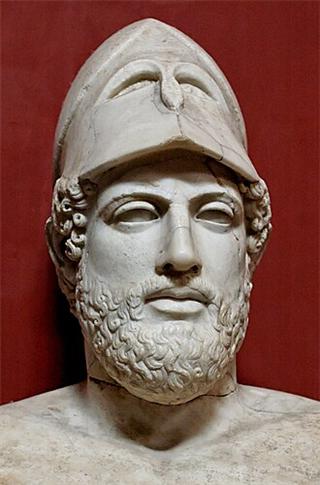
Defenders of direct democracy have argued first that it makes citizens. In Pericles’ funeral speech as Thucydides reports it, the Athenians regard a man who takes no part in public affairs not as quiet but as useless, and hold that discussion is no obstacle to action but the best preparation for it. Herodotus believed that freedom had made the Athenians formidable: under the tyrants they had fought no better than their neighbours, but once free and equal in speech they became the foremost fighters in Greece. Admirers point to Athens’s record. In the century after Cleisthenes its citizens beat the Persians at the Battle of Marathon in 490 BCE, helped to defeat them at the Battle of Salamis in 480 BCE, built the Parthenon and staged the dramas of Aeschylus, Sophocles and Euripides. The political scientist Josiah Ober has argued that institutions such as the Council, which every year drew 500 citizens into government, let Athens gather knowledge spread among its people and outperform rival cities.
A second argument concerns judgement. Aristotle, no friend of radical democracy, granted that the many, though individually ordinary, may judge better together than a few experts, as a feast to which many contribute is better than one provided by a single host. The Assembly could also correct itself: in 427 BCE it voted to kill all the men of rebellious Mytilene, then reversed the decision the next day, and a second ship arrived in time to stop the massacre, although about a thousand men held responsible were still executed.
Modern advocates make the case for referendums and initiatives on similar grounds. Rousseau held that only laws a people has ratified in person are truly laws. Theodore Roosevelt and the American Progressives saw the initiative as a check on legislatures dominated by railways and other corporations. Students of Swiss politics argue that the referendum turned Switzerland into a consensus democracy: after the Catholic Conservatives had repeatedly defeated federal laws by referendum, the ruling Radicals gave them a seat in the Federal Council in 1891, and from 1959 the four largest parties shared its seven seats by a fixed formula. Economists such as Lars Feld, Gebhard Kirchgässner and Bruno Frey have reported that Swiss cantons with stronger rights of popular vote tend to spend and borrow less, and that their citizens report greater satisfaction with their lives.
Weaknesses
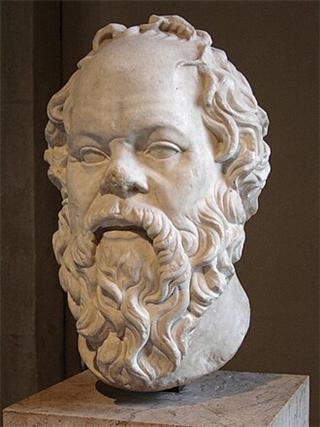
The oldest charge against direct democracy is that crowds decide badly. Plato, whose teacher Socrates was condemned to death by an Athenian jury of some 500 citizens in 399 BCE on charges of impiety and corrupting the young, compared the democratic city to a ship whose crew ignore the true navigator and seize the helm, and argued in the Republic that democracy’s excess of freedom ends in tyranny. Thucydides blamed Athens’s defeat in the Peloponnesian War on leaders who, after Pericles, flattered the people, and on the Assembly’s enthusiasm for the Sicilian Expedition of 415–413 BCE, which ended in the loss of the fleet and army. In 406 BCE, after the naval victory at Arginusae, the Assembly condemned the victorious generals in a single vote, against the law, for failing to rescue the crews of sinking ships; the six who had returned to Athens were executed, and the Athenians soon regretted it.
Critics also note how few took part. In the 4th century BCE Attica held perhaps 30,000 adult male citizens beside some 10,000 resident foreigners and many thousands of slaves, and women had no political rights. Modern direct democracy has had its exclusions too: Swiss men voted down women’s suffrage in a federal referendum in 1959 before accepting it in 1971, and Appenzell Innerrhoden admitted women to its Landsgemeinde only after the Federal Supreme Court ordered it in 1990. Others feared the majority itself. James Madison, a framer of the Constitution of the United States, wrote in Federalist No. 10 that pure democracies could not control faction and had been “as short in their lives as they have been violent in their deaths”, and Alexander Hamilton told the New York ratifying convention that the ancient democracies “never possessed one feature of good government”.
Political scientists add practical objections. Max Weber saw the plebiscite as a tool of Caesarist leaders, as when Napoleon and Napoleon III had their seizures of power approved by popular vote. Turnout in referendums is often low, campaigns can be dominated by well-funded interests, and measures written by petitioners are not refined in committee; critics of California’s ballot initiatives point to Proposition 13 of 1978, which capped property taxes and constrained state budgets for decades. Open meetings, as the political scientist Graham Smith notes, draw a self-selected few, and James Fishkin argues that no design yet delivers participation, deliberation and political equality all at once.
Impact & Legacy
Athens gave democracy its name, its first theory and its classic arguments for and against. For more than two thousand years most writers followed Plato and Thucydides in treating it as a byword for mob rule; the founders of the American and French republics chose elected assemblies instead, and the political theorist Bernard Manin has argued that they valued election, unlike the Athenian lot, as a way of choosing a distinguished few. Athens found new admirers in the 19th century, when the banker and historian George Grote defended its democracy in his History of Greece, and modern historians such as Mogens Herman Hansen and Josiah Ober describe a stable government in which several thousand citizens took an active part each year and which lasted, with two short breaks, for nearly two centuries.
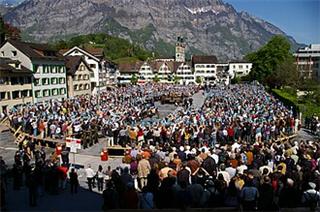
Today direct democracy survives as a complement to representation rather than a substitute for it. Glarus and Appenzell Innerrhoden still hold their Landsgemeinden in the open air each spring, while Nidwalden, Appenzell Ausserrhoden and Obwalden abolished theirs in the 1990s; in 2007 the Glarus assembly made the canton the first in Switzerland to let 16-year-olds vote. Swiss citizens vote on federal, cantonal and communal questions several times a year, on 103 federal questions alone between 1995 and 2005, and Liechtenstein, Uruguay and Italy also let citizens force a national vote. Every US state but Delaware puts constitutional amendments to its voters, about half allow citizens’ initiatives or referendums, and many towns in New England, among them those of Vermont, still govern themselves through annual town meetings.
Newer forms of participation have also spread. In 1989 Porto Alegre in Brazil began to open its city budget to neighbourhood assemblies, a practice since copied by cities around the world, and the Athenian use of the lot has returned in citizens’ assemblies drawn at random, which advised on electoral reform in British Columbia in 2004 and on constitutional questions in Ireland from 2016. Political scientists remain divided between those who see such devices as a remedy for distrust of politicians and those who, like Madison, fear that they weaken representative government and the protection of minorities.
Direct democracy is government by the citizens themselves rather than by their representatives. Classical Athens, which ruled itself through an assembly, a council and juries chosen by lot from 508 to 322 BCE, gave it its name and its first defenders and critics; today it lives on in the Swiss open-air assemblies and in the referendums and initiatives of Switzerland, many US states and other countries.
Test yourself
5 questions on this page, from its key events and facts.
The questions open here once the page has loaded.
References
- Aristotle (1984) The Athenian Constitution. Translated by P. J. Rhodes. Harmondsworth: Penguin.
- Cronin, T. E. (1989) Direct Democracy: The Politics of Initiative, Referendum, and Recall. Cambridge, MA: Harvard University Press.
- Hansen, M. H. (1991) The Athenian Democracy in the Age of Demosthenes: Structure, Principles and Ideology. Oxford: Blackwell.
- Manin, B. (1997) The Principles of Representative Government. Cambridge: Cambridge University Press.
- Ober, J. (2008) Democracy and Knowledge: Innovation and Learning in Classical Athens. Princeton: Princeton University Press.
- Rousseau, J.-J. (1968) The Social Contract. Translated by M. Cranston. Harmondsworth: Penguin.