Work / monument · text
Nag Hammadi library
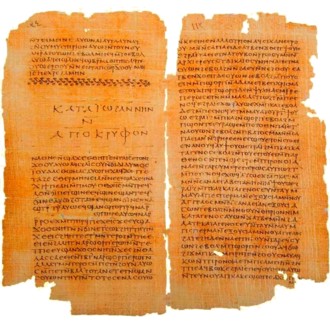
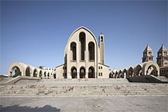
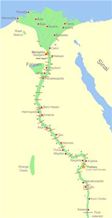
The Nag Hammadi library is a collection of early Christian and Gnostic texts discovered near the Upper Egyptian town of Nag Hammadi in 1945. Twelve leather-bound papyrus codices and a tractate from a thirteenth, buried in a sealed jar, were found by a farmer, Muhammed al-Samman, and others; they hold 52 mostly Gnostic treatises in Coptic, three works of the Corpus Hermeticum and part of Plato's Republic. The manuscripts date from the 3rd and 4th centuries, and among them is the only complete text of the Gospel of Thomas. Some scholars hold that they belonged to a nearby Pachomian monastery. The codices are now housed in the Coptic Museum in Cairo.
Mentioned in 2 profiles
See also



Cite this entry
- APA
- The Epoch Institute. (2026). Nag Hammadi library. In The Epoch Institute Encyclopedia. https://the-epoch-institute.org/encyclopedia/nag-hammadi-library
- MLA
- “Nag Hammadi library.” The Epoch Institute Encyclopedia, The Epoch Institute, 2026, https://the-epoch-institute.org/encyclopedia/nag-hammadi-library. Accessed .
- Chicago
- The Epoch Institute. “Nag Hammadi library.” The Epoch Institute Encyclopedia. 2026. https://the-epoch-institute.org/encyclopedia/nag-hammadi-library.
- Harvard
- The Epoch Institute (2026) ‘Nag Hammadi library’, The Epoch Institute Encyclopedia. Available at: https://the-epoch-institute.org/encyclopedia/nag-hammadi-library (Accessed: ).
Last reviewed October 2026Random entry ↻