Language · Egypt & North Africa
Ancient Egyptian
At a glance
- Egyptian, the language of the pharaohs, is with Sumerian one of the two earliest written languages, and its records span more than four thousand years, from the first hieroglyphs to Coptic.
- It was written in hieroglyphs, a script of pictures standing for sounds and ideas, and in the faster hieratic and demotic, until the Christian Egyptians adopted the Coptic alphabet, based on Greek.
- Forgotten after the last hieroglyphs were carved in 394, the script was deciphered by Jean-François Champollion in 1822 with the help of the Rosetta Stone, reopening the history and literature of ancient Egypt.
Timeline
- c. 3250 BCEBone labels in a royal tomb at Abydos carry the earliest known Egyptian writing
- c. 2700 BCEA seal of King Peribsen bears the earliest known complete sentence in Egyptian
- c. 2350 BCEThe Pyramid Texts, the oldest long religious texts in Egyptian, are carved in the pyramid of Unas
- c. 1900 BCEThe Story of Sinuhe, a classic of Middle Egyptian literature, is composed
- 196 BCEA decree of Ptolemy V is inscribed in hieroglyphs, demotic and Greek on the Rosetta Stone
- 394The last known hieroglyphic inscription is carved at the temple of Philae
- 452The last known inscription in demotic is written at Philae
- 1822Jean-François Champollion announces the decipherment of hieroglyphs
Write in Ancient Egyptian
Type in the script itself: every key shows a sign with its value and how it sounds. Then make a picture of what you wrote, to save, copy or share.
The keyboard opens here once the page has loaded.
Origins

Egyptian is a member of the Afroasiatic family, which also includes the Semitic languages, such as Akkadian, Hebrew and Arabic, the Berber languages of North Africa, the Cushitic languages of the Horn of Africa and the Chadic languages; but it forms a branch of its own, and its relationship with the others is distant.
Writing appeared in Egypt at about the same time as in Mesopotamia, and apparently independently. The oldest known Egyptian writing consists of small bone and ivory labels found in a royal tomb at Abydos, known as U-j, of about 3250 BCE, which bear signs that seem to record place names or quantities of goods. In the following centuries, writing was used for the names and titles of kings, as on the ceremonial palette of Narmer, and for labels, seals and offering lists. The earliest known complete sentence, on a seal of King Peribsen of the 2nd dynasty, around 2700 BCE, declares that the god of Ombos has given the two lands to his son, the king.
From the Old Kingdom onwards Egyptian was written in long inscriptions on tomb walls and in documents on papyrus, a writing material made from the reed of the Nile, which the Egyptians had invented and which became the paper of the ancient Mediterranean world.
Scholars divide the history of the language into five stages: Old Egyptian, from about 2700 to 2000 BCE; Middle Egyptian, the classical language of the Middle Kingdom, used for inscriptions until the end of antiquity; Late Egyptian, the language of the New Kingdom from about 1350 BCE; Demotic, from the 7th century BCE; and Coptic, written from the 3rd century CE.
Sounds, Script & Grammar

Hieroglyphs, from the Greek for “sacred carvings”, were pictures of people, animals, plants and objects, used in three ways. Some stood for sounds: about two dozen signs each represented a single consonant, forming a kind of alphabet, while others stood for two or three consonants. Others were word signs, representing what they depicted. Others again were determinatives, silent signs placed at the end of a word to show its category, such as a seated man for words about people or a scroll for abstract ideas. Hieroglyphs could be written in rows or columns, from right to left or left to right; the people and animals face the beginning of the line. The names of kings were enclosed in an oval ring, the cartouche.
The script did not write vowels, so the exact pronunciation of Egyptian is uncertain. Egyptologists add an e between consonants by convention, writing nfr, “good” or “beautiful”, as nefer; the vowels of the language are reconstructed from Coptic and from the way foreign scripts wrote Egyptian names.
For everyday use, scribes wrote with a reed brush and ink in hieratic, a cursive form of hieroglyphs, and from the 7th century BCE in demotic, an even faster script used for documents, letters and literature. Coptic, the last stage of the language, was written in the Greek alphabet with six or seven extra letters taken from demotic for sounds that Greek lacked; for the first time, the vowels were written.
The grammar of Egyptian shares features with its Afroasiatic relatives, such as roots of consonants, a feminine ending in -t and pronouns attached to words as suffixes. Over its history the language changed profoundly: older Egyptian placed the verb first and built meanings with endings, while Late Egyptian and Coptic developed definite articles, the ancestors of the Coptic articles p, t and n, and expressed tense through auxiliary verbs placed before the subject.
Speakers & Spread

Egyptian was spoken throughout the Nile valley, from the Mediterranean coast to the First Cataract at Aswan, with regional dialects; a scribe of the New Kingdom joked that the speech of a man from the Delta and a man from Elephantine in the far south could not be understood by each other. Writing, however, was the skill of a small elite of scribes, who learned the scripts in long years of schooling and formed the administration of the state and the temples.
Egyptian spread with Egyptian power. In Nubia, conquered by the New Kingdom pharaohs, Egyptian became the language of temples and government, and the kings of Kush who ruled Egypt in the 8th and 7th centuries BCE wrote in Egyptian hieroglyphs; the later Meroitic script of Kush was derived from Egyptian signs.
Under Persian, Greek and Roman rule, Egyptian continued to be spoken by the great majority of the population, but Greek became the language of government under the Ptolemies, who ruled from 305 BCE. Temple priests maintained the hieroglyphic script, multiplying its signs into the thousands, and demotic was used for contracts, letters and stories; the Rosetta Stone, a decree of 196 BCE, was inscribed in hieroglyphs, demotic and Greek. The last hieroglyphic inscription was carved at Philae in 394 CE, and the last demotic one in 452.
With the spread of Christianity, Egyptian Christians began in the 3rd century to write their language in the Greek alphabet, creating Coptic, in which they translated the Bible and wrote a rich monastic literature. After the Arab conquest of Egypt in 641 and 642, Arabic gradually replaced it: Arabic became the language of administration in 706, Coptic Christians increasingly spoke and wrote Arabic from the 10th century, and Coptic seems to have died out as a spoken language, last in villages of Upper Egypt, by about the 17th century. It remains the liturgical language of the Coptic Orthodox Church.
Literature & Learning
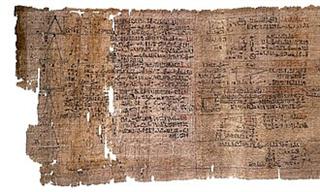
Egyptian literature is one of the oldest and longest in the world. In the Old Kingdom, officials recorded their careers on the walls of their tombs, such as Harkhuf, who led expeditions into Nubia and brought back a dancing pygmy for the boy king Pepi II, and the kings had the Pyramid Texts carved inside their pyramids.
The Middle Kingdom produced the classics of Egyptian literature, copied in schools for centuries: the Story of Sinuhe, an official who flees Egypt and returns in old age, often regarded as its masterpiece; the Tale of the Shipwrecked Sailor; the Eloquent Peasant; the dialogue of a man weary of life with his soul; and instructions in wisdom, such as the Teaching of Ptahhotep and the Satire of the Trades, which praises the scribe’s profession above all others.
The New Kingdom added love poems, the Tale of the Two Brothers, the Great Hymn to the Aten and the poem on the battle of Kadesh of Ramesses II. Egyptian also preserved the science of its time: the Rhind Mathematical Papyrus, copied by the scribe Ahmes around 1550 BCE, and the medical papyri Ebers and Edwin Smith, the latter a surgical treatise describing injuries and their treatment with remarkable objectivity. Demotic literature continued with tales of the magician-prince Setne Khamwas and the instructions of Ankhsheshonq.
Coptic literature consists largely of Christian works: translations of the Bible, the lives and sayings of the desert fathers, the writings of the abbot Shenoute of Atripe, the greatest Coptic author, and the Gnostic texts of the Nag Hammadi library, a collection of 4th-century Coptic books, including the Gospel of Thomas, found in Upper Egypt in 1945.
Change & Descendants
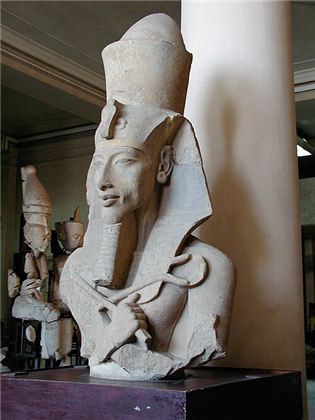
Few languages have changed so much while remaining recognisably the same language. Old and Middle Egyptian were verb-first languages that expressed grammatical meanings with endings; Late Egyptian, which entered official writing under Akhenaten in the 14th century BCE, used articles, auxiliary verbs and a different word order; demotic and Coptic continued this development. Middle Egyptian, meanwhile, remained the classical language of religious and monumental inscriptions, much as Latin did in medieval Europe.
Coptic had several dialects: Sahidic, from Upper Egypt, was the main literary dialect in its classical period, and Bohairic, from the western Delta, became the liturgical language of the Coptic Church from the 11th century. Egyptian left traces in the Arabic spoken in Egypt, in place names such as Aswan and Faiyum, and in the vocabulary of other languages: ebony, oasis, gum and adobe come from Egyptian words.
Knowledge of the hieroglyphs was lost after the end of antiquity. Late writers such as Horapollo in the 5th century interpreted them as symbols of hidden wisdom rather than as writing of sounds, an error that misled scholars for more than a thousand years. In the 17th century Athanasius Kircher argued that Coptic was the last stage of the language of the pharaohs.
In 1799 French soldiers found the Rosetta Stone near the town of Rosetta in the Nile Delta. The English scholar Thomas Young made progress with demotic and the royal names, and in 1822 Jean-François Champollion, who knew Coptic well, showed that hieroglyphs combined signs for sounds and for meanings, reading the names of Ptolemy and Cleopatra and then of the pharaohs Ramesses and Thutmose. His decipherment opened the way for the study of Egyptian texts that has continued ever since.
Legacy

Egyptian writing has a special place in the history of the alphabet. Around the early 2nd millennium BCE, speakers of a Semitic language working in Egypt and Sinai adapted hieroglyphic signs to write the consonants of their own language, taking, for example, the picture of an ox’s head for the sound at the beginning of their word for ox. This Proto-Sinaitic script is the ancestor of the Phoenician alphabet and through it of the Greek, Latin, Hebrew and Arabic alphabets: the letter A ultimately descends from an Egyptian hieroglyph.
Egyptian texts, from the Pyramid Texts and the Book of the Dead to tales, letters and accounts, give voice to one of the longest-lasting civilisations in history and make it possible to know its people in their own words. Papyrus, the Egyptian writing material, was used across the Mediterranean world for millennia and gave its name to paper.
Since Champollion, Egyptology has grown into a major field of scholarship, and Middle Egyptian is taught in universities around the world. Coptic remains alive in the liturgy and hymns of the Coptic Orthodox Church, and some Copts today learn it as a heritage language.
The hieroglyphs themselves have become one of the most recognisable symbols of ancient civilisation, and have been included in the international Unicode standard for computers, allowing the oldest writing of Africa to be written in the newest of media.
Ancient Egyptian, the Afroasiatic language of the pharaohs, was written in hieroglyphs from about 3250 BCE and in hieratic, demotic and finally Coptic, giving it one of the longest recorded histories of any language. Displaced by Greek and then by Arabic, it ceased to be spoken by about the 17th century, survives in the Coptic liturgy, and was recovered through Champollion’s decipherment of 1822.
References
- Allen, J.P. (2013) The Ancient Egyptian Language: An Historical Study. Cambridge: Cambridge University Press.
- Allen, J.P. (2014) Middle Egyptian: An Introduction to the Language and Culture of Hieroglyphs. 3rd edn. Cambridge: Cambridge University Press.
- Loprieno, A. (1995) Ancient Egyptian: A Linguistic Introduction. Cambridge: Cambridge University Press.
- Lichtheim, M. (1973–1980) Ancient Egyptian Literature. 3 vols. Berkeley: University of California Press.
- Parkinson, R.B. (1999) Cracking Codes: The Rosetta Stone and Decipherment. London: British Museum Press.
- Parkinson, R.B. (trans.) (1997) The Tale of Sinuhe and Other Ancient Egyptian Poems, 1940–1640 BC. Oxford: Oxford University Press.