
Language · Egypt & North Africa
Coptic
At a glance
- Coptic is the last stage of Egyptian, a language whose recorded history may be the longest of any, written not in hieroglyphs or Demotic but in Greek letters with seven signs taken from Demotic.
- Christian from its first literary texts in the 3rd century, it was the language of the saints and monks of Egypt; Sahidic was its great literary dialect, and Shenoute’s sermons helped to standardise it.
- After the Arab conquest Arabic replaced it, in government at the turn of the 8th century and later in writing and speech; Coptic survives in the liturgy of the Coptic churches and in borrowed words such as adobe and barge.
Timeline
- 1st centuryThe earliest known Old Coptic text, Egyptian written in Greek letters, is set down
- 3rd centuryLiterary Coptic appears in biblical texts, as notes in Greek Bibles and in bilingual Greek–Coptic texts
- c. 325Sahidic begins its age as the literary language of all Egypt, which lasts to about 800
- c. 700After the Arab conquest, the Umayyad caliph Abd al-Malik ibn Marwan decrees that Arabic replace Greek as the sole language of administration
- 11th centuryBohairic replaces Sahidic as the liturgical language of the Coptic Church
- 14th centuryThe last known literary work in Coptic is written, late in the century
- 17th centuryCoptic survives as a minority first language until at least this century
- 20th centuryPope Cyril VI of Alexandria starts a Church-sponsored movement to revive Coptic, in the second half of the century
Origins
Coptic is the last stage of the Egyptian language, an Afroasiatic language whose documented history, from Old Egyptian just before 3200 BCE to Coptic in the Middle Ages, may be the longest of any. It belongs to the Later Egyptian phase, the colloquial speech of the later periods, and its core vocabulary is closest to the Demotic phase before it. The word Coptic means both this stage of Egyptian and the new writing adapted from the Greek alphabet. In Coptic the language is timetremǹkhēmi, “Egyptian”; the Greek word for Egyptian, borrowed as gyptios, passed into Arabic as qibṭ and on to Europe, giving the English Copt.
Greek letters were first used for Egyptian in transcriptions of names, most from the Ptolemaic Kingdom, after Alexander the Great’s conquest had spread Greek–Egyptian bilingualism, above all in the Nile Delta. Efforts to write whole texts this way probably began in the 1st century BCE; the earliest known text is of the 1st century. This Old Coptic, lasting into the 4th or 5th century, consists of pagan magical and divinatory writings, some in Greek letters alone, others with more Demotic signs than later became standard.
Literary Coptic first appears in the 3rd century. Why it arose is debated: Gnostics in Alexandria, monasteries translating Greek teaching, an “effort to revive a national Egyptian culture”, or a wish to leave behind the pagan associations of the old Egyptian scripts.
Sounds, Script & Grammar
Coptic is written in the Coptic alphabet, an uncial form of the Greek alphabet with seven extra letters taken from Demotic, much as Icelandic keeps the runic thorn among its Latin letters; some Greek letters were normally kept for Greek words. Texts did not divide words. Because the script writes vowels in full, Coptic gives the clearest view of how later Egyptian sounded, though scholars still debate how to read letter pairs such as ⲉ and ⲏ.
Coptic is mainly fusional, meaning that one prefix can carry several grammatical meanings at once, and its usual word order is subject, verb, object. Where earlier Egyptian added endings to the verb, Coptic uses prefixes and particles: Middle Egyptian stp.f, “he chooses”, corresponds to Sahidic f.sotp, whose prefix f- marks the subject. Every noun is masculine or feminine, shown by a definite article fixed to its front, as in Sahidic ⲡⲉⲣⲱⲙⲉ, “the man”, and ⲧⲉϫⲓϫ, “the hand”.
Like ancient Egyptian and the Semitic languages, Coptic builds words on a root of consonants whose vowels change with use: the root kt, “build”, appears as kɔt, ket-, kot= and kɛt, depending on how its object is joined or whether a resulting state is meant. Up to 40% of the vocabulary of literary Coptic is Greek, much of it for religious ideas that native words, with their pagan associations, could not carry.
Speakers & Spread
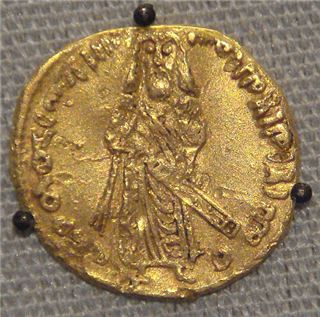
Coptic was the speech of the native Egyptians from the 3rd century, its dialects running from the Mediterranean coast south into Nubia and out to the western oases. Its influence outside Egypt was slight, except in the monasteries of Nubia.
The Arab conquest of Egypt brought Islam in the 7th century, and at the turn of the 8th the Umayyad caliph Abd al-Malik ibn Marwan decreed that Arabic replace Greek as the sole language of administration. Coptic remained the spoken language of the native population outside the capital until the 10th century. It declined massively under the Fatimid caliph al-Hakim bi-Amr Allah, in his campaigns of religious persecution: the Coptologist Emile Maher Ishaq writes that he forbade Coptic everywhere, in schools, streets and homes, on pain of having the tongue removed, and the Church’s oral traditions tell of tongues left in public squares as a warning.
Coptic was the majority language of Egypt until some time between the 10th and 12th centuries, then lived on as a minority first language until at least the 17th century, and perhaps in isolated pockets of Upper Egypt as late as the 19th. In the village of Zainiya, north of Luxor, passive speakers over 50 years old were recorded as late as the 1930s, and traces of the old spoken language were reported at Abydos and Dendera.
Literature & Learning
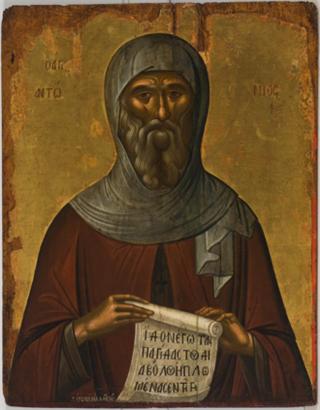
Coptic writing begins with pagan magic, but its literature proper is Christian or para-Christian, that is Gnostic and Manichaean. The five literary texts of the 3rd century are all biblical; the only documentary text is a private letter on an ostracon, a potsherd. Around 300 Sahidic began to be written as a literary language, including translations of large parts of the Bible, and by the 6th century its spelling was standard across Egypt. Texts in the other dialects are mostly translations from Greek; Sahidic alone has a considerable body of original writing and everyday documents.
Its great authors were saints of the Coptic Church, Anthony the Great, Pachomius the Great and Shenoute, whose many sermons, treatises and homilies laid the basis of early Coptic literature and helped to standardise the language. The Gnostic texts of the Nag Hammadi library are written mainly in Sahidic, with traces of Lycopolitan, a dialect much used for Gnostic and Manichaean translations.
After the Arab conquest literary Coptic declined slowly; within a few hundred years the bishop Severus ibn al-Muqaffa found he had to write his History of the Patriarchs in Arabic, though lives of saints were still composed in Coptic. Arabic began to replace Coptic in writing in the 10th century and was likely the more used by the 11th or 12th; the last known literary work in Coptic dates to the late 14th century.
Change & Descendants
Earlier Egyptian shows little written trace of dialects, its institutions being so centralised, but Coptic displays many, though they mostly reflect local spelling traditions with very few grammatical differences. Sahidic, perhaps the urban dialect of Thebes and Memphis, led before Islam, flourishing as the literary language of all Egypt from about 325 to about 800; it is attested as late as the 14th century. Bohairic, from the western Delta, has manuscripts from the 4th century, though most date from the 9th, when it began to challenge Sahidic. Akhmimic, the most archaic in its sounds, flourished in the 4th and 5th centuries and then vanished from writing; Fayyumic, attested from the 3rd to the 10th centuries, writes l where others write r.
In the 11th century Bohairic replaced Sahidic as the liturgical language of the Coptic Church. In Late Coptic, around the 14th century, Bohairic lost the sounds Egyptian Arabic lacked, and its vowels were reduced to those of Arabic, a, i and u.
Coptic left no daughter language. Arabic took its place, but Egyptian Arabic kept a Coptic substratum, an underlying layer, in its words, word forms, sentence patterns and sounds.
Legacy
Coptic survives in the churches. It is the liturgical language of the Coptic Orthodox and Coptic Catholic Churches, used beside Modern Standard Arabic, in the Bohairic dialect, with two traditions of pronunciation that come from reforms of the 19th and 20th centuries. It has no native speakers and no fluent speakers apart from some priests.
Some Copts tried in vain to revive the language in the early 20th century. In the second half of the century Pope Cyril VI of Alexandria started a national, Church-sponsored movement to revive it; new grammars, a fuller dictionary, the findings of Egyptology and the founding of the Institute of Coptic Studies fed a renaissance, and efforts based on Bohairic continue, followed by Copts and linguists in and outside Egypt. Scholars outside the Church usually learn Sahidic, for its large body of texts.
Coptic words travelled. Arabic and Hebrew took timsāḥ, “Nile crocodile”, from Coptic emsah, and Arabic took wāḥa, “oasis”. Sahidic tōōbe, “brick”, became Spanish adobe, and English barge goes back through Greek to Coptic baare, “small boat”. Many Egyptian place names are Arabic forms of Coptic ones, and the name papnoute, “he of God”, lives on as Babnouda among Copts and, through Greek Paphnutius, as the Russian Pafnuty.
Coptic, the final stage of the Egyptian language, was written from the 3rd century in a Greek-based alphabet with letters taken from Demotic, and became the language of Christian Egypt, its saints, monks and Bible. After the Arab conquest Arabic slowly replaced it in government, writing and speech, though it lingered as a first language until at least the 17th century; it lives on in the liturgy of the Coptic churches.
References
- James P. Allen, Coptic: A Grammar of Its Six Major Dialects (Eisenbrauns, 2020)
- Jean-Luc Fournet, The Rise of Coptic: Egyptian versus Greek in Late Antiquity (Princeton University Press, 2020)
- Bentley Layton, A Coptic Grammar (Sahidic Dialect): With a Chrestomathy and Glossary (Harrassowitz, 2000)
- Thomas Oden Lambdin, Introduction to Sahidic Coptic (Mercer University Press, 1983)
- Walter Ewing Crum, A Coptic Dictionary (Clarendon Press, 1939)
- Antonio Loprieno, Ancient Egyptian: A Linguistic Introduction (Cambridge University Press, 1995)