
Language · Sub-Saharan Africa
Ge'ez
At a glance
- Ge'ez was the language of the Kingdom of Aksum, carved on stone from the 4th century in a script made for it, which today also writes Amharic, Tigrinya and most other languages of Ethiopia.
- Its Bible of 81 books, translated mostly from Greek in the first century of the Aksumite church, keeps the only complete text of the Book of Enoch.
- No longer a living language by the 14th century, it remained Ethiopia’s official written language until the 19th, much like Medieval Latin in Europe, and is still the liturgical language of the Ethiopian and Eritrean churches and the Beta Israel.
Timeline
- 4th centuryAksum becomes Christian under King Ezana, and surviving Ge'ez literature begins
- c. 400The Hawulti obelisk at Matara is inscribed with the oldest known example of the Ge'ez script
- 5th centuryThe Aksumite Collection of liturgical, theological, synodal and historical texts is translated from Greek, late in the century
- 6th centuryGe'ez inscriptions in South Arabia record the conquests of Kaleb of Axum, the king who conquered Himyar
- 14th centuryThe Kebra Nagast, “Glory of the Kings”, retells the story of the Queen of Sheba, Solomon and their son Menelik I
- c. 1450The Fetha Negest, “Laws of the Kings”, is translated into Ge'ez; it serves as Ethiopia’s supreme law until 1931
- c. 1532Enbaqom writes the expanded Ge'ez version of his Anqasa Amin, “Gate of the Faith”, a classic of later Ge'ez literature
- 19th centuryGe'ez ceases to be the official written language of Ethiopia
Origins

Ge'ez, called Classical Ethiopic by scholars, is an ancient South Semitic language from what is now Ethiopia and Eritrea. On another view the Semitic languages of the two countries form a branch of their own, with Ge'ez, Tigrinya and Tigre in its northern half and Amharic, Argobba, Harari and the Gurage languages in its southern. Semitic languages are attested in Eritrea from about 2000 BCE, and inscriptions of the mid-1st millennium BCE in Sabaic, in the Ancient South Arabian script, found in the kingdom of Dʿmt, witness Semitic speakers in the region; but Ge'ez is not regarded as an offshoot of Sabaic or of any other form of Ancient South Arabian.
Ge'ez was the language of the Kingdom of Aksum. Its early inscriptions, in the South Arabian script and in the Ethiopic script with or without vowels, date from as early as the 4th century, and about a dozen long inscriptions and over 200 short ones survive from the 4th and 5th centuries. The oldest known example of the Ge'ez script, without vowels and with pagan religious references, is on the Hawulti obelisk at Matara in Eritrea, tentatively dated to about 400.
Its literature begins in the same 4th century, with the Christianization of Aksum in the reign of Ezana, and almost everything that survives from this early Aksumite period is Christian and translated from Greek.
Sounds, Script & Grammar
Ge'ez is written in its own script, Ethiopic, developed for this language and called fidäl, “script” or “alphabet”, in Amharic and Tigrinya. It is an abugida, a script whose signs stand for a consonant together with a vowel; four extra series of signs write labialized velars, k- and g-sounds made with rounded lips. It is read from left to right, and a sign like a colon, ፡, divides words. Because Ge'ez is no longer spoken by large communities, some early sounds are uncertain: the letters transliterated ś and ḍ have merged with two others in the traditional pronunciation, and their old values can only be reconstructed.
Its sounds are conservative for a Semitic language. Consonants come in threes, voiceless, voiced and ejective, the last made with a closed throat; Ge'ez even has an ejective p̣, as in p̣āp̣p̣ās, “(arch)bishop”. The script does not mark stress, but in the liturgical tradition verbs are stressed on the next-to-last syllable, as qatálat, “she killed”, and nouns on the last, as nəgúś, “king”.
Nouns are masculine or feminine, the feminine sometimes marked by -t, as in ʼəxt, “sister”. Plurals add -āt, as ʿāmat, “year”, becomes ʿāmatāt, or change the inside of the word, as bet, “house”, becomes ʾabyāt. An ending -a marks both the object of a verb and the construct state, used for possession. The usual sentence order is verb, subject, object.
Speakers & Spread
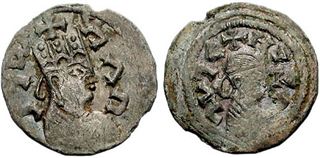
Ge'ez was the language of the Kingdom of Aksum, carved on its monuments and used by its church, and it travelled with its kings. Six Ge'ez inscriptions are known from 6th-century South Arabia, from the reign of Kaleb of Axum, the king who conquered Himyar; they record his conquests, name Jesus, Mary and David and quote Isaiah, the Psalms and Matthew.
After the decline of the Aksumites a long gap follows in the record, and by the 14th century Ge'ez was no longer a living language: there is ample evidence that Amharic had replaced it in the south, and Tigrinya and Tigre in the north. Yet it remained the official written language until the 19th century. Its keepers were the priests and monks who ran traditional education, so that, in Richard Pankhurst’s words, “the Church thus constituted the custodian of the nation’s culture”. Pupils learned the syllabary, then memorised the first chapter of the First Epistle of John in Ge'ez, then studied the Acts of the Apostles, and reaching the Psalms of David was celebrated by the parents with a feast.
The Beta Israel, the Jewish community of the region, also came to use Ge'ez as their liturgical language, gradually, after many of their works had been written in Ge'ez in the Hebrew alphabet. Today Ge'ez is used in prayer and scheduled public celebrations in Eritrea, Ethiopia and Israel.
Literature & Learning

The range of the translation work undertaken in the first century of the Aksumite church has few parallels in early Christian history. Its fruit was an Ethiopic Bible of 81 books, 46 in the Old Testament and 35 in the New, among them Jubilees, the Ascension of Isaiah and the Book of Enoch. The Qerlos, Christological writings opening with a treatise of Cyril of Alexandria, became the theological foundation of the Ethiopian Church; the natural history Physiologus, popular in Europe too, was translated as well.
Some writers call the period from the 14th century a “Golden Age”, when a whole library of Coptic Arabic religious works was translated. The Kebra Nagast, “Glory of the Kings”, by the Nebura'ed Yeshaq of Aksum, retold the story of the Queen of Sheba, Solomon and Menelik I; the first contemporary royal chronicles date to Amda Seyon I (1314–1344), and around 200 texts on Ethiopian saints were written between the 14th and 19th centuries. Emperor Zara Yaqob himself wrote the Book of Light, and the Fetha Negest, “Laws of the Kings”, translated around 1450, was Ethiopia’s supreme law until 1931.
Muslim invasions ended this flowering early in the 16th century, but Enbaqom’s Anqasa Amin, “Gate of the Faith”, is a classic of later Ge'ez writing, and around 1600 the Chronicle of John of Nikiu was first translated from Arabic. History, law, philology and medicine were written in Ge'ez too.
Change & Descendants
Ge'ez changed little in its sounds compared with its Semitic ancestor. Like Arabic it merged two old s-sounds, and apart from these it may have lost only the interdental fricatives and ghayn of Proto-Semitic, the reconstructed parent of the family. Its vowels come from the Proto-Semitic ones in regular ways, the old diphthongs ay and aw becoming e and o, so that forms still alternate, as taloku and talawku, “I followed”. Its negative prefix ʾi- goes back to ʾəy-, found in the Aksum inscriptions, and further to Proto-Semitic *ʾal.
Most linguists believe that Ge'ez is not the common ancestor of the modern Ethio-Semitic languages but split early from another, unattested common language. They are its close relatives: in one study Tigre, spoken in northern Eritrea, showed a lexical similarity, a share of related words, of 71% with Ge'ez, Tigrinya 68% and Amharic 62%.
These languages took its place in speech, and in the 14th century the Victory Songs of Amda Seyon mark the beginning of Amharic literature. Ge'ez itself lived on as a written and church language, with its own long history: the Aksumite translations from Greek, then translations from Arabic in the 13th and 14th centuries, among them a new version of the Apostolic Constitutions and Zena ʼAyhud, from Joseph ben Gurion’s Hebrew History of the Jews.
Legacy
The Ge'ez script outlived the spoken language and became the writing of much of Ethiopia and Eritrea. It has been adapted mostly for other Semitic languages, most widely Amharic in Ethiopia and Tigrinya in Eritrea and Ethiopia, but also Sebatbeit, Meʼen, Agew and most other languages of Ethiopia, Tigre in Eritrea, and often Bilen, a Cushitic language. Some languages once written in it, such as Oromo, have switched to Latin-based alphabets.
Ge'ez remains a living liturgy. It is the main liturgical language of the Ethiopian and Eritrean Orthodox Tewahedo Churches, the Ethiopian and Eritrean Catholic Churches and the Beta Israel; the rite of the churches is called the Ethiopic Rite or the Ge'ez Rite. Its stress, never marked in writing, survives only in the liturgical traditions, whose accounts of it disagree.
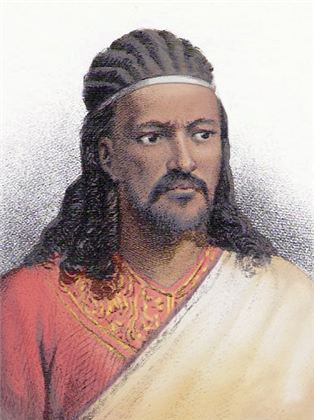
Ge'ez texts matter far beyond Ethiopia. The Book of Enoch survives complete in no other language, and the Ethiopic versions of other books are highly regarded as witnesses to their original texts. Great collections of Ethiopian manuscripts are in France, Italy, the United Kingdom and the United States. The British Library’s, some 800 manuscripts of the 15th to 20th centuries, began with 74 codices given by the Church of England Missionary Society in the 1830s and 1840s and grew by 349 looted by the British from Emperor Tewodros II’s capital at Magdala during the expedition to Abyssinia.
In the Research Series
Ge'ez, or Classical Ethiopic, was the South Semitic language of the Kingdom of Aksum, written from the 4th century in a script of its own and the language of a Bible translated largely from Greek, the only one to keep the complete Book of Enoch. No longer spoken by the 14th century, it remained Ethiopia’s written language until the 19th century and is still the liturgical language of the Ethiopian and Eritrean churches and the Beta Israel.
References
- J. M. Harden, An Introduction to Ethiopic Christian Literature (1926)