Social ladder · 1820–1879 (from Shaka's victory over Zwide to the Anglo-Zulu War)
Social Hierarchy of the Zulu Kingdom
From King to Homestead
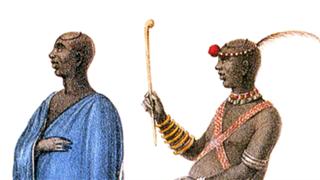
The Zulu Kingdom ranked its people by birth, by the king’s appointment and, among men, by age and marriage. Shaka, king from 1816, turned the old custom by which young men served their local chiefs into service to himself: after their twentieth birthdays they were enrolled in regiments (amabutho) by age rather than by clan, swore loyalty to the king and could marry only with his leave. Above the regiments stood the king’s kin, the officials and commanders he appointed (izinduna) and the chiefs of the clans the kingdom absorbed; around them lived the herding and farming people of the homesteads. Shaka ruled some 250,000 people at his death in 1828. Much of what is known comes from European traders such as Nathaniel Isaacs and Henry Francis Fynn, whose accounts historians now read with caution, and from the Zulu oral histories James Stuart collected around 1900.
Period 1820–1879 (from Shaka's victory over Zwide to the Anglo-Zulu War)People 250,000Ranks 6Profile Zulu Kingdom
The ladder
By rank, the ladder is drawn as a pyramid. To scale, each bar is as wide as that rank’s share of the people. Shares marked est. are estimates where no count survives; their boxes and bars are dashed.
Ruler · One ruler
The king
-
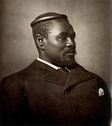
The Zulu king commanded the army and decided when the young warriors could marry.
Shaka, spurned as an illegitimate son of King Senzangakhona, served as a warrior under Dingiswayo of the Mthethwa, who helped him become king of the Zulu; after Dingiswayo’s death around 1816 he led the whole Mthethwa alliance, defeated the Ndwandwe at the Mhlatuze River in 1820 and by 1822 ruled some 210,000 square kilometres. He drew the young men’s customary service away from the clan leaders to himself: the regiments swore loyalty to the king, only he could let a man marry, and the warriors’ shields were his property. Cetshwayo’s army destroyed a British force at Isandlwana in 1879, but after the defeat at Ulundi that July he was captured and exiled to Cape Town.
Moving in or out. The throne passed by force more often than by rule: Dingane and Mhlangana murdered Shaka in 1828, Mpande overthrew Dingane with Voortrekker support, and Cetshwayo defeated his brother Mbuyazi at Ndondakusuka in 1856 and took over his father’s authority long before Mpande died in 1872.
How many? One king at a time, with his household.
Nobility and officials · c. 0.1–0.4% (est.)
The royal kin
-
The king’s brothers and sons could hope to rule one day, so they were often rivals.
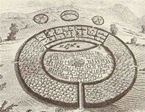
The king’s kin were his closest rivals. Shaka was the eldest of Senzangakhona’s many sons, but as one held illegitimate he was sent away with his mother, Nandi. His half-brothers Dingane and Mhlangana made at least two attempts on his life before they killed him in 1828 with the induna Mbopa. Dingane then murdered Mhlangana and, as one of his first acts as king, executed all his royal kin, sparing only Mpande, who seemed too weak to be a threat. Mpande in turn defected with 17,000 followers and helped the Voortrekkers overthrow Dingane. In Mpande’s last decades his sons Cetshwayo and Mbuyazi fought for the succession, and the Battle of Ndondakusuka in 1856 left Mbuyazi dead.
Moving in or out. Birth into the royal house brought a claim to the throne and the danger that went with it: royal sons rose by winning followers and battles, and fell by murder or defeat.
How many? Estimate: the sons and brothers of kings with their households and followers, a few hundred people at most among some 250,000.
Picture: The royal homestead of King Dingane, with the family quarters (isigodlo), about 1840 · Unknown author · Public domain · Wikimedia Commons
Nobility and officials · c. 0.1–0.5% (est.)
Izinduna (Izinduna, the king's officials and commanders)
induna
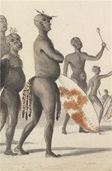
An induna was one of the king’s trusted advisers or army commanders, chosen for his leadership and bravery.
An induna (plural izinduna) was a senior official appointed by the king or a chief and held in high esteem for leadership, bravery or service: an adviser, ambassador, headman or commander. Izinduna met in council, an indaba, to discuss important matters. In the older order they settled disputes and collected taxes for their chiefs and led their districts’ fighting men; in the Zulu army an induna guided each regiment, senior izinduna commanded the corps, and elder izinduna of long experience directed the whole host, while officers carried the half-moon axe as a sign of rank. Ndlela kaSompisi, a general of Shaka and Dingane, was Dingane’s chief adviser; Ntshingwayo kaMahole commanded the army that won at Isandlwana.
Moving in or out. The king appointed izinduna for their leadership, bravery or service and could destroy them: Ndlela, who repeatedly refused Dingane’s order to kill Mpande, was strangled for it. Mzilikazi, a general of Shaka’s, fled his service and founded a kingdom of his own.
How many? Estimate: an induna led each regiment of 400 to 4,000 men, with junior izinduna under him and senior ones over the corps; with the officials of the districts and the king’s councillors, a few hundred to a thousand men among some 250,000.

Nobility and officials · c. 0.2–1% (est.)
Chiefs of the clans
-
Chiefs led the clans that joined the Zulu kingdom, but they had to obey the king.
Before Shaka the chief of a clan lineage stood at the head of local society. Shaka’s clan numbered only a few thousand at first and grew to some 45,000 by absorbing neighbouring clans. Some chiefs were won over by patronage and reward rather than defeated: Zihlandlo of the Mkhize, Jobe of the Sithole and Mathubane of the Thuli were never beaten in battle by the Zulus. Others were overthrown, as Phakathwayo of the Qwabe was, and the Qwabe’s rulers began re-inventing their genealogies to make the Qwabe and the Zulu seem closely related. By recruiting the regiments by age rather than by region or clan, Shaka strengthened the king at the expense of the clan and tribal leaders.
Moving in or out. A chief held his place by birth in his lineage, but under the Zulu kings he kept it by the king’s favour. After Ulundi in 1879 most leading chiefs submitted to the British, and Wolseley shared out Zululand among thirteen chiefs, Zibhebhu among them, so that the Zulus would no longer unite under one king.
How many? Estimate: the heads of the clans drawn into the kingdom, with their households; Shaka’s own clan of a few thousand grew to 45,000 by absorbing its neighbours, and in 1879 the British divided Zululand among thirteen chiefs.

Soldiers, merchants and craftsmen · 20–25%
Amabutho (Warriors of the regiments)
ibutho, impi
Young Zulu men served together in regiments of the same age and could marry only when the king allowed it.
After their twentieth birthdays young men were enrolled in a regiment (ibutho, plural amabutho), by age rather than by clan or region, and swore loyalty to the king. Each regiment built its own ikhanda, a stockade of huts around a cattle corral, where it gathered when summoned, with its own name, headdress and shield colours. Active service lasted until a man married, a privilege only the king bestowed; the men of senior regiments wore the head-ring (isicoco) of married men. Shaka armed them with the short stabbing spear, the iklwa, and kept them under an iron discipline: a man seen to hesitate before closing with the enemy was executed after the fight.
Moving in or out. Boys from the age of six carried supplies for the army and trained as cadets until the king enlisted them. A regiment that lost a battle could return, as Cetshwayo told Rider Haggard, to find many of its wives and children beaten to death on Shaka’s orders.
How many? Roughly: the article on Shaka gives more than 50,000 warriors among the 250,000 people he ruled at his death in 1828; the senior regiments included married men.
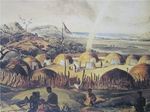

Free commoners · About 76% (the rest, est.)
The people of the homesteads
-
Most Zulu people lived in homesteads, herding cattle, growing sorghum and drinking milk.
Most Zulu lived in homesteads (kraals) of herders and light farmers: the Zulu relied on cattle, sorghum and milk, and milk was the basis of their diet. Young men owed limited service to their local chiefs until they married and were recognised as householders, a custom Shaka turned to his own use. Ordinary people bore the full weight of the king’s will: after his mother Nandi died in 1827, by Donald Morris’s account Shaka forbade planting and the use of milk for a year of mourning, and at least 7,000 people judged insufficiently grief-stricken were executed. Oral tradition says a man named Gala objected and the edicts were called off.
Moving in or out. A man became a householder only when the king let him marry. Others left the kingdom: thousands fled into British Natal, many with their cattle, when Mpande purged those he thought dissidents in 1843.
How many? Everyone not counted in the other tiers: women, children, older men and men not under arms. The other ranks are estimates, so this share is one too.
Picture: A Zulu homestead (kraal) near Umlazi, 1849 · George French Angas · Public domain · Wikimedia Commons

Born into history
Where would you have stood? Chance places you on the ladder, as birth placed most people: weighted by how many each rank held.
Moving up and down
Rank in the Zulu Kingdom rested on birth into the royal house or a chief’s lineage, on the king’s appointment and, for men, on age and marriage. Shaka himself rose from an exiled son held illegitimate to king through his service as a warrior: when Dingiswayo learned that he was royalty, he put him in charge of a regiment. Conquest moved whole peoples into the kingdom. Shaka enrolled the remnants of each conquered tribe in his army, and in time warriors from many tribes and clans came to regard themselves as one nation, the Zulu, though the cohesion never became complete, as the later civil wars showed. Others left: Mzilikazi, a general of Shaka’s, fled and built the Ndebele kingdom, and Mpande left Dingane with 17,000 followers. Europeans could be granted standing too: Shaka gave the trader Nathaniel Isaacs the title inDuna Incoola, Principal Chief of Natal, with large tracts of land. After 1879 the British broke the kingdom up among thirteen chiefs, and the dynasty of Shaka was deposed.
Women on the ladder
The articles used say little about women’s own ranks. Royal mothers mattered: Shaka and his mother, Nandi, were sent away together and found refuge among the Mthethwa, and Shaka spent part of his childhood in her settlements. The year of mourning he decreed after her death in 1827 fell hardest on women: by Donald Morris’s account any woman who became pregnant was to be killed with her husband. Women could hold religious authority. Ntombazi, mother of the Ndwandwe king Zwide, was a sangoma, a diviner, and Shaka had her killed. In the ritual battles of the time before Shaka, women and children watched from a distance; under Shaka, as Cetshwayo told Rider Haggard, the wives and children of a defeated regiment could be beaten to death. Women’s memories are also among the sources: Baleka of the Qwabe passed on her father’s description of Shaka.
Compare with another society
Test yourself
3 questions on the ladder of the Zulu Kingdom.
The questions open here once the page has loaded.
Sources and further reading
- Bryant, A. T. (1964) A History of the Zulu and Neighbouring Tribes. Cape Town: C. Struik.
- Colenso, F. E. (1880) History of the Zulu War and Its Origin. London: Chapman & Hall.
- Deflem, M. (1999) "Warfare, Political Leadership, and State Formation: The Case of the Zulu Kingdom, 1808–1879". Ethnology 38 (4): 371–391.
- Isaacs, N. (1836) Travels and Adventures in Eastern Africa.
- Knight, I. (2010) Zulu Rising: The Epic Story of Isandlwana and Rorke's Drift. London: Macmillan.
- Laband, J. and Knight, I. (1996) The Anglo-Zulu War. Stroud: Sutton.
- Morris, D. R. (1965) The Washing of the Spears: The Rise of the Zulu Nation. New York: Simon and Schuster.
The shares are of the whole population, children included. Where a scholar has counted or estimated a rank, its share follows that work, named on the rank; where no count survives, the share is an estimate, marked est. and drawn dashed, made from what the rank was and did, from related figures and from the same rank in comparable societies, and its note says what it rests on. Population: the number of people Shaka ruled at his death in 1828, as the article on him gives it; the articles give no figure for the kingdom under his successors.
Cite this page
- APA
- The Epoch Institute. (2026). Social Hierarchy of the Zulu Kingdom. In Social Ladders. https://the-epoch-institute.org/societies/zulu-kingdom
- MLA
- “Social Hierarchy of the Zulu Kingdom.” Social Ladders, The Epoch Institute, 2026, https://the-epoch-institute.org/societies/zulu-kingdom. Accessed .
- Chicago
- The Epoch Institute. “Social Hierarchy of the Zulu Kingdom.” Social Ladders. 2026. https://the-epoch-institute.org/societies/zulu-kingdom.
- Harvard
- The Epoch Institute (2026) ‘Social Hierarchy of the Zulu Kingdom’, Social Ladders. Available at: https://the-epoch-institute.org/societies/zulu-kingdom (Accessed: ).