At a glance
- A Polynesian kingdom created by the Pōmare family, who used European guns and allies to rise above Tahiti’s rival chiefs from about 1788.
- Pōmare II’s victory at Fei Pi in 1815 made Tahiti a Christian kingdom, with Polynesia’s first written law code in 1819.
- Anglo-French rivalry led to a French protectorate in 1842, a war in 1844–1847 and annexation by France in 1880.
Rise & Fall
- 1788William Bligh’s HMS Bounty arrives at Matavai Bay to collect breadfruit plants
- 1791Tu’s son, the future Pōmare II, is invested with the red-feathered maro ‘ura
- 1797London Missionary Society missionaries land from the Duff at Matavai Bay
- 1815Pōmare II defeats the chiefs of the old religion at the Battle of Fei Pi
- 1819Pōmare II issues Tahiti’s first written law code and is baptised
- 1842Pōmare IV signs a request for French protection under threat of bombardment
- 1844–1847Tahitians resist French rule in the Franco-Tahitian War
- 1880Pōmare V cedes Tahiti and its dependencies to France
Foundation
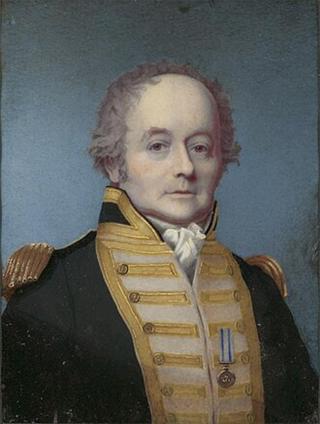
Before European contact Tahiti was divided among rival chiefdoms led by ari‘i of sacred rank, such as the Teva chiefs of the south, and no single ruler held the whole island. Samuel Wallis reached Tahiti in HMS Dolphin in 1767, followed by Louis-Antoine de Bougainville in 1768 and James Cook in 1769, and European captains came to treat Tu, chief of Pare and Arue near Matavai Bay, as the island’s king. Tu turned this recognition, and the goods and firearms that came with it, to his family’s advantage. William Bligh’s HMS Bounty anchored in Matavai Bay in October 1788, and after the mutiny of April 1789 sixteen of its men returned to live on Tahiti. In September 1790 a small party of them fought for Tu’s family against the western districts of Tetaha and Atehuru, whose chiefs then acknowledged Tu’s young son as sovereign. On 13 February 1791 the boy was invested with the maro ‘ura, the red-feathered girdle of paramount rank; he later ruled as Pōmare II. His father, who took the name Pōmare, acted as regent until his death in 1803. The family’s influence reached Moorea, Tetiaroa and Mehetia, although rival chiefs long contested its claim to rule all Tahiti.
Socioeconomy

Tahitian society was ranked by descent. The ari‘i, chiefs who claimed descent from the gods, stood above the ra‘atira, landholders who managed the districts, and the manahune, commoners who farmed and fished. Breadfruit, taro, coconuts, bananas, pigs and fish fed the population, and bark cloth and red feathers were prized as wealth in feasts, gifts and offerings. Religion centred on the marae, open-air stone temples, and on the cult of ‘Oro, god of war, whose devotees in the ‘arioi society travelled between islands as performers. Introduced diseases caused a long fall in population: Captain James Wilson of the missionary ship Duff estimated about 16,000 Tahitians in 1797, though estimates for the time of first contact are far higher and remain disputed. From 1801 ships from New South Wales bought salted pork, a trade the Pōmare family sought to control and which brought muskets, tools and cloth. After 1815 the London Missionary Society reshaped daily life: Sunday worship, schools and reading in Tahitian spread, a mission press began printing on Moorea in 1817, and Henry Nott completed a translation of the whole Bible in 1835. Coconut oil and pearl shell from the Tuamotus became exports, and Papeete grew into the main harbour for whalers and traders.
Military

Tahitian war was waged by chiefs and their followers with spears, clubs and slings, on land and from fleets of double canoes; in April 1774 James Cook watched more than 150 large war canoes gather at Pare for an attack on Moorea. Firearms shifted the balance among the chiefdoms. The Pōmare family obtained muskets from visiting ships, the Bounty mutineers cleaned and repaired its guns and joined its campaign of 1790, and the pork trade with New South Wales brought more weapons. Guns did not guarantee victory: in December 1808 a coalition of chiefs drove Pōmare II from Tahiti, and he spent most of the next seven years on Moorea. He returned in 1815, and in November his Christian forces defeated the chiefs loyal to the old gods at the Battle of Fei Pi on the west coast, where Opuhara, the leading chief of Papara, was killed. Missionary accounts say the enemy attacked during Sunday worship and that Pōmare spared the defeated, which helped to win them over. The kingdom’s last war was fought against France. From March 1844 Tahitians resisted French occupation, fighting at Mahaena in April and holding mountain strongholds until the French stormed the fort of Fautaua in December 1846, while forces on Huahine defeated a French landing in 1846.
Governance & Law

The Pōmare kingdom grew out of Tahitian chieftainship, in which rank came from genealogy and from sacred regalia such as the maro ‘ura, and power depended on alliances with district chiefs. Missionaries, traders and naval officers dealt with the Pōmare as monarchs, and the family used that recognition to rise above its rivals. After 1815 Pōmare II rebuilt royal government on a Christian basis. In 1819 he issued a written code of nineteen articles, drafted with the missionaries, which protected life and property, enforced the Sabbath and Christian marriage and set up judges to apply it, and he was baptised the same year. His death in December 1821 left an infant heir, Pōmare III, who was crowned by the missionaries in 1824 and ruled under a regency, and in that year a Tahitian legislative assembly was created under missionary influence. When the boy died in January 1827 his sister ʻAimata became Queen Pōmare IV. She reigned for fifty years, held court at Papeete, and through her marriages and children linked the dynasty to the ruling families of Bora Bora and Raiatea. George Pritchard, a missionary who became British consul in 1837, was her closest adviser. Under the French protectorate from 1842 the queen and chiefs kept internal government, while France took charge of foreign affairs, the port and resident foreigners.
Global & Regional Impact
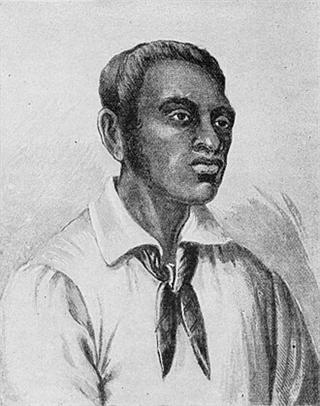
Tahiti was the first Polynesian kingdom to adopt Christianity and to govern by a written code of law, and it became a model for the missionary kingdoms of the Pacific. Pōmare II’s code of 1819 was followed by a code for Raiatea and its neighbours in 1820 and one for Huahine soon after, and Society Islands teachers such as Papeiha, who landed on Aitutaki in 1821, carried Christianity to the Cook Islands and later to Samoa. The mission press and the Tahitian Bible, printed in 1838 as the first complete Bible in a Polynesian language, gave Tahitian a standard written form that remains the basis of the written language. Pōmare II sent his family’s images of the gods to the London Missionary Society, which put them on display in London as evidence of the conversion. The rivalry between British Protestant missionaries and French Catholic priests mattered far beyond the island: the arrest and expulsion of George Pritchard in 1844 provoked a diplomatic crisis between Britain and France, and the Jarnac Convention of 1847 fixed the limits of French expansion in the Society Islands for forty years. Through the accounts of Bougainville and Cook, Tahiti had already become a European symbol of the South Seas, and the Protestant church founded by the mission is still one of the largest in French Polynesia.
Decline & Fall
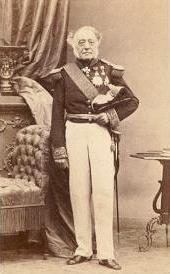
The kingdom’s independence was worn down by depopulation, the rivalry of district chiefs and the competition of the foreign powers it had welcomed. In December 1836 the French Catholic priests Honoré Laval and François Caret were expelled at the urging of Pritchard, and in 1838 Abel Aubert du Petit-Thouars arrived with the frigate Vénus to exact an apology and an indemnity. On 9 September 1842, under threat of bombardment, Pōmare IV and her leading chiefs signed a request for French protection, which Louis-Philippe ratified in March 1843. When the queen turned to Britain instead, Du Petit-Thouars deposed her in November 1843 and declared Tahiti annexed. Paris disavowed the annexation and restored the protectorate, but fighting broke out in 1844 and the queen withdrew to Raiatea. She returned to Papeete in February 1847, after the fall of the last Tahitian strongholds, and accepted the protectorate, while the Jarnac Convention of June 1847 guaranteed the independence of Huahine, Raiatea and Bora Bora but left Tahiti to France. French control over the protectorate grew in the following decades. After Pōmare IV died in 1877, her son Pōmare V ceded Tahiti and its dependencies to France on 29 June 1880 in return for a pension, a cession ratified by a French law in December. The islands are now part of French Polynesia, an overseas collectivity of France.
The Kingdom of Tahiti shows how a Polynesian chiefly family used European ships, guns and missionaries to build a Christian monarchy with written laws, and how the same foreign ties drew it into the rivalry of Britain and France, a French protectorate in 1842 and annexation in 1880.
Test yourself
5 questions on this page, from its key events and facts.
The questions open here once the page has loaded.
References
- Davies, J. (1961) The History of the Tahitian Mission, 1799–1830, ed. C.W. Newbury. Cambridge: Cambridge University Press for the Hakluyt Society.
- Gunson, N. (1978) Messengers of Grace: Evangelical Missionaries in the South Seas, 1797–1860. Melbourne: Oxford University Press.
- Newbury, C. (1980) Tahiti Nui: Change and Survival in French Polynesia, 1767–1945. Honolulu: University Press of Hawaii.
- Oliver, D.L. (1974) Ancient Tahitian Society. 3 vols. Honolulu: University Press of Hawaii.
- Smith, V., Thomas, N. and Nuku, M. (eds) (2013) Mutiny and Aftermath: James Morrison’s Account of the Mutiny on the Bounty and the Island of Tahiti. Honolulu: University of Hawai‘i Press.
Connections
Open the full connections map →