Research Series · Essay 08 · · 19 min read
How Songs Travel
The Evolution, Branching and Power of Song
The Oldest Voices
The oldest song in the Institute's collection is a funeral for a city. The Lament for Ur was composed around 2000 BCE, about the time Ur fell to the Elamites and its Third Dynasty came to an end. In 438 lines the goddess Ningal weeps for her city. It is one of five known Mesopotamian city laments, dirges sung in the voice of the city's goddess by male lamentation-priests.
Most of the oldest songs were made for gods. The Hurrian Hymn to Nikkal, from a fourteenth-century BCE stratum of the royal palace at Ugarit, is the oldest surviving substantially complete work of notated music in the world. The Great Hymn to the Aten, attributed to Akhenaten or his courtiers, was found in the tomb of the courtier Ay.
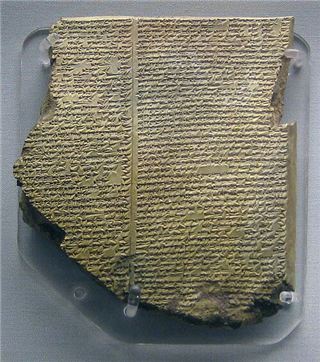
Egypt's tombs also kept songs about death itself. The Harper's Songs first appear in tomb inscriptions of the Middle Kingdom and were still copied on papyrus in the New Kingdom; most praise the tomb and the life to come, but one doubts that there is an afterlife at all and advises the listener to enjoy life while it lasts. The Epic of Gilgamesh grew from five Sumerian poems about the king of Uruk into an Akkadian epic; some of the best copies of its later version come from the library of Ashurbanipal at Nineveh. No music for it survives.
The Greeks wrote their music on stone. The Delphic Hymns, two hymns to Apollo carved on the Athenian Treasury at Delphi, were probably written for the Athenian procession to Delphi of 128 BCE. The Seikilos epitaph, a marble pillar from Tralles in western Anatolia of the first or second century CE, preserves the oldest surviving complete musical composition, a short song with signs for the melody above the words. China's oldest songs reach us through anthologies: Guan ju, the first poem of the Classic of Poetry, which Confucius praised in the Analects, and the Song of the Yue Boatman, its original sounds transcribed in 32 Chinese characters. The oldest voices sang for gods, for cities and for the dead, and they reach us by tablet, tomb wall, papyrus, stone and anthology, often with their music lost and sometimes with the language itself only half understood.
From Hymn to Anthem
Across the collection the sacred song gives way to the anthem. Of the songs to 1750, 74 per cent are sacred and 8 per cent anthems, and none is a protest song; from 1750, 9 per cent are sacred, 40 per cent anthems and 17 per cent protest songs.
The oldest anthems were songs of a cause before they were songs of a state. The Wilhelmus was written at the start of the Dutch Revolt, to the tune of a Catholic French song mocking a Huguenot prince; it became the official anthem only in 1932. God Save the King appeared close to its present form in 1744 and spread among supporters of George II during the Jacobite rising of 1745. Spain's Marcha Real, first printed in 1761, has never had official words.
The revolutions gave the anthem its modern form, a song of the nation in arms. La Marseillaise was written on the evening of 25 April 1792 to rally soldiers against the invading armies of the First Coalition, and the National Convention made it France's first national anthem on 14 July 1795. In 1797, Joseph Haydn wrote Gott erhalte Franz den Kaiser as the Habsburg monarchy's answer to the British anthem. The same summer Józef Wybicki wrote Poland Is Not Yet Lost for the Polish Legions in the French army, two years after the third partition had erased the Polish–Lithuanian Commonwealth from the map; its idea was that a nation could exist without a state as long as its people lived and fought for it. The Star-Spangled Banner began as a poem written on 14 September 1814, in the War of 1812, fitted to the tune of a London club song.
The nineteenth century holds 30 of the collection's anthems, most written for nations that did not yet have states. The poem of Himnusz was completed in 1823. The Deutschlandlied was written in 1841 as an appeal to the German princes to put a united Germany before their small states. The Canto degli Italiani was first performed in December 1847; the Piedmontese police banned it until March 1848. The poem that became the State Anthem of Ukraine was written in Kyiv in 1862. Hatikvah was written in 1877 and set a decade later. The monarchies took the form up through foreign bandmasters: King Kalākaua wrote Hawaiʻi Ponoʻī in 1874 to music by his bandmaster Henri Berger; Japan's Kimigayo received Western harmony from the German Franz Eckert; and Siam's Sansoen Phra Barami was printed in 1888 in an arrangement by the Russian Pyotr Schurovsky.
Beside the anthem grew the protest song and the work song. Eugène Pottier, a member of the Paris Commune, wrote The Internationale in June 1871, after the French army crushed the Commune; by 1910 it had been sung in 18 languages. The Polish Warszawianka became the anthem of the workers' protests of 1905. The work songs are fewest, 14 in all: The Song of the Volga Boatmen, whose slow beat let a team of men pull together on the towline; the hammer songs of John Henry, which told what happened to men who worked too fast; and Shosholoza, first sung by Ndebele men travelling by steam train to the mines of South Africa. The protest song did not leave the hymn behind: We Shall Overcome was long thought to descend from a hymn of 1901, Nkosi Sikelel' iAfrika was composed in 1897 as a hymn of a single stanza, and John Brown's Body took its tune from a camp-meeting hymn traceable in print to 1806–1808.
Tunes That Branch
Songs seldom travel alone. The collection records 32 links between its songs, from 20 parents, and of its 98 anthems 22 have a named source song. The commonest form of borrowing is the one the Japanese song Hotaru no Hikari illustrates: new words to an existing tune, known as contrafactum.
No tune has branched further than God Save the King. About 140 composers have used it, and the melody served Prussia from 1795 to 1918, the Russian Empire from 1816 to 1833 and Switzerland until 1961. The Prussian Heil dir im Siegerkranz became the royal anthem of the Kingdom of Prussia in 1795; after the First World War began a composer set its text to new music to remove the likeness. The melody of Hawaiʻi Ponoʻī recalls both the British and the Prussian anthems. In Siam two former British officers adopted God Save the King as the king's honour music in 1851; when King Chulalongkorn visited Singapore in 1871 and found Siam using the same anthem as Great Britain, he had a tune of its own chosen. The pseudonymous composer of Glory to Hong Kong named God Save the King, with The Star-Spangled Banner, the anthem of Russia, the Battle Hymn of the Republic and Vivaldi's Gloria, as a model in 2019.
The anthems of the revolutions bred anthems in turn. Pottier meant The Internationale to be sung to La Marseillaise; the Canto degli Italiani drew on the French text; and Julián Felipe said he had based Lupang Hinirang on the Marcha Real, the Grand March from Verdi's Aida and La Marseillaise. The Polish mazurka travelled east and south. On 2 November 1834 a Slovak Lutheran minister wrote three verses to be sung to Dąbrowski's Mazurka; Hey, Slavs became the Pan-Slavic anthem and served Yugoslavia from 1943 to 1992. Scholars think the words of the Ukrainian anthem were influenced by the Polish song, and Hatikvah too is named as inspired by it. Haydn's tune passed from one empire to another when the Deutschlandlied was written to it in 1841.
A Scottish song of parting became the sound of East Asian ceremonies. Auld Lang Syne, which Robert Burns wrote in 1788, has a pentatonic tune that suited the musical traditions of Asia. Hotaru no Hikari set entirely different words to it; it is heard at graduations and as the last song of NHK's New Year's Eve programme. In Korea the words of Aegukga were sung to the Scottish tune by dissidents under Japanese rule; the composer Ahn Eak-tai wrote a Korean melody in 1935, while North Korea kept the Scottish tune briefly before adopting a new Aegukka in 1947. In the United States a camp-meeting hymn became John Brown's Body in the first months of the Civil War, its words worked out by Massachusetts militiamen teasing a comrade of that name; in November 1861 Julia Ward Howe, who had heard troops singing it, wrote the Battle Hymn of the Republic to the same tune. The Warszawianka crossed to Spain through a German translation: A las Barricadas was by 1936 the anthem of the anarcho-syndicalist CNT.
Not every branching was consented to. In 1939 Solomon Linda and the Evening Birds recorded Mbube in Johannesburg; it sold over 100,000 copies in Africa and earned its author almost nothing, because just after the session he sold his rights for ten shillings. In the United States the Weavers' "Wimoweh" of 1951 was credited by its publisher to a fictitious name; in 1961 George David Weiss turned Linda's closing improvisation into the main tune of The Lion Sleeps Tonight, which reached No. 1 with no credit to Linda. Linda died in 1962 aged 53 with about forty dollars in today's money in his bank account. In 2004 his family sued Disney over the song's use in The Lion King, and a settlement in 2006 named Linda as co-composer.
Songs Put to Work
A song becomes an anthem by use before it becomes one by law, and the laws often came late. The Star-Spangled Banner became the national anthem on 3 March 1931. Poland Is Not Yet Lost was adopted in 1927, the Wilhelmus in 1932, Himnusz by the constitution of 1989, the Canto degli Italiani provisionally in 1946 and by law in 2017. Japan's Act on National Flag and Anthem of 1999 passed after a Hiroshima school principal killed himself over a dispute between his school board and his teachers about the flag and anthem. China's March of the Volunteers became the provisional anthem of the People's Republic in 1949, the official anthem in 1982 and the subject of a National Anthem Law in 2017.
Once adopted, an anthem was taught. Kimigayo was sung at school ceremonies by 1893; under a Tokyo directive of 2003 requiring teachers to stand and sing at graduations, 410 teachers and school workers were punished by 2008. Siam adopted Sansoen Phra Barami for schools in 1914. The Philippines' Flag and Heraldic Code of 1998 requires that schools see every student learns Lupang Hinirang by heart. The Ode to the Motherland was ordered sung throughout China by Zhou Enlai in 1951. Dictatorships were the most thorough. Under Italian fascism the school day had to open with Giovinezza or the song of the regime's youth organisation; when Arturo Toscanini refused to conduct it in Bologna in 1931, Blackshirts assaulted him and he left Italy. In Germany a law of 19 May 1933 made the Horst-Wessel-Lied a national symbol, and Hitler fixed the tempo at which it had to be played.
The cult of a person could be built in song. The East Is Red began as a peasant love song of the Loess Plateau; its modern words of 1942 idealise Mao Zedong, and when a political commissar proposed teaching it to the army in 1956 the defence minister Peng Dehuai refused and called it a personality cult. During the Cultural Revolution it served as China's unofficial anthem: loudspeakers played it at dawn and dusk, and in 1970 China's first satellite sent its melody back to Earth as its first signal. The Song of General Kim Il Sung, composed in 1946, marks the beginning of the cult around him; it displaced the national anthem at public gatherings. East Germany's Lied der Partei, whose title line held that the party is always right, named Stalin in its chorus until his name was removed in the 1960s. The Partisans' With Marshal Tito of 1943 originally named Tito together with Stalin, and after the split of 1948 that version was no longer performed or printed. The State Anthem of the Soviet Union named him in its verses; after his death it was played without words from 1956 to 1977.
What states adopted, they also banned. The Horst-Wessel-Lied, Germany's second national anthem from 1933 to 1945, has been illegal in Germany and Austria since the regime fell. That regime's ally had itself censored a song: Faccetta nera, written in April 1935 as the Italian army prepared to invade Ethiopia, presented the conquest as the liberation of an enslaved Ethiopian girl; Mussolini, said to have hated the song because it seemed to favour the mixing of races, tried to ban it and, since it was too popular, settled for cutting a verse. The Deutschlandlied's stanzas were rationed by regime: the whole song under the Weimar Republic from 1922, the first stanza followed by the Horst-Wessel-Lied under Nazi Germany, the third alone in reunified Germany from 1991. South Africa banned Nkosi Sikelel' iAfrika for its link to the African National Congress, and Asimbonanga and Free Nelson Mandela too. In Hong Kong, after the national security law of 2020, the government told schools not to allow Glory to Hong Kong; a court refused an injunction in 2023 and on 8 May 2024 the Court of Appeal granted one, banning the song. Bella ciao was never banned: its partisan words have no documentary trace before 1953, yet since the 1960s it has been sung in dozens of languages against fascism and oppression.
What a Song Can Do
The clearest record of what a song can do for people without power is the spiritual. Go Down Moses draws on the Book of Exodus; enslaved people in the United States saw their own enslavement in that story, and because of the song's double meaning many enslavers outlawed it. The authorised biography of Harriet Tubman quotes her as saying she used it as a code song for people escaping slavery. Swing Low, Sweet Chariot was made known by the Fisk Jubilee Singers; in 1939 Nazi Germany's Reich Music Examination Office listed it among undesired and harmful works. Wade in the Water is believed, though it has not been proven, to have warned escaping people to go into the water so that dogs could not follow their scent; in the 1960s the Staple Singers' version became part of the civil rights movement.
That movement's own anthem took its modern shape in a strike. Through the winter of 1945–1946, tobacco workers in Charleston, South Carolina, mostly African American women, ended each day's picketing with a slow hymn led by the striker Lucille Simmons; Zilphia Horton of the Highlander Folk School learned it from her, Pete Seeger changed "will" to "shall", and in 1959–1960 the school's young student activists gave We Shall Overcome the words and rhythm known today. Joan Baez led a crowd in it at the March on Washington in 1963, and more than 50,000 people sang it at Martin Luther King Jr.'s funeral. Marchers in Northern Ireland sang it before the shootings of 1972, hundreds of thousands sang it in Wenceslas Square during the Velvet Revolution, and Bengali versions were sung in the Bangladesh war of 1971.
In South Africa the songs of the struggle against apartheid were of several kinds. Shosholoza was sung by prisoners too: Nelson Mandela described singing it while he worked on Robben Island, and after the Rugby World Cup of 1995 it became a favourite at sporting events. Asimbonanga, written in 1986 while Mandela was imprisoned, mourned his absence. Free Nelson Mandela, recorded in Britain in 1984, was banned in South Africa and got back into the country to be played at football matches and ANC rallies. The oldest of these songs went furthest. Nkosi Sikelel' iAfrika, a teacher's hymn of 1897, was the closing anthem of the African National Congress by 1925; it became the anthem of Tanganyika and of Zambia, Zimbabwe and Namibia at their independence. In 1994 Mandela declared it and the former anthem, Die Stem van Suid-Afrika, national anthems together, and since 1997 a shortened combination of the two has been South Africa's anthem.
Elsewhere a song stood in for a state that did not exist. Ey Reqîb was written in 1938 by the Kurdish poet Dildar in jail; in 1946 it became the anthem of the Kurdistan Republic of Mahabad, and it is today the official anthem of the Kurdistan Region of Iraq. My Homeland, a poem by the Palestinian Ibrahim Tuqan of about 1934, served for much of the century as an unofficial anthem of the Palestinians, and in 2004 became the anthem of Iraq, after the anthem associated with Saddam Hussein's government had been set aside.
Songs also outlive the states that made them. The music of the Soviet anthem outlasted the Soviet Union: in December 2000 Russia's legislature approved it as the anthem of Russia. Rise, O Voices of Rhodesia, set in 1974 to Beethoven's Ode to Joy, lost its legal status in December 1979, and because of it the melody remains controversial in Zimbabwe. Democratic Kampuchea's anthem, The Glorious Seventeenth of April, celebrating the day the Khmer Rouge came to power, outlived a regime whose policies killed 1.5 to 2 million people: it went on being presented in the West as Cambodia's anthem until the monarchy was restored in 1993. East Germany's Auferstanden aus Ruinen spoke of a single German fatherland, which sat badly with the state after it built the Berlin Wall in 1961, so that on official occasions only its tune was played.
The Lesson for Institutions
The first lesson of these three hundred songs is that a song's meaning belongs to its singers, not to its makers. God Save the King spread among supporters of George II and, by some claims, was first sung for the Jacobite kings; its tune served Prussia, Russia and Siam, and two of them later took pains to be rid of it. A camp-meeting hymn became a soldiers' joke and then a hymn of judgment; a Shaanxi love song became the sound of a personality cult; a Zulu song of a lion hunt became an American hit from which its author earned ten shillings. The institutions that adopted songs seldom controlled what they came to mean: the Deutschlandlied's author meant its first stanza as an appeal to the princes for a united Germany, and critics abroad read it as a claim of supremacy over other peoples; Faccetta nera was written as propaganda for a colonial war and censored by the regime it served.
The second lesson is that adoption and prohibition are weaker than custom. Anthems were sung for generations before they were legislated, and laws about them, from the Philippine code of 1998 to Japan's Act of 1999 and Hong Kong's injunction of 2024, have more often marked a dispute than ended one. Bans failed in a pattern: the Piedmontese police could not stop the Canto degli Italiani, apartheid South Africa could not keep Free Nelson Mandela off its football grounds, and the Soviet ban on the Ukrainian anthem ended with its singing at a presidential inauguration in 1991. The songs most thoroughly imposed, Giovinezza, the Horst-Wessel-Lied, The East Is Red, are the ones least willingly heard now.
The third lesson concerns what lasts. The songs that crossed the most borders named no party and fixed no enemy: a hymn asking God to bless Africa served four states at their independence and still carries two anthems; a slow hymn of a tobacco workers' strike was sung at the March on Washington, in Northern Ireland and in Prague; a partisan song whose link to the partisans is doubtful could unite the Catholic, Communist, Socialist and Liberal strands of the Italian Resistance because it named none of them. A state that wants its anthem to outlive it should write it as a prayer or a promise rather than a roll of honour, since a name in a chorus is the first thing the next turn of politics removes: Stalin's from the Soviet anthem and the Lied der Partei, Stalin's beside Tito's from the Partisan song, and the verse of the Ode to the Motherland that names Mao is often left out.
What the Data Shows
The Institute's Songs in History holds 300 songs in 85 languages. For 187 the words are printed; 88 are in copyright and are described without them; 265 have a checked performance. By type, 98 are anthems, 70 sacred, 57 war songs, 41 protest songs, 39 love songs, 36 celebrations, 35 laments, 22 ballads, 18 dances, 14 work songs, 6 lullabies and 1 an epic; a song may carry more than one type. By era, 20 are ancient, 26 medieval, 19 early modern, 25 of the age of revolutions, 73 of the nineteenth century, 87 of the twentieth to 1945 and 50 postwar. By region, 120 are European, 47 from the Americas, 35 from Central and East Asia, 25 from South and Southeast Asia, 20 from Sub-Saharan Africa, 19 from Oceania, 17 from the Middle East, 10 from the Ancient Near East and 7 from Egypt and North Africa. The collection is a selection, not a census: its songs were chosen one by one, it counts the songs that states, churches and movements kept rather than the songs people sang most, and its weight towards Europe and the last two centuries reflects what was written down as much as what was sung.
Read against time, the types tell the story of the second section. Sacred songs are 16 of the 20 ancient songs, 21 of 26 medieval and 11 of 19 early modern, then 2 of 25 in the age of revolutions, 11 of 73 in the nineteenth century, 7 of 87 in the twentieth and 2 of 50 postwar: 74 per cent of the songs to 1750, 9 per cent after. Anthems follow the opposite curve, from 1 medieval and 4 early modern to 10, 30, 35 and 18, so that from 1750 they are 40 per cent of the whole. Protest songs appear only with the revolutions, 4, then 9, 17 and 11; war songs peak at 27 in the twentieth century to 1945; work songs cluster in the nineteenth century, 7 of 14. Of the 98 anthems, 22 have a named source song, and the collection records 32 links between its songs from 20 parents, listed below. The links are of several kinds, which the table names: a tune taken whole, a text drawn on, a model named by the composer. Two rows rest on titles alone rather than on any borrowing, and two record a song's inclusion in a stage work and film named after another.
| Parent song | Songs that took its tune or words, or named it as their model |
|---|---|
| God Save the King | Heil dir im Siegerkranz (same melody); Gott erhalte Franz den Kaiser (a new tune written to match it); Hawaiʻi Ponoʻī (melody recalls it); Kimigayo (words perhaps chosen for their likeness to it); Sansoen Phra Barami (Siam's honour music before its own anthem); Land of Hope and Glory (first five notes alike); Glory to Hong Kong (a model named by the composer) |
| La Marseillaise | Il Canto degli italiani (text drew on it); Lupang Hinirang (one of three pieces its composer based the music on); The Internationale (words written to be sung to its tune) |
| Poland Is Not Yet Lost | Hey, Slavs (same melody, slowed); State Anthem of Ukraine (words influenced by it); Hatikvah (named as inspired by it) |
| Psalm 137 | Va, pensiero (libretto inspired by it); Jerusalem of Gold (a line drawn from it) |
| Auld Lang Syne | Hotaru no Hikari (same tune, new words); Aegukga (sung to its tune until 1935) |
| Hanacpachap cussicuinin | Magnificat (a title match only: a 2024 recording of the Quechua hymn on an album called Magnificat) |
| Marcha Real | Lupang Hinirang (one of three pieces its composer based the music on) |
| Ode to Joy | Rise, O Voices of Rhodesia (same melody, 1974–1979) |
| Heil dir im Siegerkranz | Hawaiʻi Ponoʻī (melody recalls it) |
| Gott erhalte Franz den Kaiser | Deutschlandlied (same melody, new words of 1841) |
| The Star-Spangled Banner | Glory to Hong Kong (a model named by the composer) |
| Battle Hymn of the Republic | Glory to Hong Kong (a model named by the composer) |
| John Brown's Body | Battle Hymn of the Republic (same tune, new words of November 1861) |
| The Internationale | March of the Volunteers (opening motif inspired by it) |
| Warszawianka | A las Barricadas (same melody; Spanish words from a German translation) |
| Botany Bay | Waltzing Matilda (a title match only: a 2008 recording of Botany Bay on an album called Waltzing Matilda; the tunes have separate histories) |
| Aegukga | Aegukka (the earlier anthem it replaced in North Korea in 1947) |
| Mbube | The Lion Sleeps Tonight (the closing improvisation made the new tune, with English words) |
| Ode to the Motherland | The East Is Red (the stage work of 1964 and film of 1965, which it closed; not the song) |
| Without the Communist Party, There Would Be No New China | The East Is Red (the film of 1965, in which it is included; not the song) |
The British anthem has seven descendants and the revolutionary anthems of France and Poland three each; the songs that reached furthest, from Scotland to Japan and Korea, from Poland to Spain, from Johannesburg to New York, did so through printed songbooks, translations and records. A few of the 32 links rest on weak ground, as the notes say. Even so, the pattern holds: tunes travel further than words, anthems breed anthems, and the children often outlive their parents in use.
Further Reading
- Bobetsky, Victor V., ed. We Shall Overcome: Essays on a Great American Song. 2015.
- Carawan, Guy, and Candie Carawan, eds. Sing for Freedom: The Story of the Civil Rights Movement Through Its Songs. 1992.
- Clague, Mark. O Say Can You Hear? A Cultural Biography of "The Star-Spangled Banner". 2022.
- George, Andrew. The Babylonian Gilgamesh Epic: Introduction, Critical Edition and Cuneiform Texts. Oxford: Oxford University Press, 2003.
- Jones, Arthur C. Wade in the Water: The Wisdom of the Spirituals. 1993; revised edition 2023.
- Lichtheim, Miriam. Ancient Egyptian Literature, Volume 1: The Old and Middle Kingdom. 1975.
- Nelson, Scott Reynolds. Steel Drivin' Man: John Henry, the Untold Story of an American Legend. 2006.
- O'Keeffe, Dennis. Waltzing Matilda: The Secret History of Australia's Favourite Song. 2012.
- Scholes, Percy A. God Save the Queen!: The History and Romance of the World's First National Anthem. 1954.
- Siemens, Daniel. The Making of a Nazi Hero: The Murder and Myth of Horst Wessel. 2013.
- Stauffer, John, and Benjamin Soskis. The Battle Hymn of the Republic: A Biography of the Song That Marches On. 2013.
- Stowe, David W. Song of Exile: The Enduring Mystery of Psalm 137. 2016.
- West, M. L. Ancient Greek Music. 1992.
Profiles in this essay
 Soviet Union1922 CE – 1991 CE
 Nazi Germany1933 CE – 1945 CE
 Kingdom of Italy1861 CE – 1946 CE
 People's Republic of China1949 CE – 2025 CE
 Kingdom of Prussia1701 CE – 1918 CE
 Habsburg Monarchy1526 CE – 1804 CE
 Kingdom of Hawaii1795 CE – 1893 CE
 Polish-Lithuanian Commonwealth1569 CE – 1795 CE
 Anti-apartheid movement1948 CE – 1994 CE
 Civil rights movement1954 CE – 1968 CE
Cite this essay
- APA
- The Epoch Institute. (2026). How Songs Travel. In Research Series. https://the-epoch-institute.org/essays/how-songs-travel
- MLA
- “How Songs Travel.” Research Series, The Epoch Institute, 2026, https://the-epoch-institute.org/essays/how-songs-travel. Accessed .
- Chicago
- The Epoch Institute. “How Songs Travel.” Research Series. 2026. https://the-epoch-institute.org/essays/how-songs-travel.
- Harvard
- The Epoch Institute (2026) ‘How Songs Travel’, Research Series. Available at: https://the-epoch-institute.org/essays/how-songs-travel (Accessed: ).