Europe
Polish-Lithuanian Commonwealth
At a glance
- The Commonwealth joined Poland and Lithuania in 1569 into one of Europe's largest states, with an elected king and noble parliament.
- Its religious tolerance made it a refuge for dissenters and home to the world's largest Jewish population.
- The liberum veto paralysed reform, letting Russia, Prussia and Austria partition it out of existence by 1795.
Rise & Fall
- 1569The Union of Lublin creates the Commonwealth from Poland and Lithuania
- 1573The Warsaw Confederation guarantees religious peace among the nobility
- 1610Żółkiewski wins at Klushino and Polish troops occupy Moscow
- 1648Bohdan Khmelnytsky's Cossack uprising begins in Ukraine
- 1652Władysław Siciński breaks up the Sejm with a single objection, the first liberum veto
- 1683Jan III Sobieski leads the cavalry charge that relieves Vienna
- 1791The Constitution of 3 May abolishes the liberum veto
- 1795The Third Partition erases the Commonwealth from the map
Foundation

The Polish-Lithuanian Commonwealth was formally constituted by the Union of Lublin on 1 July 1569, a constitutional act that joined the Kingdom of Poland and the Grand Duchy of Lithuania into a single federal state with a common monarch and parliament, one of the largest polities in Europe, covering some 815,000 square kilometres at its formation and nearly one million at its greatest extent in the early seventeenth century. The union’s roots lay in the Union of Krewo of 1385, under which the Lithuanian Grand Duke Jogaila agreed to accept Latin Christianity and marry Queen Jadwiga of Poland; baptised and crowned in 1386 as Władysław II Jagiełło, he inaugurated a dynastic union that bound the two states for nearly two centuries before the Lublin settlement transformed a personal connection into a formal constitutional merger. The immediate context of 1569 was strategic urgency: Lithuania was bearing the brunt of the Livonian War against Ivan IV of Russia, who had invaded Livonia in 1558 and taken Polotsk in 1563, and it needed Polish military resources. This gave the Polish nobility the leverage to insist on terms favourable to the Crown, including the transfer of Podlachia, Volhynia and the vast Ukrainian palatinates of Kiev and Bracław from Lithuanian to Polish administration. The Commonwealth’s constitutional order was novel in the European context: an elective monarchy in which the king was chosen by the entire szlachta nobility in mass elections, usually held at Wola outside Warsaw; a bicameral Sejm representing noble interests across both constituent states; and a guarantee of religious peace, the Warsaw Confederation of 1573, which made the Commonwealth a refuge for religious minorities while confessional warfare raged in western Europe. Sigismund II Augustus, the last male Jagiellonian king, pressed for the union partly to ensure that the joint state would survive the extinction of his line, and his death in 1572 opened the era of elective kingship that would both define and ultimately cripple the Commonwealth’s political capacity.
Socioeconomy
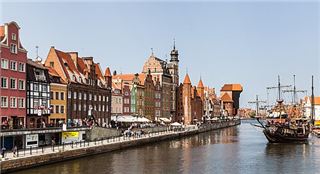
The Commonwealth’s economy was anchored in large agricultural surpluses, above all from the Vistula basin, whose grain, chiefly rye, was floated downriver to the Baltic port of Gdańsk and shipped to the urbanising markets of the Netherlands and western Europe, making the Commonwealth one of Europe’s principal granaries; the eastern lands of Lithuania and Ukraine contributed timber, potash, livestock and, increasingly, grain. The grain trade generated great wealth for the szlachta, who restructured agrarian relations through the so-called second serfdom, a progressive tightening of peasant obligations that bound cultivators to the land with increasing legal severity through the sixteenth and seventeenth centuries. The folwark, a large noble-run demesne farm worked by compulsory serf labour, became the dominant unit of agricultural production, generating exportable surpluses while steadily eroding the peasantry’s legal status and economic autonomy. Urban development, by contrast, was comparatively weak: the nobility’s political dominance allowed it to bar nobles from trade on pain of losing their status while restricting the political rights and economic protections of the burghers, producing an environment less favourable to merchant capitalism than that of contemporary Dutch and English cities. The Commonwealth’s Jewish population, by the seventeenth century the largest in the world and concentrated in towns and noble-owned settlements, filled crucial commercial, financial and craft roles, including the leasing and management of noble estates and mills, creating a distinctive economic order in which Jewish intermediaries, grain-exporting nobles and enserfed peasants formed an interdependent but deeply hierarchical system.
Military

The Commonwealth’s military capacity was formidable in its early decades, combining the heavy cavalry tradition of the Polish knighthood with the manpower of the Lithuanian and Ukrainian frontier zones and a light cavalry tradition shaped by the Tatar and Cossack warrior cultures of the steppe borderlands. The winged hussars (husaria) were its most celebrated arm: armoured lancers whose distinctive feathered wings added to an intimidating appearance, and whose disciplined, close-ordered charge proved devastating against infantry and lighter cavalry alike. At the Battle of Kircholm in 1605, a Commonwealth force of some 3,600 men, its striking power provided by hussars, routed a Swedish army of around 11,000 in a short and decisive engagement. The high point of Commonwealth arms came in 1610, when Hetman Stanisław Żółkiewski defeated a larger Russian and Swedish force at the Battle of Klushino and Polish troops occupied Moscow, where a group of boyars elected Sigismund III’s son Władysław, the future Władysław IV, as Tsar, an overreach that proved unsustainable but illustrated the Commonwealth’s offensive reach at its peak. The Truce of Deulino of 1618, which confirmed Polish possession of Smolensk and Chernigov, marked the greatest territorial gains of Commonwealth arms in the east. The fundamental weakness of this military system was fiscal: the Sejm’s chronic reluctance to vote adequate taxation, routinely blocked by deputies defending noble privileges, meant that the Commonwealth habitually fielded armies far smaller than its size warranted, relying on mercenaries, Cossack auxiliaries and the private forces of great magnate families, which sometimes rivalled the royal army in size.
Governance & Law

The Commonwealth’s constitutional system was both its most celebrated achievement and its fatal structural weakness, a paradox that contemporaries recognised but proved unable to resolve. The elective monarchy placed executive authority in a king chosen by the entire szlachta, a class comprising roughly eight to ten per cent of the population, an exceptionally high proportion by European standards, whose members gathered in their tens of thousands at royal elections to cast votes that were in principle equal regardless of wealth. The Sejm, meeting every two years in ordinary session, required unanimity for legislation, a principle rooted in the noble conviction that a law passed over a member’s objection violated his fundamental liberty; in practice, a determined minority, or a single deputy acting on factional instruction or foreign bribery, could paralyse the legislature. The liberum veto crystallised this principle in its most destructive form when the deputy Władysław Siciński broke up the Sejm in 1652 by his solitary objection, establishing a precedent exploited with increasing frequency, with foreign powers, particularly Russia and Prussia, bribing deputies to block measures that might strengthen the state. The constitution Nihil Novi of 1505 had already established that nothing new could be enacted without the consent of the noble deputies, and the Henrician Articles of 1573 bound each elected king to fixed obligations, including the nobility’s right to refuse obedience to a monarch who broke them, a principle invoked in armed noble rebellions (rokosz). The Constitution of 3 May 1791, often described as Europe’s first modern written constitution, abolished the liberum veto, established a hereditary constitutional monarchy and extended rights to the burghers of royal towns. It was a genuine reformist achievement, but it was overturned within about fourteen months by Russian military intervention in support of the Confederation of Targowica, formed by magnates who preferred foreign protection to the loss of their privileges.
Global & Regional Impact
The Commonwealth’s most enduring contribution to European history was its model of constitutional pluralism, religious tolerance and noble self-government, which attracted interest across the continent even as its dysfunctions turned it into a cautionary example rather than an admired template. The Warsaw Confederation of 1573 guaranteed peace among the nobility’s Catholics, Lutherans, Calvinists, Orthodox and other confessions at a time when the St. Bartholomew's Day Massacre in France and the Duke of Alba’s repression in the Netherlands demonstrated the murderous alternative, making the Commonwealth exceptional in the confessional landscape of the later sixteenth century. It became a refuge for religious dissenters: the Antitrinitarian Polish Brethren, joined by the Italian exile Fausto Sozzini, developed at Raków a rationalist theology that influenced later Enlightenment thought, while the dense network of Jewish communities in Polish and Lithuanian towns formed the demographic and cultural heartland of Ashkenazi Jewry, whose Talmudic academies, Hasidic movement and Yiddish culture shaped Jewish life worldwide for centuries. Militarily, the Commonwealth played a decisive role in the relief of Vienna in 1683, where Jan III Sobieski led the great cavalry charge that broke Kara Mustafa’s besieging army, and it joined the Holy League that went on to roll back Ottoman power in central Europe. The Commonwealth’s partition gave rise to a powerful Polish national consciousness, articulated through Romantic literature, music and political thought, which sustained Polish identity through 123 years of statelessness and ultimately produced the modern Polish nation.
Decline & Fall
The Commonwealth’s decline unfolded across a century and a half of institutional paralysis, foreign manipulation and military weakness that turned one of Europe’s largest states into a power vacuum absorbed by its more efficiently governed neighbours. The Khmelnytsky Uprising, the Cossack revolt led by Bohdan Khmelnytsky from 1648, inflicted catastrophic losses on Ukraine, and the Deluge that followed, the Swedish invasion of 1655 coinciding with Russian, Transylvanian and Brandenburg attacks, devastated the country; together these wars are estimated to have reduced the population by perhaps a quarter to a third through warfare, famine and epidemic disease, destroying the economic and demographic foundations of the preceding golden age. The growing use of the liberum veto after 1652 made governmental reform almost impossible: a large share of Sejm sessions over the following century were broken up, and under Augustus III (1733–1763) almost every Sejm was broken without passing legislation. Russia under Peter the Great and Catherine the Great treated the Commonwealth as a client state, intervening militarily to block reform and supporting compliant kings: Augustus II and Augustus III of the Saxon Wettin dynasty owed their thrones in large part to Russian arms, and Catherine secured the election of Stanisław August Poniatowski in 1764, while Russia exploited the grievances of Orthodox and Protestant dissenters as a pretext for intervention. The First Partition of 1772, in which Russia, Prussia and Austria annexed about thirty per cent of the Commonwealth’s territory and roughly a third of its population without significant resistance, exposed its strategic helplessness. The reformist moment of the Constitution of 3 May 1791 was extinguished by the Russian invasion of 1792 and the Targowica Confederation; the Second Partition of 1793 stripped away further vast territories; and the Kościuszko Uprising of 1794, an attempt to mobilise the whole nation including the peasantry, was crushed by Russian and Prussian forces, leading directly to the Third Partition of 1795, which erased the Commonwealth from the map of Europe.
The Polish-Lithuanian Commonwealth’s ultimate historical significance lies in the clarity of the lesson it offers: that constitutional liberty without institutional discipline can become constitutional paralysis, and that a state unable to defend its reforms against internal sabotage and external predation may find its most celebrated freedoms turned into the instruments of its destruction.
References
- Davies, N. (1982) God's Playground: A History of Poland. 2 vols. Oxford: Clarendon Press.
- Frost, R. (2000) The Northern Wars: War, State and Society in Northeastern Europe, 1558–1721. London: Longman.
- Lukowski, J. and Zawadzki, H. (2001) A Concise History of Poland. Cambridge: Cambridge University Press.
- Rowell, S.C. (1994) Lithuania Ascending: A Pagan Empire within East-Central Europe, 1295–1345. Cambridge: Cambridge University Press.
- Stone, D. (2001) The Polish-Lithuanian State, 1386–1795. Seattle: University of Washington Press.
- Zamoyski, A. (1987) The Polish Way: A Thousand-Year History of the Poles and Their Culture. London: John Murray.
Connections
Open the full connections map →