Europe
Grand Duchy of Lithuania
At a glance
- Pagan Lithuanian dukes, united after their victory at Saule in 1236, built one of the largest states of medieval Europe.
- Ruled by the Gediminid dynasty, it absorbed much of Rus' and used Ruthenian as its chancery language.
- Joined to Poland from 1386 and in the Commonwealth from 1569, it was partitioned, mostly to Russia, by 1795.
Rise & Fall
- 1236Lithuanians destroy the Livonian Brothers of the Sword at the Battle of Saule
- 1253Mindaugas is crowned king of Lithuania
- 1323Gediminas invites Western settlers in letters naming Vilnius as his seat
- c. 1362Algirdas defeats the Golden Horde at the Battle of Blue Waters
- 1387Jogaila begins the conversion of Lithuania to Catholicism
- 1410Vytautas and the Poles defeat the Teutonic Order at the Battle of Grunwald
- 1569The Union of Lublin creates the Polish-Lithuanian Commonwealth
- 1795The Third Partition gives almost all remaining lands to the Russian Empire
Foundation
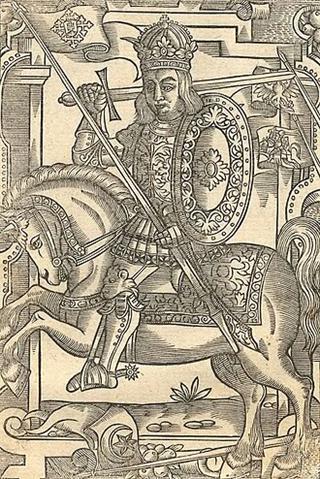
The Lithuanian tribes in the forests between the Neman and the Neris remained pagan long after their neighbours converted, organised under dukes whose number is suggested by a treaty of 1219 with Galicia–Volhynia that names twenty-one of them. Pressure from the crusading orders encouraged unification: in 1236 a force of Samogitians and other Lithuanians annihilated the Livonian Brothers of the Sword at the Battle of Saule, the event from which the state is conventionally dated here. Mindaugas, the most powerful of the dukes, eliminated or exiled his rivals and by the 1240s ruled a unified realm. Seeking peace with the Livonian Order, he accepted baptism in 1251 and was crowned king in 1253 with the authority of Pope Innocent IV, the only crowned king Lithuania ever had. His assassination in 1263 by rival dukes ended the kingdom and the first Christian experiment, and a period of instability followed. Under Traidenis and later Vytenis the state regained strength, and around 1316 Vytenis's brother Gediminas, who gave his name to the Gediminid dynasty, succeeded to a grand duchy that was ready to expand into the lands of Rus' weakened by the Mongol invasions. Gediminas made Vilnius his capital, and in letters of 1323 he invited merchants, craftsmen and clergy from the West to settle in his realm.
Socioeconomy

The grand duchy was a land of forest, lakes and rivers where most people farmed rye, kept livestock and paid dues in kind to their lords. Its ethnic and religious make-up changed dramatically with expansion: by the fifteenth century Orthodox East Slavs, ancestors of today's Belarusians and Ukrainians, formed the large majority, while ethnic Lithuanians lived mainly in the north-west. Pagan Lithuanians worshipped deities such as the thunder god Perkūnas and cremated their dead until conversion to Catholicism began in 1387 in Lithuania proper and in 1413–1417 in Samogitia. Vytautas granted privileges to the Jews in 1388 and settled Tatars and Karaites near Trakai, communities whose descendants still live in Lithuania. Furs, wax, honey, timber, potash and later grain flowed down the rivers to Riga, Danzig and Königsberg. In 1557 the Volok Reform of Sigismund II Augustus reorganised royal estates into standard plots, increasing grain output but tightening serfdom. Vilnius, granted Magdeburg rights in 1387, grew into a multi-faith city of Catholic, Orthodox and later Protestant churches and synagogues, and by the eighteenth century it was renowned as a centre of Jewish learning, the home of the scholar known as the Vilna Gaon. Noble landowners, Lithuanian and Ruthenian, came to dominate rural society, while towns remained relatively small and many were owned by magnates.
Military
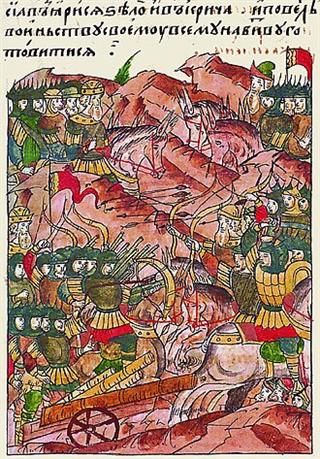
Lithuania's rise rested on mobile armies of light cavalry able to raid deep into enemy territory and on the defensive strength of forests, marshes and fortresses such as Kaunas, Trakai and Vilnius. For more than a century it fought the Teutonic Order and the Livonian Order, answering their annual raids with counter-raids into Prussia and Livonia. At the same time it expanded eastwards: Algirdas defeated the Golden Horde at the Battle of Blue Waters around 1362, opening the way to Kiev and Podolia, and marched on Moscow three times between 1368 and 1372. Vytautas suffered a heavy defeat against the Tatar commander Edigu at the Battle of the Vorskla River in 1399, but in 1410 his troops fought beside the Poles of Władysław II Jagiełło at the Battle of Grunwald, breaking the power of the Teutonic Order. From the late fifteenth century the main enemy was Muscovy, which won the Battle of Vedrosha in 1500 and took Smolensk in 1514, despite the Lithuanian victory under Konstanty Ostrogski at the Battle of Orsha the same year. After 1569 the grand duchy kept its own army under a grand hetman, and in the seventeenth century its forces fought Sweden, Russia and the Cossacks, suffering a Russian occupation of Vilnius from 1655 to 1661.
Governance & Law

The grand duke held wide powers as war leader, judge and owner of much of the land, ruling through members of his dynasty and through local princes. Conquered Ruthenian principalities such as Polotsk, Kiev and Volhynia were long left under Gediminid princes or local dynasties who kept their customs, Orthodox faith and Ruthenian law, a flexible approach summed up in a later saying that the Lithuanians neither changed the old nor introduced the new. Ruthenian, a written East Slavic language, served as the language of the chancery, whose copybooks of charters and decisions, the Lithuanian Metrica, survive as a major archive. After the Union of Horodło in 1413 the core was divided into the voivodeships of Vilnius and Trakai, and Catholic nobles received privileges and coats of arms on the Polish model. The Council of Lords became a powerful body under often absent Jagiellonian rulers, and a general diet developed in the fifteenth and sixteenth centuries. The reforms of 1564–1566 created new voivodeships and local dietines, extending political rights to the whole gentry, Orthodox as well as Catholic. Law was codified in three Statutes of Lithuania (1529, 1566 and 1588), among the most advanced legal codes of their time; the third remained in force in parts of the Russian Empire until 1840.
Global & Regional Impact
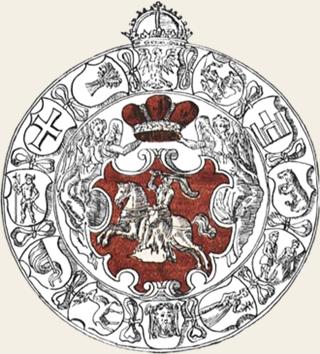
The grand duchy shaped the history of four modern nations. For Lithuanians it is the age of independence and greatness; for Belarusians, whose ancestors made up much of its population and whose language descends from that of its chancery, it is a formative state of their own; and for Ukrainians and Poles it is part of a shared past. By drawing most of the western lands of Kievan Rus' away from Mongol and later Muscovite control, it created a lasting divide between these lands and Russia, with consequences for later religious and national identities. Its dynastic union with Poland, begun at Krewo in 1385, produced the Jagiellonian dynasty, which at times ruled Poland, Lithuania, Bohemia and Hungary, and ultimately the Polish-Lithuanian Commonwealth. The Statutes of Lithuania influenced legal thought across eastern Europe. Cultural life drew on several traditions: Francysk Skaryna printed books in Vilnius in the 1520s, the first book in Lithuanian, Martynas Mažvydas's catechism, appeared at Königsberg in 1547, and the Jesuit academy founded in 1579, now Vilnius University, became a leading centre of learning. The Union of Brest of 1596, which created the Ruthenian Uniate Church, and the long coexistence of Catholics, Orthodox, Protestants, Jews, Tatars and Karaites made the grand duchy one of Europe's most religiously diverse states.
Decline & Fall
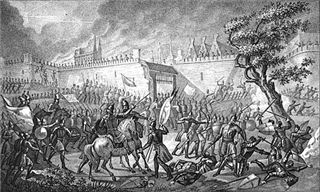
From 1386 the grand duchy shared a ruler with Poland for most of its history, though Vytautas, who ruled from 1392 to 1430, kept it practically independent and nearly obtained a royal crown. Growing danger from Muscovy, especially during the Livonian War, in which Ivan IV took Polotsk in 1563, pushed the Lithuanian nobility towards closer union. At the Union of Lublin in 1569 King Sigismund II Augustus transferred Podlasie, Volhynia, Kiev and Bracław to the Crown of Poland, and the grand duchy entered the Polish-Lithuanian Commonwealth with a common monarch, diet and foreign policy but its own army, treasury, offices and law. Polonisation of the nobility followed, and in 1696 Polish replaced Ruthenian as the language of administration. The Deluge of 1655–1660 brought Russian and Swedish invasions, devastation and heavy population losses, and in the eighteenth century the grand duchy, like the whole Commonwealth, fell under Russian influence, its magnate families such as the Radziwiłłs and Sapiehas often more powerful than the state. The Reciprocal Guarantee of Two Nations, attached to the Constitution of 3 May 1791, reaffirmed its status, but the partitions of 1772, 1793 and 1795 divided its lands, almost all of which went to the Russian Empire.
The Grand Duchy of Lithuania grew from a pagan Baltic realm into one of the largest states of medieval Europe, ruling most of present-day Belarus and Ukraine, and through its union with Poland it shaped the religious, legal and national history of eastern Europe for more than five centuries.
Test yourself
5 questions on this page, from its key events and facts.
The questions open here once the page has loaded.
References
- Rowell, S.C. (1994) Lithuania Ascending: A Pagan Empire within East-Central Europe, 1295–1345. Cambridge: Cambridge University Press.
- Kiaupa, Z., Kiaupienė, J. and Kuncevičius, A. (2000) The History of Lithuania before 1795. Vilnius: Lithuanian Institute of History.
- Frost, R. (2015) The Oxford History of Poland-Lithuania. Volume I: The Making of the Polish-Lithuanian Union, 1385–1569. Oxford: Oxford University Press.
- Davies, N. (2005) God's Playground: A History of Poland. Revised edn. Oxford: Oxford University Press.
- Snyder, T. (2003) The Reconstruction of Nations: Poland, Ukraine, Lithuania, Belarus, 1569–1999. New Haven: Yale University Press.
Connections
Open the full connections map →