
Ideology · Americas
Peronism
At a glance
- As labour secretary after the 1943 coup and president from 1946, Juan Perón built his movement on the trade unions; real wages rose by 25% between 1943 and 1948, and workers won paid holidays, sick leave and a thirteenth-month bonus.
- Its place on the spectrum is disputed: many scholars call it left-wing populism or a national, non-Marxist socialism, others a paternalistic conservatism or a Latin American fascism, a label most scholars reject.
- After Perón its currents ranged from the revolutionary Montoneros and the orthodox right to Carlos Menem’s free-market reforms of 1989–1999 and the centre-left Kirchnerism that followed.
Timeline
- 1943After the military coup Perón takes over the Labour Department and becomes the trade unions’ ally
- 1946Perón is elected president of Argentina
- 1949A new constitution removes its references to “racial differences”, giving Indigenous Argentines equal legal status
- 1955The Revolución Libertadora overthrows Perón, who goes into exile, and the Justicialist Party is banned
- 1973Perón returns from exile and is elected president again with 62% of the vote
- 1976The military overthrows President Isabel Perón, opening the National Reorganization Process
- 1989Carlos Menem is elected president and turns to free-market policies and privatisation
- 2003Néstor Kirchner wins the presidency and returns the movement to Perón’s left-wing populism
Origins
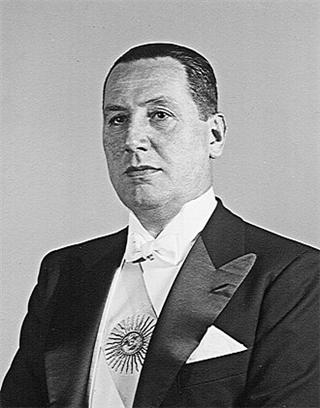
Peronism gained popularity after earlier governments failed to meet popular needs. President Hipólito Yrigoyen had neglected workers’ pleas for better wages after the First World War and failed to oppose Argentina’s oligarchy. Juan Perón, an army officer who had served as a military attaché between 1938 and 1940 and drew on his experiences in Europe, rose after the coup of 1943. In October that year he took over the Labour Department, soon enlarged into a department of labour and welfare with great power over the economy, and called himself a “labor unionist”. His settlement with Unión Ferroviaria, the largest railway union, in December 1943 offered it almost everything it had sought for fifteen years and made him “Argentina’s Number One Worker”.
When the junta came under pressure to hold elections in late 1944 and the Radicals rejected him, Perón turned to the working class. He praised the Labour victory in the British election of 1945 and embraced the name “shirtless”, descamisado, for his poor supporters. Elected president in 1946, he was made yet more popular by his wife Eva, who championed migrant workers, the poor and women until her death in 1952.
He named Christian socialism, Franklin D. Roosevelt and Harold Laski as his inspirations, and he wrote that his group chose the word justicialism because socialism was discredited in Argentina: “since our fundamental idea was social justice … we should take the derivative of justice”.
Core Ideas
Peronism is defined by its three flags: social justice, against social and economic inequality; economic independence, through national industry; and political sovereignty, free of foreign interference. Its twenty tenets declare that “for Peronism, there is only one class of person: those who work”, that the scale of values is “Argentina first; the movement second; and thirdly, the individuals”, and that Justicialism is “profoundly Christian and humanist”. In foreign policy it took a “Third Position” between the United States and the Soviet Union, a forerunner of Third Worldism.
Its economic policy sought a dominant state role in production, egalitarian distribution of income and protection of the home market. At its centre stood the Social Pact, collective agreements between labour and capital with the state as intermediary, which in practice favoured the unions. Perón’s organised community was one in which each person fulfilled a social function “in the service of all”. Its nationalism was inclusive, embracing all ethnicities, and it is generally considered populist, relying on a leader at the head of the masses.
Perón described Peronism in 1973 as “a left-wing movement”, a “Justicialist left” that was neither communist nor anarchist, and called it a national, Christian form of socialism. Left-wing Peronists read this as a call for “the socialist nation”; right-wing Peronists saw something closer to corporatism.
Spread & Variants

Peronism and anti-Peronism alike spanned the whole spectrum. Exiled after 1955, Perón moved further left, praised the Cuban Revolution and liberation theology, and in 1956 gave John William Cooke command of the movement in Argentina; Cooke presented it as “antibureaucratic, socialist, profoundly national” and in Cuba combined it with Guevarism. From this grew Revolutionary Peronism and the Montoneros. Against it the union leader Augusto Vandor proclaimed in 1965 a “Peronism without Perón”, a neo-Peronism Perón defeated in the Senate election of 1966; Orthodox Peronism, which came to include the movement’s right, ruled under Isabel Perón from 1974 to 1976.
After the defeat of 1983 the Peronist Renovation of Antonio Cafiero, Carlos Grosso and Carlos Menem joined national-popular values to liberal democracy. Menem’s Menemism broke with Peronist protectionism, Kirchnerism from 2003 returned the movement to the centre-left, and Federal or dissident Peronism grew up as its more conservative rival.
Abroad, Víctor Paz Estenssoro’s Revolutionary Nationalist Movement in Bolivia and Carlos Ibáñez del Campo in Chile identified with Peronism. It is often compared with Nasserism, which Lily Pearl Balloffet argues was inspired by Perón, and Hugo Chávez called himself “a true Peronist”.
In Power

Under Perón trade union membership rose to 42% of the workforce, a record in Latin America, real wages rose by 25% between 1943 and 1948, and the share of wages in national income reached 50%. He brought in paid holidays, sick leave and the aguinaldo, a thirteenth-month bonus. He founded a central bank, nationalised foreign trade, introduced free universal education and a five-year plan, and his governments adopted women’s suffrage and free university tuition. The Constitution of 1949 gave Indigenous Argentines equal legal status.
Political opponents accuse Perón of organised violence and dictatorial rule, and argue that he subverted freedoms by nationalising broadcasting, centralising the unions under his control and monopolising the supply of newsprint. At times he illegally imprisoned opposition politicians and journalists, among them the Radical leader Ricardo Balbín, and shut down opposition papers such as La Prensa. He also allowed many Nazi and other Axis criminals to take refuge in Argentina. His conflict with the Catholic Church, openly hostile by 1953, is considered to have directly caused the military coup of 1955.
The return of 1973 was violent. Revolutionary Peronists had waged a wave of bombings, kidnappings and assassinations since 1969; at Ezeiza the Peronist left and right clashed in a massacre, and a meeting of October 1973 is alleged to have founded the Argentine Anticommunist Alliance, an orthodox Peronist death squad. Isabel Perón’s government was overthrown in 1976.
Critiques & Debates
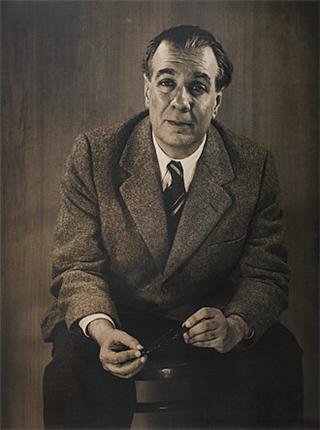
Perón’s critics charged him with contempt for opponents, whom he called traitors and foreign agents. The writer Jorge Luis Borges told the Argentine Society of Writers, after Perón became president in 1946, that “dictatorships breed oppression, dictatorships breed servility, dictatorships breed cruelty”. The United States government portrayed Peronism as a “Nazi menace” in its Blue Book of 1946, and Perón’s admiration for Benito Mussolini is well documented. Carlos Fayt called Peronism “an Argentine implementation of Italian fascism”, and Paul Hayes a fascism “distinctively Latin American”.
Most scholars reject the fascist label. Cristian Buchrucker notes that Peronism arose in a time of growth, not crisis, drew on the working class, not the middle classes, lacked territorial expansionism and never made Argentina a one-party state; Robert Crassweller and others argue it was authoritarian but not a dictatorship. Alan Knight argues that, measured against the “infamous decade” before it, Peronism was socially progressive. Seymour Martin Lipset called it, if fascism at all, “a fascism of the left”.
Marxist critics such as Samuel Baily and Ernesto Laclau saw Peronism as resting on new migrant workers without a clear consciousness of their class interests; Miguel Murmis, Juan Carlos Portantiero and Walter Little found instead that the established working class took part fully and was remarkably homogeneous.
Legacy

Peronism has been an influential movement in 20th- and 21st-century Argentine politics. Since 1946 Peronists have won 10 of the 14 presidential elections in which they have been allowed to run, and as of 2025 they had held the presidency for 39 years. Trade unions remain built into the movement. The coup of 1955 cast Perón as a “second tyranny” after Juan Manuel de Rosas; the comparison backfired, and nationalist historians drew their own line, “San Martín – Rosas – Perón”.
Its legacy reached beyond the working class. The historian Raanan Rein credits it with including minorities hitherto kept at the margins of the nation, such as Arabs and Jews, and the Mapuche leader Jeronimo Maliqueo called Indigenous Argentines “the first Peronists”; the indigenous movement stayed aligned with Peronism from 1955 to 1980. Cas Mudde writes that Perón’s populism “propelled democracy forward” by bringing the lower classes into political life.
Its influence on Latin American populism has been traced by Loris Zanatta from Hugo Chávez to the Sandinista revolution. Chavismo’s heirs claim it too: in 2024 Nicolás Maduro declared, “I am a Peronist”. In 2013 the theologian Leonardo Boff described Pope Francis as a Peronist. Within Argentina, Peronists hold generally centre-left positions in the 21st century, and anti-Peronists the centre-right.
Songs in history
Peronism, or justicialism, is the Argentine movement built on Juan Perón’s ideas from his rise in 1943, joining the trade unions to a nationalist programme of social justice, economic independence and political sovereignty. Banned after the coup of 1955 and back in power in 1973, it has ranged from revolutionary left to free-market right, and its party, now Kirchnerist and centre-left, has won most Argentine presidential elections since 1946.
Test yourself
5 questions on this page, from its key events and facts.
The questions open here once the page has loaded.
References
- Daniel James, Resistance and Integration: Peronism and the Argentine Working Class, 1946–1979 (Cambridge University Press, 1988)
- Félix Luna, Perón y Su Tiempo, Vol. I–III (Sudamericana, 1990)
- Tomás Eloy Martínez, El Sueño Argentino (1999)
- Antonio Luis Gansley-Ortiz, Perón and the Argentine Paradox: An Investigation into an Economic Mystery (Bard College, 2018)
- Teresa Meade, A History of Modern Latin America: 1800 to the Present
- Seymour Martin Lipset, Political Man: The Social Bases of Politics