
Ideology · Islamic Caliphates & Middle East
Islamism
At a glance
- Islamism is not one movement: it spans reformists who work through elections, Salafis who differ on whether to engage in politics at all, and jihadists who reject democracy, and moderates now make up the majority.
- Its early thinkers, Rashid Rida, Hassan al-Banna and Abul A’la Maududi, answered the end of the Ottoman Empire and its caliphate with the ideal of an Islamic state under sharia; Sayyid Qutb added armed jihad.
- The Iranian Revolution of 1978–1979 created the first modern Islamist state, and after it, in one account, “nobody within the Muslim world or outside it” remained unaware of militant Islam.
Timeline
- 1922Rashid Rida begins his treatise “The Caliphate or the Supreme Imamate” in Al-Manar, later a blueprint for Islamist movements
- 1924The Turkish National Assembly abolishes the Caliphate, shocking the Sunni clerical world
- 1928Hassan al-Banna founds the Muslim Brotherhood in Ismailiyah, Egypt
- 1941Abul A’la Maududi founds the Jamaat-e-Islami party
- 1966Sayyid Qutb is executed for allegedly taking part in a plot to assassinate the president
- 1979A revolution led by Ayatollah Ruhollah Khomeini overthrows the Shah and creates the Islamic Republic of Iran
- 1979An armed fundamentalist group seizes the Grand Mosque in Mecca and holds it for over a week
- 2013A coup deposes Mohamed Morsi of the Muslim Brotherhood, Egypt’s first democratically elected president
Origins
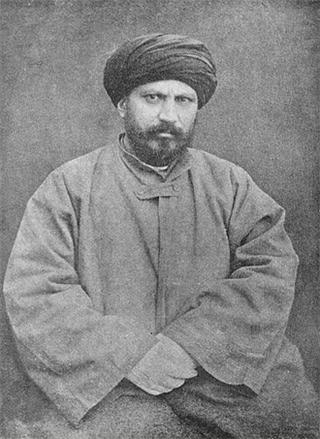
Islamism had forerunners: the jurist Ibn Taymiyyah in the 13th and 14th centuries, Ahmad Sirhindi in India, Muhammad ibn Abd al-Wahhab, the founder of Wahhabism, Shah Waliullah, and the Deobandi movement founded around 1867. At the end of the 19th century, as European colonial powers dismembered most of the Ottoman Empire, Jamal al-Din al-Afghani (1837–97), Muhammad Abduh (1849–1905) and Rashid Rida (1865–1935) preached Islamic alternatives to that decline.
The abolition of the Ottoman Sultanate in 1922 and of the Caliphate by the Turkish National Assembly in March 1924 shocked the Sunni clerical world, and many felt the need to present Islam not as a traditional religion but as a modern socio-political ideology. In 1922–1923 Rida published in Al-Manar a treatise on “The Caliphate or the Supreme Imamate”, advocating a restored caliphate guided by Islamic jurists; the doctrine became the blueprint of later Islamist movements. In British India the Khilafat movement of 1919–24 expressed Muslims’ hopes for the caliphate, and Muhammad Iqbal, who in 1930 outlined a Muslim state in north-western India, influenced Maududi.
Abul A’la Maududi’s al-Jihad fil-Islam of 1925 was his first contribution to Islamism, and he founded the Jamaat-e-Islami in 1941. In 1928 Hassan al-Banna founded the Muslim Brotherhood in Ismailiyah, Egypt, arguably the first, largest and most influential modern Islamic political and religious organisation. Olivier Roy dates the beginning of the Islamist movement “more or less in 1940”.
Core Ideas
Islamists hold that Islam is innately political and, as a political system, superior to communism, liberal democracy and capitalism. In its original formulation Islamism sought to revive Islam to its past assertiveness and glory, purify it of foreign elements and reorder “government and society in accordance with laws prescribed by Islam”, sharia. Rida described a caliph governing through consultation, shura, and applying sharia with jurists who would update law by ijtihad; Maududi held that a society could not be Islamic without sharia and an Islamic state to enforce it, founded on tawhid, the unity of God, prophethood and the caliphate. Under the motto “the Qur’an is our constitution” the Brotherhood sought revival through preaching and community services. For Islamists the primary threat of the West is cultural rather than political or economic.
Sayyid Qutb argued that since sharia was not in force, Islam did not truly exist in the Muslim world, which lay in jahiliyya, pre-Islamic ignorance, and that preaching must be joined by jihad to destroy its structures. Khomeini’s doctrine of Velayat-e Faqih gave supreme authority to the leading Islamic jurist. Islamists themselves prefer “Islamic movement” or “Islamic activism” to the word Islamism, holding their cause to be Islam renewed, and al-Banna and Maududi favoured a gradual, reformist strategy where al-Turabi favoured state power.
Spread & Variants
The Brotherhood spread across the Arab world. Israel’s defeat of Arab armies in the Six-Day War of 1967 was blamed by some on the secular nationalism of their regimes, and Ba’athism, Arab socialism and Arab nationalism lost credibility while Islamist movements inspired by Maududi and Qutb gained ground. From the mid-1970s Saudi Arabia’s oil wealth funded the spread of a strict Wahhabi or Salafi Islam, by some estimates over US$100 billion between the 1960s and 2016. During the Cold War the United States and Britain encouraged Islamic fundamentalists as a hedge against Soviet expansion and a counterweight to nationalist and socialist movements.
Islamism divided into currents. Salafis agree that sharia must be applied thoroughly but split into quietists, who ignore government, activists, who take part in politics, and Salafi jihadists, inspired by Qutb. Salafi jihadism rose in the 1980s, when an estimated 16,000 to 35,000 Muslim volunteers came to fight the Soviet Union in Afghanistan, and after the Soviet withdrawal of 1989 many carried jihad elsewhere, against the United States and the governments of Muslim-majority countries, which they saw as apostate. Shi’i Islamism, associated above all with Khomeini, drew on Sunni Islamists but was “more leftist and more clerical”; the majority Usuli Shi’ism rejects an Islamist state during the Occultation of the Hidden Imam.
In Power
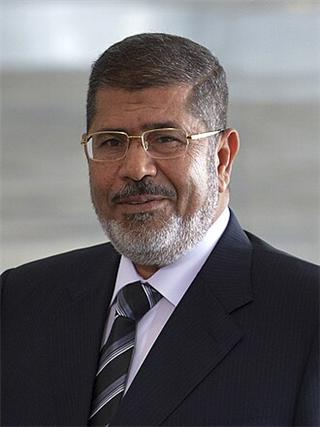
The first modern Islamist state, with the possible exception of Zia’s Pakistan, which brought in the Hudud Ordinances in 1979, was the Islamic Republic of Iran, founded in the revolution of 1978–1979 under a constitution that placed a Supreme Leader, the guardian jurist, over the government. Consolidating power, it executed more than 3,400 political dissidents between June 1981 and March 1982; it later brought almost universal access to electricity and clean water, and it created or assisted like-minded armed Shia groups, SCIRI in Iraq and Hezbollah in Lebanon. The Sudanese National Congress implemented sharia. In Egypt, Islamist parties won 75% of the seats in 2011–12, and the Brotherhood’s Mohamed Morsi became the first democratically elected president before being deposed in 2013. Turkey’s Justice and Development Party offered a “Turkish model” that came “unstuck” after a purge and violations of democratic principles.
Militant groups used violence. Elements of the Brotherhood assassinated Egypt’s premier Mahmoud Fahmy El Nokrashy in 1948; Egyptian Islamic Jihad assassinated Anwar al-Sadat in 1981; Islamists fought the Algerian Civil War of 1991–2002 and waged a terror campaign in Egypt in the 1990s. Al-Qaeda formally declared the “far enemy” under attack in 1996, and Osama bin Laden’s terror attacks climaxed in the September 11 attacks of 2001. After the Arab Spring and the Syrian civil war its Iraqi remnants grew into the Islamic State of Iraq and the Levant, which most Islamists reject as blasphemous.
Critiques & Debates
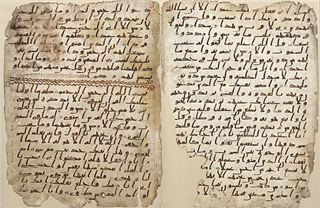
Islamism has been criticised for repression of free expression and individual rights, rigidity, hypocrisy, antisemitism, misinterpretation of the Quran and Sunnah, and innovations in Islam that Islamists themselves claim to oppose. Others see it as a modern deviation from Islam: Daniel Pipes calls it a modern ideology owing more to European utopian “isms” than to traditional Islam, while Salman Sayyid argues that it is no secular substitute for Islam but “a constellation of political projects that seek to position Islam in the centre of any social order”. Even the term is disputed. The Council on American–Islamic Relations complained that it had become shorthand for “Muslims we don’t like”, and critics say it may feed Islamophobia and stereotyping.
Debate continues over Islamism and democracy. On the “inclusion-moderation” theory, the more Islamists are included in politics, the more moderate they become; critics, both Islamists who reject democracy and anti-Islamists, hold its aims incompatible with democratic principles. Jihadist groups such as al-Qaeda, Egyptian Islamic Jihad and the Taliban reject democracy as unbelief. Hayri Abaza argues that a failure to tell Islam from Islamism leads many in the West to support illiberal Islamist regimes out of respect for Islam, to the cost of those who would separate religion from politics. Morten Valbjørn calls the division into radical and moderate, or violent and peaceful, Islamism “simplistic”.
Legacy
Robin Wright has argued that Islamist movements “arguably altered the Middle East more than any trend since the modern states gained independence”. By the early 21st century “secular”, once a label proudly worn, was shunned in Egypt and much of the Muslim world; in 2009 the journalist Sonja Zekri wrote that Islamists “determine how one dresses, what one eats” even where they never take power. Scholars explain its appeal by the charitable work of movements such as the Brotherhood, which run clinics, schools and legal aid, by economic stagnation, and by rural migrants uprooted into vast cities; Gilles Kepel notes that the Islamist uprisings in Iran and Algeria came with the first generation taught en masse to read and write.
By 2020 observers such as Olivier Roy, Mustafa Akyol and Nader Hashemi saw a decline in its vigour. Roy argues that in four decades it failed to build a “concrete and viable blueprint for society”; Hashemi writes that “the popular prestige of political Islam has been tarnished by its experience with state power”. Arab Barometer polls in six Arab countries found that by 2018–19 fewer than 20% trusted Islamist parties, and that the share of Arabs calling themselves not religious had risen from 8% in 2013 to 13%. Several parties, Ennahda in Tunisia and the Prosperous Justice Party in Indonesia among them, formally gave up their aim of implementing sharia, a turn called post-Islamism.
Islamism is a range of movements holding that Islam should shape politics and the state through sharia. Formed by Rashid Rida, Hassan al-Banna, Maududi and Qutb after the end of the Ottoman caliphate, it took power in Iran in 1979 and entered elections across the Muslim world, while militant Salafi jihadists from al-Qaeda to ISIL waged armed jihad; since about 2020 observers have seen it decline.
Test yourself
5 questions on this page, from its key events and facts.
The questions open here once the page has loaded.
References
- Rashid Rida, The Caliphate or the Supreme Imamate (Al-Manar, 1922–1923)
- Abul A’la Maududi, al-Jihad fil-Islam (1925)
- The Encyclopaedia of Islam (1938)