
Ideology · Central & East Asia
Maoism
At a glance
- Mao adapted Marxism–Leninism to agrarian China by making the peasants, not the urban workers, the revolutionary class, and by waging a people’s war to surround the cities from the countryside.
- Mao Zedong Thought became the Chinese Communist Party’s unified ideology in 1945 and its guide in power until Deng Xiaoping’s reforms of 1978; the party’s 1981 resolution laid on Mao the chief responsibility for the “grave ‘Left’ error” of the Cultural Revolution.
- Some historians hold that thirty million people died in the famines of 1958 to 1961 that followed the Great Leap Forward, and Jung Chang and Jon Halliday blame Maoist rule for as many as 70 million deaths in peacetime.
Timeline
- 1919The May Fourth Movement begins with 3,000 students in Beijing protesting the Versailles Treaty’s concessions to Japan
- 1936Mao’s pamphlet Strategic Problems of China’s Revolutionary War marks his turn away from the Soviet model
- 1945The Communist Party’s 7th national congress makes Mao Zedong Thought its unified ideology and writes it into the party constitution
- 1958The famines that follow the Great Leap Forward begin; by some historians’ count thirty million die by 1961
- 1967The Naxalbari uprising in India begins the Naxalite movement, which spreads Quotations from Chairman Mao Zedong
- 1974China announces its Three Worlds Theory at the United Nations
- 1978Deng Xiaoping begins market reforms and calls the true spirit of Mao Zedong Thought “seeking truth from facts”
- 1981The party’s resolution on its history holds Mao chiefly responsible for the Cultural Revolution while upholding his Thought
Origins
Maoism grew out of a Chinese intellectual tradition that by the early 20th century was defined by iconoclasm and nationalism. A small but significant part of the old elite of landlords and bureaucrats lost faith in Confucianism, and the fall of the Qing dynasty in 1911 marked the final failure of the Confucian moral order. During the New Culture Movement of 1915–1919 Chen Duxiu’s periodical New Youth called for the “total destruction of the traditions and values of the past”; it profoundly influenced the young Mao Zedong, whose first published work appeared in its pages.
Radical anti-imperialism turned into nationalist fervour when the Treaty of Versailles of 1919 transferred former German lands in Shandong to Japan. The May Fourth Movement began with 3,000 students protesting in Beijing, and the Russian Revolution drew the intelligentsia toward Marxism: to become a Marxist was one way to reject both the traditions of China’s past and Western domination of its present.
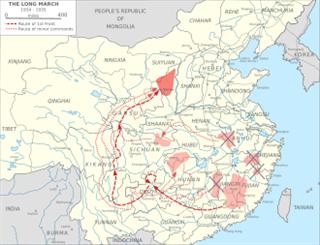
After the Long March the party was based in the Yan’an Soviet, where from November 1935 Mao produced most of the works later canonised as the Thought of Mao Zedong and won ideological independence from Moscow. His pamphlet Strategic Problems of China’s Revolutionary War (December 1936) held that China’s circumstances demanded a unique application of Marxist theory, the Sinicization of Marxism. In 1945 the party’s 7th congress made Mao Zedong Thought its unified ideology.
Core Ideas
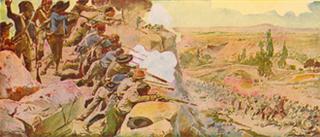
Maoism departs from European Marxism by putting the countryside before the city. For Marx the proletariat was the urban working class; for Mao the revolutionary class was the millions of peasants, poor and, in his words, “a clean sheet of paper” on which the newest and most beautiful words could be written. Holding that “political power grows out of the barrel of a gun”, Mao called for a people’s war, in which rural masses waging guerrilla warfare would surround the cities from the countryside. Under New Democracy, a national, popular, anti-feudal and anti-imperialist revolution run by the communists would open the long road to socialism.
The mass line, “from the masses, to the masses”, asked the party to gather the ideas of the masses, concentrate them in the light of Marxism and return them as a political line, again and again. In On Contradiction and On Practice Mao held that contradiction is present in all things and drives their development, and that each process has a principal contradiction to be tackled first. His view of continuous revolution, first fully theorised in 1956, held that class struggle continues and even intensifies under socialism, so bourgeois ideology and traditional values must be fought constantly.
The Three Worlds Theory, announced at the United Nations in 1974, cast the United States and the Soviet Union as an imperialist first world exploiting the third. Many of Maoism’s pillars, such as the distrust of intellectuals, are typical populist ideas.
Spread & Variants

After the Sino-Soviet split of the 1960s each party claimed to be Stalin’s sole heir, and from 1962 China’s challenge to Soviet leadership divided communist parties around the world. The Albanian Party of Labour and the Communist Parties of Burma, Thailand and Indonesia sided with Beijing, and the Communist Party of New Zealand was the only classic Western communist party to do so. New parties, often named Communist Party (Marxist–Leninist) or Revolutionary Communist Party, grew from the student radicalism of the 1960s and 1970s.
In India Mao’s ideas found followers in the Telangana uprising of 1946–1951, and after the Naxalbari uprising of 1967 Charu Majumdar had Quotations from Chairman Mao Zedong read aloud to illiterate peasants. The Communist Party of the Philippines was founded on Mao’s birthday in 1968, and Peru’s Shining Path under Abimael Guzmán waged a prolonged people’s war. In France students of Louis Althusser formed a Maoist circle in 1964, and the Proletarian Left drew in Jean-Paul Sartre and Michel Foucault; in the United States Maoists became the largest and most dynamic branch of socialism after 1968, and the Black Panther Party quoted Mao liberally. Julius Nyerere’s ujamaa in Tanzania drew on Maoist themes of self-reliance and the peasantry.
After Mao’s death in 1976 the movement split into three camps; today’s international Maoist movement descends from those who denounced Deng’s leadership as traitors.
In Power
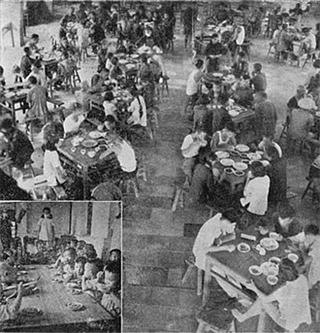
From the 1950s until the late 1970s Maoism was the political and military ideology of the Chinese Communist Party, and its mass campaigns, among them the Anti-Rightist Campaign of 1957–1958, the Great Leap Forward and the Great Proletarian Cultural Revolution, put Mao’s theory of cultural revolution into practice. Some historians argue that the famines caused by Mao’s land reforms in the Great Leap Forward killed thirty million people between 1958 and 1961; by the end of 1961 malnutrition had nearly halved the birth rate. Party purges and “reeducation” led to the imprisonment or execution of those deemed contrary to Maoist ideals, and Jung Chang and Jon Halliday hold Maoist rule responsible for as many as 70 million deaths in peacetime.
In the Cultural Revolution Mao claimed that revisionists had infiltrated the government to restore traditionalism and capitalism, and urged his followers to denounce and expel them, assuring them that the party would not interfere. For roughly ten years those seen as revisionists, chiefly landlords, rich peasants and so-called bourgeois academics, were publicly denounced, and many were beaten, tortured or killed. Lin Biao’s cult of Mao’s charisma, “the atom bomb of the spirit”, became the ruling interpretation; from 1967 Mao and the army began to restrain the mass organisations.
Abroad, the Comoros under Ali Soilih was a Maoist state. In India the conflict with Maoist insurgents had cost 13,834 lives by 2018, and the Shining Path’s insurgency in Peru caused tens of thousands of deaths.
Critiques & Debates
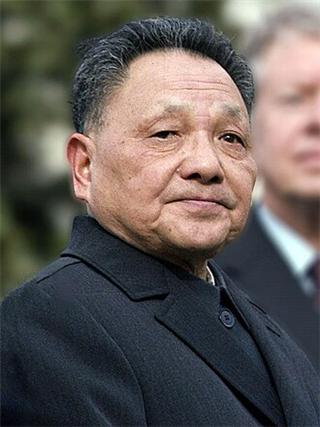
In China, Deng Xiaoping held that Maoism showed the dangers of “ultra-leftism” and the harm done by the mass movements of its era, but he separated the revolutionary Mao from the ruler, judging him “70% right, 30% wrong”. The party’s 1981 resolution laid the chief responsibility for the “grave ‘Left’ error” of the Cultural Revolution on Mao, who had “confused right and wrong and the people with the enemy”. Chinese scholars generally agree that this reading preserves the legitimacy of Communist rule while criticising Mao’s governance; some scholars outside China see it as a justification for restoring the essentials of capitalism.
From within Marxism–Leninism, Enver Hoxha of Albania denounced Deng as a revisionist in 1978 and attacked Maoism itself, arguing that New Democracy halts class struggle, that the Three Worlds Theory is “counter-revolutionary”, and questioning Mao’s guerrilla methods. Graham Young notes that Maoist judgements of Stalin range from extremely positive to ambivalent, Martin Cohen sees in Maoism an attempt to combine Confucianism and socialism, and Slavoj Žižek places Mao’s main contribution in his materialist dialectics. Some Western scholars saw Maoism as a battle to subdue nature and a catastrophe for the environment.
The death tolls are debated too: Christian Sorace and his co-authors observe that discussions of deaths under Maoism assign responsibility in a way not usual for other ideologies, such as liberalism. Maoists, for their part, contend that the Khmer Rouge strongly deviated from Marxist doctrine.
Legacy
After Mao’s death in 1976, Deng Xiaoping began market reforms in 1978 and reduced the role of ideology in policy, separating Mao from Maoism and making clear that Mao was fallible. Matthew Galway writes that the party did not de-Maoize but reassessed Mao’s legacy, stressing his positive contributions while acknowledging his mistakes. The 1981 resolution credited Mao Zedong Thought with national independence, the transformation of China’s social classes, economic self-sufficiency, the expansion of education and health care and China’s leading role in the Third World, and it remains one of the Four Cardinal Principles of the People’s Republic. Xi Jinping, in a speech of 2013, summed it up as seeking truth from facts, the mass line, and national independence and autonomy.
Contemporary Maoists in China criticise the social inequalities created under the party, and some radicals have backed protests and strikes such as the Jasic incident; Bo Xilai’s mass mobilisation with red songs in Chongqing was called neo-Maoist. In the 2020s the growing wealth gap and the 996 working hours have revived Mao’s thought among China’s generation Z, and the government has censored some Maoist posts.
Abroad, the Communist Party of India (Maoist), designated a terrorist organisation in India, the New People’s Army in the Philippines and the TKP/ML in Turkey still wage armed struggles, while the Workers’ Party of Belgium broke formally with its Maoist past in 2008.
Maoism, officially Mao Zedong Thought, is Mao Zedong’s adaptation of Marxism–Leninism to agrarian China, built on peasant revolution, people’s war and the mass line. It guided the People’s Republic from the 1950s to the late 1970s, through the Great Leap Forward, whose famines killed thirty million by some historians’ count, and the Cultural Revolution, and it still inspires insurgencies abroad.
Test yourself
5 questions on this page, from its key events and facts.
The questions open here once the page has loaded.
References
- Julia Lovell, Maoism: A Global History (2019)
- Stuart Schram, The Political Thought of Mao Tse-Tung
- Maurice Meisner, Marxism, Maoism, and Utopianism: Eight Essays
- Nick Knight, Rethinking Mao: Explorations in Mao Zedong’s Thought
- Alexander C. Cook, ed., Mao’s Little Red Book: A Global History (Cambridge University Press, 2014)
- Jeremy Brown and Matthew D. Johnson, eds., Maoism at the Grassroots: Everyday Life in China’s Era of High Socialism (Harvard University Press, 2015)