
Movement · Europe
Impressionism
At a glance
- Impressionist painters worked in the open air to catch the passing effects of sunlight, laying short, broken strokes of pure colour side by side instead of the smooth, blended finish the Académie demanded.
- Shut out by the Salon jury, they founded their own society in December 1873 and held eight independent exhibitions from 1874 to 1886; a critic’s mocking review of the first gave them their name.
- First met with harsh opposition, the style gradually won public acceptance and opened the way to Post-Impressionism, Fauvism and Cubism, with echoes in music, literature, sculpture and film.
Timeline
- 1863The Salon jury rejects Édouard Manet’s Le déjeuner sur l’herbe, and Napoleon III allows a Salon des Refusés, which draws more visitors than the Salon
- 1870Frédéric Bazille dies in the Franco-Prussian War
- 1873Monet, Renoir, Pissarro, Sisley, Cézanne, Morisot, Degas and others found a society to exhibit their work independently
- 1874Thirty artists show at the first exhibition in Nadar’s studio, and Louis Leroy’s review gives the group its name
- 1881Edgar Degas’s Little Dancer of Fourteen Years, his only sculpture shown in his lifetime, appears at the sixth exhibition
- 1882The seventh exhibition, the most selective, shows only nine “true” Impressionists
- 1886The group divides over the invitations to Paul Signac and Georges Seurat at the eighth and last exhibition
Background
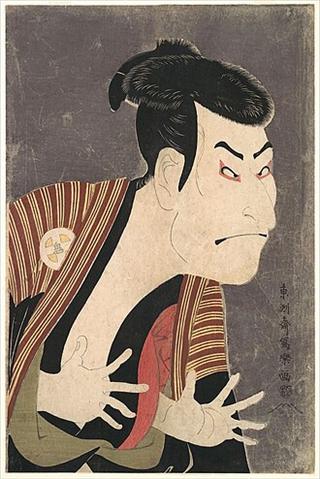
In the middle of the 19th century, a time of rapid industrialisation and unsettling social change in France, the Académie des Beaux-Arts dominated French art. It valued historical subjects, religious themes and portraits over landscape and still life, and preferred carefully finished pictures of precise, blended brush strokes that hid the artist’s hand, their colour often toned down further by a thick golden varnish. Its annual juried show, the Salon de Paris, brought prizes, commissions and prestige, and its juries favoured painters such as Jean-Léon Gérôme and Alexandre Cabanel. By the 1850s the Realist Gustave Courbet had drawn attention and censure by painting contemporary life without idealisation.
Others prepared the way: the Romantic colourist Eugène Delacroix, J. M. W. Turner, the painters of the Barbizon school such as Théodore Rousseau, and Johan Barthold Jongkind, Jean-Baptiste-Camille Corot and Eugène Boudin, who painted from nature in a direct, spontaneous style and befriended the younger artists. Painting in the open air, pioneered by artists such as John Constable, had become increasingly popular by mid-century.
New technology helped. Premixed paints in tin tubes, introduced in the mid-century, let artists work more spontaneously, and vivid synthetic pigments such as cobalt blue, viridian and cadmium yellow had become available. Photography, which seemed to devalue the painter’s skill in reproducing reality, and Japanese ukiyo-e prints, with their unusual angles, were further influences.
Aims
The Impressionists set out to capture a moment as it is experienced. They painted realistic scenes of everyday life in natural settings, often outdoors, en plein air, to catch the momentary and transient effects of sunlight, and they portrayed overall visual effects rather than details. They built their pictures from freely brushed colour that took precedence over line and contour, using short “broken” strokes of mixed and pure colour, not blended or shaded as was customary, to achieve an effect of intense colour vibration. In 1876 the poet Stéphane Mallarmé wrote that the subject of such a painting “palpitates with movement, light, and life”.
Their methods were not new in themselves, but they were the first to use them all together and so consistently: colours placed side by side with little mixing, greys and darks mixed from complementary colours without black, wet paint laid into wet, white or light grounds, and shadows painted with the blue of the sky.
They also chose modern subjects: middle-class leisure, train stations, cafés, brothels, the theatre and dance, the new avenues of Paris, and even the factories spreading through the countryside, which earlier landscape painters had avoided. Their compositions often resemble a snapshot, a part of a larger reality caught as if by chance. Rather than compete with photography to imitate reality, they sought to express their own perceptions of nature, and were the first to offer a consciously subjective alternative to the photograph.
Course of Events
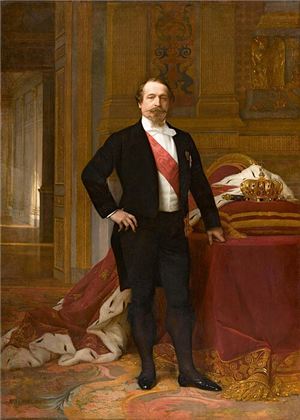
In the early 1860s Claude Monet, Pierre-Auguste Renoir, Alfred Sisley and Frédéric Bazille met while studying under the academic painter Charles Gleyre and began to paint landscapes together in the open air. At the Café Guerbois in Paris their discussions were often led by Édouard Manet, and they were joined by Camille Pissarro, Paul Cézanne and Armand Guillaumin. The Salon jury routinely rejected about half their submissions. In 1863 it rejected Manet’s Le déjeuner sur l’herbe, and Emperor Napoleon III let the public judge the rejected works at a Salon des Refusés, which drew more visitors than the regular Salon.
In December 1873 Monet, Renoir, Pissarro, Sisley, Cézanne, Berthe Morisot, Edgar Degas and others founded the Société anonyme des artistes peintres, sculpteurs, graveurs to exhibit independently, its members forswearing the Salon. Thirty artists showed at their first exhibition, in April 1874 in the studio of the photographer Nadar. The critic Louis Leroy derided it in Le Charivari as “The Exhibition of the Impressionists”, and the name was soon taken up by the public and the artists.
They exhibited together eight times between 1874 and 1886. Bazille died in the Franco-Prussian War in 1870, and Cézanne, later Renoir, Sisley and Monet, stayed away to submit to the Salon. Degas brought in Mary Cassatt in 1879 along with realists whom Monet in 1880 called “first-come daubers”. The seventh exhibition, in 1882, showed only nine “true” Impressionists, and the group divided again over Paul Signac and Georges Seurat at the eighth, in 1886.
People
The Impressionists were a diverse group in style and temperament, united chiefly by their spirit of independence and rebellion. Claude Monet, Alfred Sisley, Berthe Morisot and Camille Pissarro may be considered the “purest” of them, in their constant pursuit of spontaneity, sunlight and colour; Monet was the most prolific and stereotypical, and Pissarro the only artist to show at all eight exhibitions. Edgar Degas, who despised the term, believed in the primacy of drawing over colour and belittled painting outdoors. Pierre-Auguste Renoir turned away from Impressionism for a time in the 1880s, and Paul Cézanne developed a highly individual vision and is more often called a Post-Impressionist. Gustave Caillebotte, younger than the others, joined them in the mid-1870s.
Édouard Manet, regarded by the Impressionists as their leader, never took part in their exhibitions and never gave up black, arguing that “the Salon is the real field of battle”. The dealer Paul Durand-Ruel kept their works before the public and arranged shows for them in London and New York.
Women took part under heavy limits: they were excluded from the cafés where the men formed their ideas, and critics praised their talent only within a narrow notion of femininity. Mary Cassatt, Eva Gonzalès, Marie Bracquemond and Berthe Morisot were known as the “Women Impressionists”; Morisot showed at seven of the exhibitions, Cassatt at four and Bracquemond at three, while Gonzalès, a follower of Manet, did not exhibit with the group.
Outcomes
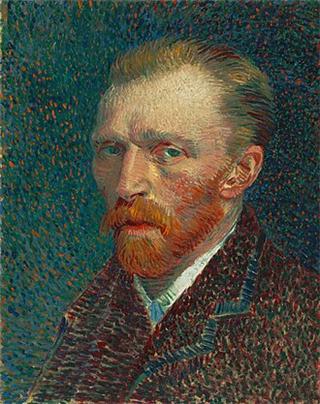
The Impressionists faced harsh opposition from the conventional art community in France, and Monet and Cézanne received the harshest attacks. Leroy called Monet’s painting at most a sketch, hardly a finished work. Yet the public, at first hostile, gradually came to believe that they had captured a fresh and original vision, even while critics and the art establishment disapproved.
The exhibitions brought the individual artists few financial rewards, but their art slowly won acceptance and support. Renoir had a great success at the Salon in 1879, Monet became financially secure during the early 1880s and Pissarro by the early 1890s, though Sisley died in poverty in 1899. By the early 1880s Impressionist methods, in a diluted form, had become commonplace in Salon art: fashionable painters such as Jean Béraud and Henri Gervex found critical and financial success by brightening their palettes while keeping the smooth finish the Salon expected.
The group itself did not hold. Disputes over membership, over Guillaumin and the realists Degas invited, the defections of those who returned to the Salon and the quarrel over Signac and Seurat divided it. During the 1880s younger painters, Vincent van Gogh, Paul Gauguin, Georges Seurat and Henri de Toulouse-Lautrec, reacted against the Impressionists’ concern with reproducing the optical sensations of light and colour and turned to symbolic content and the expression of emotion. Pissarro briefly painted in a pointillist manner, and even Monet abandoned strict open-air painting.
Legacy
By recreating the sensation in the eye rather than delineating the details of a subject, Impressionism became a precursor of Post-Impressionism, Fauvism and Cubism. Its influence spread far beyond France: to the American Impressionists such as Childe Hassam, to the Heidelberg School in Australia, to Max Liebermann and Lovis Corinth in Germany, Joaquín Sorolla in Spain, the Skagen Painters, Nazmi Ziya Güran, who brought it to Turkey, and Fujishima Takeji in Japan. In 1904 Wynford Dewhurst’s Impressionist Painting: its genesis and development did much to popularise it in Great Britain.
The name passed to other arts. Degas’s Little Dancer of Fourteen Years, shown in 1881, struck some critics as overthrowing sculptural tradition as Impressionism had overthrown painting, and Auguste Rodin and Medardo Rosso have been called Impressionist sculptors. Musical Impressionism, characterised by suggestion and atmosphere, arose in France in the late 19th century; Claude Debussy and Maurice Ravel are generally considered its greatest composers, though Debussy called the term the invention of critics. The word has also been used for literature, for Pictorialist photography and for French films of 1919 to 1929.
How Impressionism is remembered has changed. In the summer of 1945 René Huyghe and Georges Salles exhibited its core painters alongside earlier French masters as a line of French art. Its women painters were largely left out of the textbooks until Tamar Garb’s Women Impressionists of 1986.
Impressionism was a 19th-century art movement of Paris-based painters, among them Monet, Renoir, Pissarro, Sisley, Morisot and Degas, who painted light, movement and modern life in broken strokes of colour. Rejected by the Salon, they held eight independent exhibitions from 1874 to 1886, won gradual acceptance and prepared the way for Post-Impressionism and modern art.
Test yourself
4 questions on this page, from its key events and facts.
The questions open here once the page has loaded.
References
- Tamar Garb, Women Impressionists (1986)
- Jean Leymarie, Impressionism (1955)
- Wynford Dewhurst, Impressionist Painting: Its Genesis and Development (1904)
- Monet’s Years at Giverny: Beyond Impressionism (Metropolitan Museum of Art, 1978)
- Degas: The Artist’s Mind (Metropolitan Museum of Art, 1976)