
Movement · Europe
Modernism
At a glance
- Modernism grew out of Romanticism’s revolt against industrial and bourgeois society and was shaped by the ideas of Darwin, Marx, Nietzsche, Freud and Bergson.
- In the first decade of the 20th century Cubism, Expressionism, abstract painting and Schoenberg’s atonal music broke with the public’s idea of art, and after the First World War the modernist view of reality became more generally accepted.
- Condemned as “degenerate” by the Nazis and ousted by socialist realism in the Soviet Union, it found a new centre in New York after 1945; when it ended, if it did, is still contested.
Timeline
- 1857Baudelaire’s Les Fleurs du mal and Flaubert’s Madame Bovary are published
- 1863The Salon des Refusés in Paris shows the paintings rejected by the official Salon, and Manet’s work attracts attention
- 1907Picasso paints Les Demoiselles d’Avignon, and a retrospective of Cézanne’s late works opens at the Salon d’Automne
- 1911Cubism is shown to the public at the Salon des Indépendants, and Kandinsky paints what he later called the first abstract painting
- 1913Stravinsky’s The Rite of Spring causes an uproar at its first performance in Paris
- 1922James Joyce publishes Ulysses
- 1937The Nazis mount the Degenerate Art exhibition in Munich, and Picasso paints Guernica
- 1940sAmerican Abstract Expressionism triumphs in New York
Background

Modernism developed out of Romanticism’s revolt against the effects of the Industrial Revolution and against bourgeois values; for the literary scholar Gerald Graff its ground motive was criticism of the 19th-century bourgeois social order. Technology transformed daily life and even the experience of time, through railways, the electric telegraph of 1837 and the “standard time” adopted by British railway companies from 1845, while iron-and-glass buildings such as the Crystal Palace of 1851 changed the city.
The belief that progress was always good came under attack. Schopenhauer questioned earlier optimism, and Søren Kierkegaard and Friedrich Nietzsche rejected the idea that reality could be understood purely objectively. Charles Darwin’s On the Origin of Species (1859) undermined religious certainty and the idea of human uniqueness, and Karl Marx’s Das Kapital (1867) argued that capitalism was full of contradictions. Sigmund Freud placed the unconscious at the centre of mental life, and Henri Bergson’s idea of subjective time deeply influenced later novelists.
When modernism began is debated. Clement Greenberg placed it in mid-19th-century France, with Charles Baudelaire in literature and Manet in painting; William Everdell dated it to the 1870s, with Richard Dedekind’s mathematics and Ludwig Boltzmann’s statistical thermodynamics, and in painting to Georges Seurat’s Divisionism of 1885–1886. From the 1860s Impressionism and symbolism developed in France.
Aims
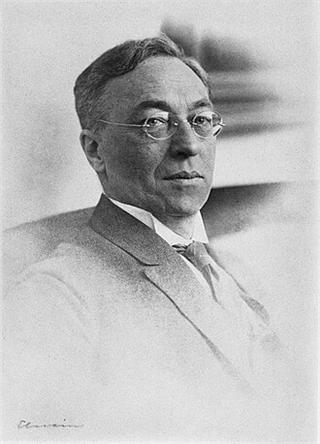
Modernism was marked by a self-conscious rejection of tradition and a search for new means of expression. Its makers felt a “growing alienation” from prevailing “morality, optimism, and convention” and wished to change how “human beings in a society interact and live together”. It took a critical stance towards Enlightenment rationalism and rejected the idea of absolute originality upheld by realism and Romanticism, turning instead to collage, reprise, rewriting, revision and parody. It was reflexive about convention, making visible how works of art are made and from what.
In literature it is often summed up in W. B. Yeats’s line “Things fall apart; the centre cannot hold”: modernists searched for a metaphysical centre and experienced its collapse. Painters rejected traditional perspective and took colour and shape, not the depiction of nature, as the essence of art; Wassily Kandinsky, Piet Mondrian and Kazimir Malevich sought to redefine art as the arrangement of pure colour. Architects such as Le Corbusier, for whom buildings were “machines for living in”, believed new technology made old styles obsolete and rejected decoration for pure geometric form.
Its politics varied. Some modernists saw themselves as part of a revolutionary culture, others as apolitical, and T. S. Eliot rejected mass culture from a conservative position. Clement Greenberg saw modernism as a reaction against “kitsch”, the products of consumer culture, and the historian Roger Griffin defined it by its ethos of “the temporality of the new”.
Course of Events
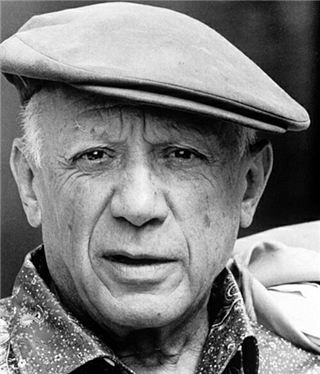
The first wave of modernist works came in the opening decade of the 20th century. Fauvism and Cubism arose in the studios of Henri Matisse, Pablo Picasso and Georges Braque between 1900 and 1910; in 1907 Picasso painted Les Demoiselles d’Avignon and Oskar Kokoschka wrote the first Expressionist play, and Arnold Schoenberg’s Second String Quartet of 1908 was his first composition without a tonal centre. Die Brücke was formed in Dresden in 1905 and Der Blaue Reiter in Munich in 1911, the year Kandinsky painted what he called the first abstract painting and Cubism caused a scandal at the Salon des Indépendants. In 1909 Le Figaro published F. T. Marinetti’s first Futurist manifesto, and in 1913 Stravinsky’s The Rite of Spring caused an uproar in Paris.
The First World War and the Russian Revolution of 1917 cast doubt on the institutions of the past, and modernism’s view of reality, a minority taste before the war, became more generally accepted in the 1920s. Surrealism arose early in the decade, James Joyce published Ulysses in 1922, and by 1930 modernism had won a place in the establishment.
The 1930s brought repression. From 1932 socialist realism ousted modernism in the Soviet Union, and in 1937 the Nazis, who called virtually all modern art “degenerate”, mounted the Degenerate Art exhibition in Munich. Schoenberg, Béla Bartók and Stravinsky left for the United States, and in the 1940s American Abstract Expressionism triumphed in New York.
People

Modernism had no single leader but many makers in every art. In painting Pablo Picasso, Henri Matisse, Georges Braque, Wassily Kandinsky, Piet Mondrian and Kazimir Malevich led the break with perspective and representation, and Marcel Duchamp’s readymades anticipated conceptual art. In music Arnold Schoenberg devised a way of organising sound by twelve-note rows, Igor Stravinsky shocked Paris with The Rite of Spring before turning to a neoclassical style, and Alban Berg and Béla Bartók followed their own paths.
Writers took up the stream of consciousness: Arthur Schnitzler may have been the first to make full use of it, in 1900, Dorothy Richardson was the first English writer to use it, and James Joyce and Virginia Woolf became its best-known novelists. In poetry T. S. Eliot, Ezra Pound, Wallace Stevens, Marianne Moore and William Carlos Williams wrote in English, and Federico García Lorca, Anna Akhmatova, Constantine Cavafy and Paul Valéry in other languages. Bertolt Brecht, Eugene O’Neill and later Samuel Beckett shaped the theatre, and Frank Lloyd Wright, Le Corbusier and Ludwig Mies van der Rohe its architecture.
Beyond Europe, Diego Rivera, David Siqueiros, José Clemente Orozco and Frida Kahlo made Mexico a centre, Kenzō Tange joined Japanese tradition with modernism, and in anglophone Africa writers such as Christopher Okigbo and Wole Soyinka used modernist ideas of aesthetic autonomy to declare their freedom from colonial bondage.
Outcomes
Modernism transformed the arts. By 1930 it had won a place in the political and artistic establishment, and its ideas reached mainstream culture: The New Yorker published young writers influenced by it, and modern design appeared in advertising and logos, as early as Edward Johnston’s London Underground logo of 1916. Visual art made the most complete break with its past, and many aspects of modernist design persist in contemporary architecture, though their earlier dogmatism has given way to a more playful use of decoration and historical quotation.
It also met hostility. Its experiments often startled and alienated audiences, with novels that rejected intelligible plots, poetry that defied clear interpretation and music of extreme dissonance. The Nazis deemed it narcissistic, nonsensical, “Jewish” and “Negro”; so-called degenerate artists were dismissed from teaching and forbidden to exhibit, to sell or even to make art, and many left for the Americas. Accusations of “formalism” could end a career, or worse, and many modernists of the post-war generation came to see themselves as a bulwark against totalitarianism. Some critics argue that modernism sustained an elite culture that excluded most of the population.
Its success changed it. As consumer and high modernist culture merged, a movement founded on the rejection of tradition became a tradition of its own, so institutionalised that it was “post avant-garde”, having lost its power as a revolutionary movement.
Legacy
When modernism ended, if it did, is contested. The Oxford Encyclopedia of British Literature sees it over in British and American literature by about 1939, and Clement Greenberg in the 1930s, except in the visual and performing arts; in music, Paul Griffiths notes, a new generation of composers revived it after the Second World War. The term late modernism is applied to work after 1930 or, by one critic, after 1945, when the Holocaust and the atom bomb reshaped its ideology. Samuel Beckett, whose plays began the Theatre of the Absurd in the 1950s, has been called a “later modernist”.
After 1945 the centre of the art world moved from Paris to New York, where Jackson Pollock and the other Abstract Expressionists redefined how art is made, followed by colour field and hard-edge painting, minimalism, pop art and performance. Art historians such as Linda Nochlin and Griselda Pollock have shown that pioneering women artists were ignored in official accounts of this history.
Postmodernism rejects many of modernism’s principles, and by the early 1980s it had established itself in art and architecture; yet for Andreas Huyssen “one critic’s postmodernism is another critic’s modernism”, and for Robert Hughes postmodernism is an extension of modernism. Most major cities now have museums of modern art, such as the Museum of Modern Art in New York, the Tate Modern in London and the Pompidou Center in Paris.
Modernism was a broad movement in Western art and thought, emerging in the late 19th century and at its height from the 1900s to the 1930s, that rejected tradition and realism for experiment, abstraction and subjective experience. It ran from Cubism and atonal music to the stream-of-consciousness novel, was condemned by the Nazis and pushed aside in the Soviet Union, and after 1945 shaded into late modernism and postmodernism.
Test yourself
5 questions on this page, from its key events and facts.
The questions open here once the page has loaded.
References
- Everdell, William R., The First Moderns: Profiles in the Origins of Twentieth Century Thought (University of Chicago Press, 1997)
- Berman, Art, Preface to Modernism (University of Illinois Press, 1994)
- Orton, Fred, and Griselda Pollock, Avant-Gardes and Partisans Reviewed (Manchester University, 1996)
- Steiner, George, After Babel, 3rd revised edition (1998)
- Barth, John, The Literature of Replenishment (1979; republished in The Friday Book, 1984)