
Movement · Europe
Environmental movement
At a glance
- In Europe and North America the movement grew from campaigns against the smoke of the Industrial Revolution and from the defence of countryside, forests and wildlife in the 19th century.
- From the 1960s it campaigned against nuclear weapons and nuclear power, then acid rain, ozone depletion and deforestation, and most recently climate change.
- It is an international movement of many organisations and approaches, not always united in its goals, and has faced critics who see it as radical and misguided.
Timeline
- 1842The Madras Board of Revenue begins state forest conservation under the botanist Alexander Gibson
- 1865The Commons Preservation Society is founded in Britain to defend the countryside against industrialisation
- 1892John Muir founds the Sierra Club in the United States
- 1956Britain passes the Clean Air Act after the Great Smog of 1952 in London
- 1962Rachel Carson publishes Silent Spring
- 1972The international environmental conference in Stockholm is held
- 1974The Chipko movement begins in India
- 1992The United Nations Conference on Environment and Development meets in Rio de Janeiro
Background
The origins of the environmental movement in Europe and North America lay in smoke abatement. The great factories of the Industrial Revolution and the immense growth in coal burning brought unprecedented air pollution to industrial centres, and after 1900 industrial chemical discharges added to the load of untreated human waste. In Britain the mitigation of air pollution was the main environmental cause for most of the century from 1850 to 1950.
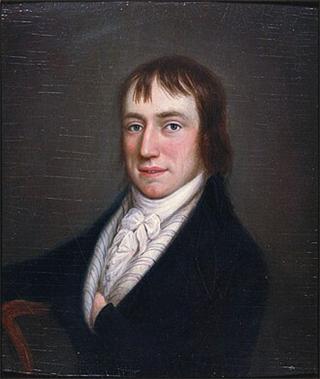
Ideas came first from the Romantic movement. Early in the 19th century the poet William Wordsworth called the Lake District “a sort of national property in which every man has a right and interest who has an eye to perceive and a heart to enjoy”. Later a “Back-to-Nature” movement, advocated by John Ruskin, William Morris, George Bernard Shaw and Edward Carpenter, opposed consumerism and pollution and reacted against the cramped, polluted industrial towns by idealising rural life; Ruskin imagined a “small piece of English ground” with “no steam engines upon it”.
In the forests of British India conservation took practical form. James Ranald Martin’s reports on the damage done by deforestation and desiccation argued for forest departments, and the conservation ethic that grew up held three principles: that human activity damaged the environment, that there was a civic duty to maintain it for future generations, and that scientific methods should be used to fulfil that duty.
Aims
The movement aims to protect the natural world from harmful environmental practices in order to create sustainable living. It sees humanity as a participant in ecosystems, not their enemy, and centres on ecology, health and human rights. Its scope is broad: conservation of nature through reforestation, recycling and pollution control; environmental health, dating at least to the Progressive Era, with its urban standards of clean water and sewage; and environmental justice, which addresses the harm done to poor or marginalised communities by hazardous waste, resource extraction and other land uses from which they do not benefit.
Its branches have not always agreed. The early movement felt a deep tension between conservation and broader environmental protection. The anti-nuclear movement opposed first nuclear weapons and then mainly nuclear power, while a pro-nuclear movement, including former opponents, holds that climate change is a far worse threat. Some environmentalists call genetically modified plants and animals inherently bad because they are unnatural; others point to crops that need less water and fewer pesticides. The climate movement can be regarded as a branch of the wider movement.
Its philosophy owes much to two Americans. Henry David Thoreau’s Walden (1854) argued that people should become intimately close with nature, and John Muir came to believe in nature’s inherent right.
Course of Events

In 1842 the Madras Board of Revenue began conservation under the botanist Alexander Gibson, the first state management of forests in the world, and in 1855 Lord Dalhousie’s government introduced the first permanent, large-scale forest conservation programme. In Britain the Commons Preservation Society, founded in 1865, defended the countryside against industrialisation; its campaign against slate railways through the valleys of Newlands and Ennerdale led to the Lake District Defence Society, and in 1894 the National Trust was inaugurated. The Plumage League of 1889, later the Royal Society for the Protection of Birds, campaigned against the use of birds’ skins and feathers in clothing, and the Coal Smoke Abatement Society followed in 1898. In the United States Muir lobbied for Yosemite National Park and founded the Sierra Club in 1892.
London’s Great Smog of 1952, which may have caused upward of 6,000 deaths, led to the Clean Air Act 1956. The roots of the contemporary movement are traced to Rachel Carson’s Silent Spring and Murray Bookchin’s Our Synthetic Environment, both of 1962, and Paul R. Ehrlich’s The Population Bomb (1968). In September 1979, after the Three Mile Island accident, 200,000 people demonstrated against nuclear power in New York City. International conferences followed in Stockholm in 1972 and in Rio de Janeiro in 1992.
People

The movement has always been many people at once: private citizens, professionals, religious devotees, politicians, scientists, nonprofit organisations and individual advocates such as Senator Gaylord Nelson of Wisconsin and Rachel Carson. In Britain the solicitor Robert Hunter worked with Hardwicke Rawnsley, Octavia Hill and John Ruskin to save the Lake District valleys, and in 1893 Hill, Hunter and Rawnsley agreed to set up the National Trust. The artist Sir William Blake Richmond, frustrated by the pall of coal smoke, founded the Coal Smoke Abatement Society, and the zoologist Alfred Newton argued for a close season to protect animals while they bred.
In India and Burma, Hugh Cleghorn’s manual of 1861, The forests and gardens of South India, became the standard work for forest assistants, and Dietrich Brandis, superintendent of the teak forests of Pegu from 1856, introduced the “taungya” system of Karen village labour and founded the Imperial Forestry School at Dehradun. In independent India the labour cooperative Dasholi Gram Swarajya Sangh, started by Chandi Prasad Bhatt in 1964, was the first seed of the movement, and the child activist Licypriya Kangujam has campaigned against air pollution.
Protesters have become known by their deeds: Julia Butterfly Hill spent 738 days in a California redwood and saved a three-acre tract of forest, and in Brazil indigenous communities and rubber tappers carried out blockades that protected much rainforest.
Outcomes
The movement changed laws. In Britain the Public Health Act 1875 required furnaces and fireplaces to consume their own smoke, the Smoke Abatement Act of 1926 extended this to soot, ash and grit, and the Clean Air Act 1956 offered householders incentives to give up open coal fires, created smoke control areas and moved power stations away from cities. The National Trust Bill of 1907 made the trust a statutory corporation. In the United States the laws of the 1970s, among them the National Environmental Policy Act, remain the foundations of environmental standards.
Results elsewhere were uneven. In South Korea and Taiwan, where industrialisation from 1965 to 1990 left rivers close to biologically dead and much farmland polluted, militant protests forced factories to improve, pay compensation, close or move, and won new rules on toxins, industrial waste and air pollution; the polluting industries then moved to China and Southeast Asia. After the Stockholm conference of 1972 Latin American governments created departments and pollution standards, but enforcement was lax. In China environmental NGOs and grassroots protests have put such issues on the national agenda, and in 2022 a South African court confirmed the right to clean air.
Critics remain. Conservatives have called the movement radical and misguided and said that laws such as the Endangered Species Act conflict with property rights and growth, and Western activists have been accused of performative activism and eco-colonialism.
Legacy
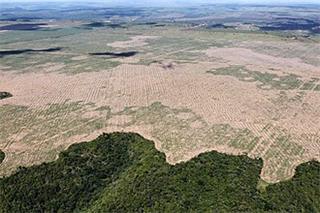
Since the 1970s growing public awareness and advances in environmental science, ecology and technology have brought new concerns to the fore: ozone depletion, climate change, acid rain and genetically modified crops and livestock. American environmentalists campaigned against nuclear weapons and power in the 1960s and 1970s, acid rain in the 1980s, ozone depletion and deforestation in the 1990s, and most recently climate change and global warming, while an anti-environmental “Wise Use” movement emerged in the 1990s.
The movement takes a different shape in each country. In India its most influential part is the anti-dam movement, following the Chipko movement from 1974 and the Bhopal gas leak of 1984, which immediately killed 2,259 people. In Brazil, under scrutiny at the Rio conference of 1992, the Blue Wave Foundation runs campaigns to keep beaches clean, Funatura a wildlife sanctuary programme, and the Landless Workers Movement has blockaded the Carajás iron ore mine. In the Arab world activists press on industrial pollution, though some doubt their governments’ commitment, and in Europe the polluter pays principle entered the Single European Act.
Its history also holds uncomfortable chapters. In the 1930s the Nazi regime passed an animal-protection law and the Reich Nature Protection Act of 1935, and several Nazis, notably Rudolf Hess, were environmentalists; in the Spanish Revolution of 1936 anarchist territories undertook reforestation and other environmental reforms.
The environmental movement is an international social movement that seeks to protect the natural world and create sustainable living. It grew from 19th-century campaigns against smoke pollution and for forests, wildlife and countryside in Britain, British India and the United States, broadened after Rachel Carson’s Silent Spring of 1962, and today is much concerned with climate change.
Test yourself
5 questions on this page, from its key events and facts.
The questions open here once the page has loaded.